Shivraj Singh Chouhan: Leaders Are Servants of the People
Synopsis
Union Agriculture Minister Shivraj Singh Chouhan, posting under #PMKISAN on 20 June 2026, declared that leaders in a democracy are servants of the people, framing the PM-KISAN scheme as an act of public service equivalent to worshipping God. The remarks underline the government's welfare-as-seva political communication.
Key Takeaways
Union Agriculture Minister Shivraj Singh Chouhan posted on X on 20 June 2026 under the hashtag #PMKISAN .
He declared that 'in a democracy, leaders are servants of their people,' rejecting the notion that leaders are guests of the public.
Chouhan framed serving the people gathered before him as equivalent to bhagwan ki pooja — worship of God.
PM-KISAN provides Rs 6,000 per year in direct income support to eligible landholding farmer families across India.
The scheme was launched in February 2019 and made universal in May 2019 , covering all farmer families with cultivable land.
Chouhan's remarks align with the BJP-led government's broader strategy of connecting welfare delivery to values of democratic accountability and cultural service.
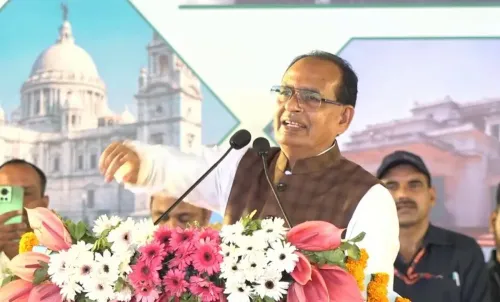
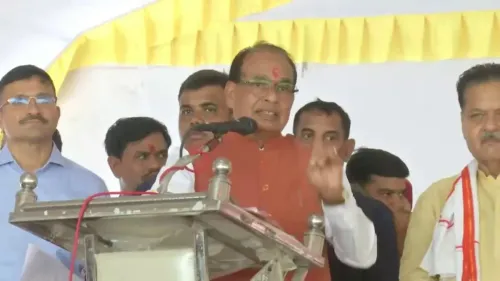
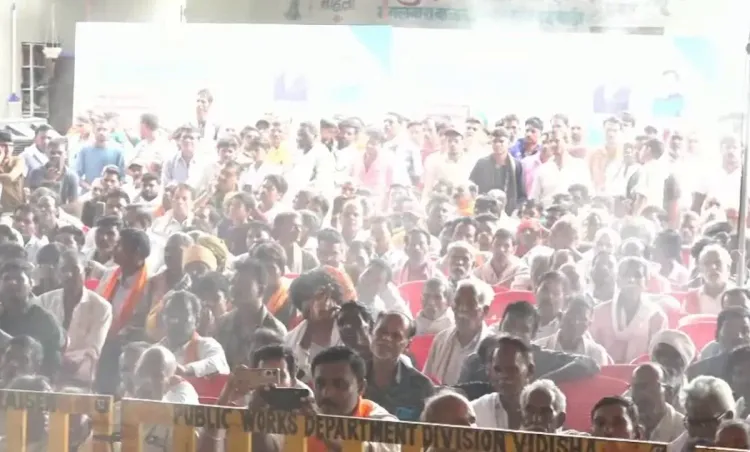
Union Agriculture Minister Shivraj Singh Chouhan invoked the principle of democratic service on Saturday, 20 June 2026, addressing an audience of farmers and reaffirming his government's commitment to the PM-KISAN scheme as an expression of public duty rather than political privilege.
Context
Posting on X under the #PMKISAN hashtag, Chouhan declared in Hindi: 'नेता कोई अतिथि नहीं होते, लोकतंत्र में नेता अपनी जनता के सेवक होते हैं' — 'Leaders are not guests; in a democracy, leaders are servants of their people.' He added that the spirit of service (seva ka bhaav) resides in his heart, and that serving the people gathered before him is, for him, equivalent to worshipping God.
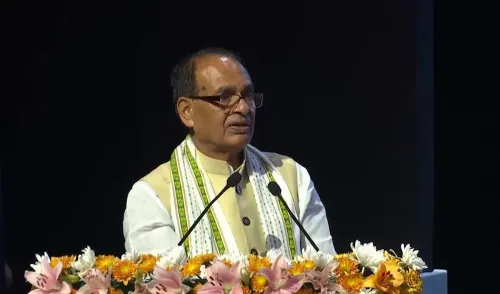
The remarks were accompanied by a video, suggesting Chouhan was speaking directly to a gathering of farmers or beneficiaries, most likely at an event connected to PM-KISAN outreach. The minister has consistently used public platforms to frame welfare delivery as a moral and democratic obligation.
Policy Backdrop
Pradhan Mantri Kisan Samman Nidhi (PM-KISAN), launched in February 2019 by Prime Minister Narendra Modi, provides eligible landholding farmer families with Rs 6,000 per year in three equal instalments of Rs 2,000 each, transferred directly to their bank accounts. The scheme was made universal in May 2019, extending coverage to all farmer families with cultivable land, removing earlier restrictions on land-holding size.
Since its launch, PM-KISAN has become one of the central government's flagship direct-benefit-transfer programmes, reaching tens of millions of small and marginal farmers across the country. Chouhan, as the Union Minister for Agriculture and Farmers Welfare, is the scheme's principal political custodian at the cabinet level.
Stakeholders and Impact
Small and marginal farmers — who constitute the overwhelming majority of India's agricultural households — are the primary beneficiaries of PM-KISAN. The scheme is designed to supplement their incomes and reduce dependence on informal credit ahead of each crop cycle.
Chouhan's framing of welfare delivery as bhagwan ki pooja ('worship of God') is consistent with the BJP-led government's broader political communication strategy, which links rural welfare programmes to cultural and moral values of service. This approach has proven effective in consolidating support among farming communities in states like Madhya Pradesh, where Chouhan served as Chief Minister for four terms before moving to the Union Cabinet.
What's Next
Attention will now turn to the timing of the next PM-KISAN instalment and any potential modifications to the scheme's coverage or benefit quantum that may be announced through the Union Budget or ministry reviews. Chouhan's continued high-profile engagement with farmer audiences signals that PM-KISAN will remain a centrepiece of the government's rural outreach ahead of upcoming state elections.
His emphasis on accountability — that leaders owe service to citizens, not the reverse — also sets a tone for how the Agriculture Ministry intends to present its policy record to rural constituencies in the months ahead.
Point of View
He elevates PM-KISAN from a cash-transfer programme to a near-sacred obligation, making any future reduction politically costly. The #PMKISAN hashtag ensures the message is algorithmically tied to the scheme's beneficiary base, reinforcing direct outreach between minister and farmer. This positions Chouhan as the human face of agricultural welfare ahead of what is likely to be a politically significant instalment cycle.
NationPress
19 Sept 2026
Frequently Asked Questions
What is PM-KISAN and who benefits from it?
PM-KISAN, or Pradhan Mantri Kisan Samman Nidhi, is a central government scheme that provides Rs 6,000 per year in direct income support to eligible landholding farmer families across India, paid in three instalments of Rs 2,000 each.
What did Shivraj Singh Chouhan say about leaders and public service?
Chouhan said that leaders in a democracy are not guests but servants of the people, and that serving citizens gathered before him is, for him, equivalent to worshipping God.
When did Shivraj Singh Chouhan make this statement?
He posted the statement on X on Saturday, 20 June 2026, under the hashtag #PMKISAN.
When was PM-KISAN launched and by whom?
PM-KISAN was launched in February 2019 by Prime Minister Narendra Modi to supplement farmer incomes through direct bank transfers, and was made universal in May 2019.
What is Shivraj Singh Chouhan's current role?
Shivraj Singh Chouhan is the Union Minister of Agriculture and Farmers Welfare and Rural Development in the Government of India, and is a former four-term Chief Minister of Madhya Pradesh.