Bhuvneshwar, Hazlewood dismantle DC with 6-wicket powerplay blitz at Kotla
Synopsis
In a format built for batting excess, Bhuvneshwar Kumar and Josh Hazlewood reminded the IPL that Test-match discipline — line, length, swing, bounce — still reigns supreme. Their six-wicket powerplay blitz reduced Delhi Capitals to an unprecedented 13 for 6, proving that world-class bowling can still seize control of T20 cricket when conditions align and execution is flawless.
Key Takeaways
Bhuvneshwar Kumar and Josh Hazlewood combined for six wickets in 18 balls each during the powerplay at the Arun Jaitley Stadium on 28 April 2026 .
Delhi Capitals collapsed to 13 for 6 in four overs — the lowest powerplay total in IPL history.
Bhuvneshwar extracted two to four degrees of swing consistently, while Hazlewood operated with precision and bounce.
Debutant Sahil Parakh fell for a duck; KL Rahul (who had scored 152 not out previously) was undone by a rising short ball.
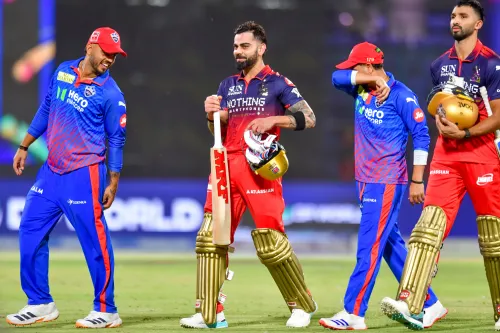
Virat Kohli finished the chase in seven overs , securing an easy RCB victory.
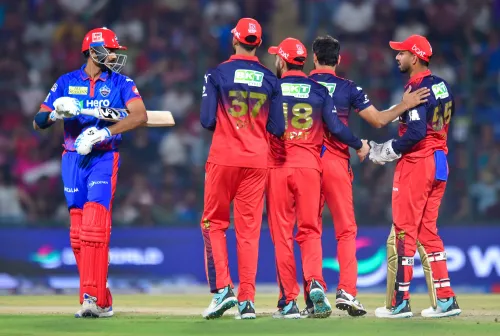
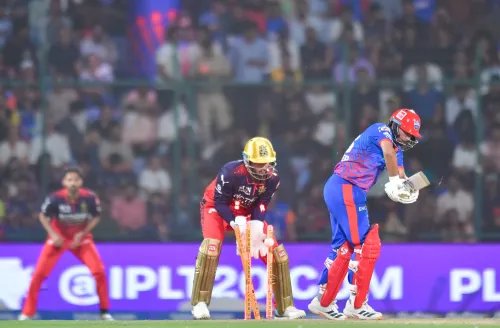
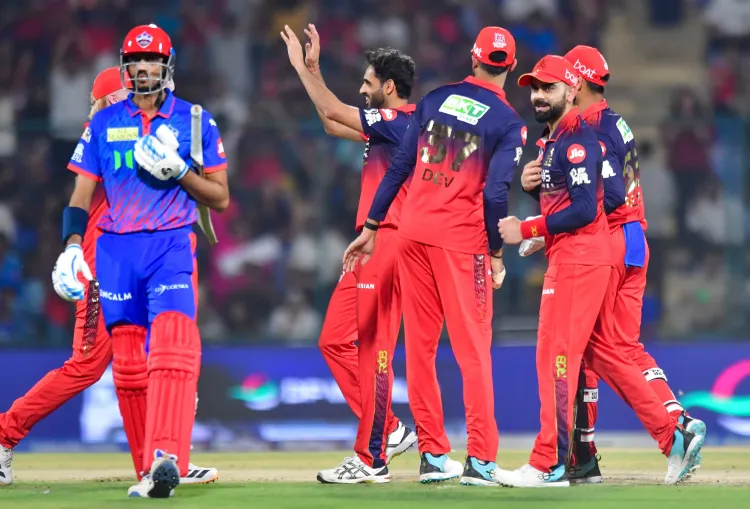
Royal Challengers Bengaluru dismantled Delhi Capitals in a devastating powerplay at the Arun Jaitley Stadium on Monday, 28 April 2026, reducing the home side to 13 for 6 in just four overs — the lowest powerplay total in IPL history. Bhuvneshwar Kumar and Josh Hazlewood, operating in tandem with Test-match discipline and precision, claimed six wickets combined in 18 balls each, exposing the fragility of DC's batting lineup against sustained swing and bounce.
How the collapse unfolded
Sahil Parakh, the debutant, fell to a Bhuvneshwar inswinger for a duck after initially edging a wider delivery. KL Rahul, who had scored 152 not out in DC's previous match, was undone by Hazlewood's short-pitched delivery that climbed steeply; his pull shot found top-edge to Jitesh Sharma. Sameer Rizvi edged behind attempting a drive in the channel, while Tristan Stubbs fended a late-swinging ball to first slip. DC captain Axar Patel was caught behind off a Bhuvneshwar delivery angled from around the wicket, and Nitish Rana gave a catch to gully, struggling against Hazlewood's bounce.
The role of pitch and conditions
The Kotla's pitch on Monday night offered pronounced swing and seam movement — a stark contrast to the same venue's day match two days prior, where a batter-friendly surface had yielded 5,329 runs. Wind conditions and floodlight timing amplified the bowlers' advantage. Bhuvneshwar consistently extracted two to four degrees of swing, while Hazlewood operated with miserly economy, wasting nothing and targeting precise lines and lengths.
What Axar Patel and RCB's perspective revealed
Axar Patel acknowledged that DC's batters, buoyed by their 264-run total in the previous match, had anticipated similar conditions and felt they could play positively from the outset. However, the shift in pitch behaviour and the bowlers' world-class execution left them unprepared. "The batters felt momentum from the last match and wanted to feel the bat on the ball early," Axar said, crediting Bhuvneshwar and Hazlewood for their skill despite the pitch's assistance.
RCB's Krunal Pandya highlighted the rarity of witnessing such bowling mastery in a format increasingly dominated by batting. "You are talking about Bhuvneshwar Kumar and Josh Hazlewood. Seeing them operate from both ends, bowling 18 balls each in the powerplay — it was quite pleasing. To get six wickets in the powerplay is almost literally taking the game away from the opponent," Pandya said in the post-match press conference.
Kohli seals the chase
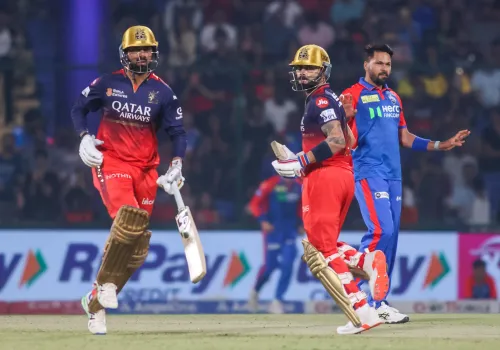
Virat Kohli, the focal point for the Kotla crowd, finished the chase in seven overs, taking RCB to victory in a lopsided contest. The Arun Jaitley Stadium crowd, which had arrived primarily to witness Kohli, departed much earlier than the scheduled end time, having witnessed a masterclass in bowling under pressure.
A rare recalibration in T20 cricket
In a format that has tilted decisively toward batters in recent years — with 200-run totals becoming routine and bowling attacks pencilled to limit damage rather than take wickets — Monday night represented a rare reversal. Bhuvneshwar and Hazlewood demonstrated that Test-match virtues of line, length, swing, and bounce remain potent weapons even in the shortest format. Their performance underscored that conditions and craft, when combined with world-class execution, can still tilt T20 cricket toward bowlers, if only briefly. The 13 for 6 scoreline serves as a reminder that no batting framework is invulnerable when confronted by sustained excellence.
Point of View
Boundary barrages, the death of bowling. Monday night was a corrective. Bhuvneshwar and Hazlewood didn't just win a powerplay; they exposed how fragile the batting-heavy ecosystem is when two world-class bowlers marry skill to conditions. DC's collapse from 264 runs two days earlier to 13 for 6 isn't really about the pitch changing — it's about craft and discipline outmaneuvering the format's momentum-driven narrative. In T20, that's rare enough to matter.
NationPress
26 Sept 2026
Frequently Asked Questions
Why did Delhi Capitals collapse to 13 for 6 in the powerplay?
DC faced a masterclass in swing and seam bowling from Bhuvneshwar Kumar and Josh Hazlewood, who extracted pronounced movement and bounce from the Kotla pitch on a night match. The bowlers operated with Test-match discipline, targeting precise lines and lengths. DC's batters, riding momentum from their previous 264-run total, were unprepared for the shift in conditions and the bowlers' world-class execution.
What is the significance of 13 for 6 in IPL history?
It is the lowest powerplay total in the IPL's 19-year history. The previous record was held by a higher score, making this collapse unprecedented in the tournament's annals and a stark reminder that batting dominance can be reversed by elite bowling under conducive conditions.
How many wickets did Bhuvneshwar and Hazlewood take in the powerplay?
Bhuvneshwar Kumar and Josh Hazlewood combined for six wickets in the powerplay, with each bowler bowling 18 balls. Bhuvneshwar took three wickets, while Hazlewood claimed three, including a pin-point yorker that castled Abishek Porel.
What did Axar Patel say about DC's batting collapse?
Axar acknowledged that DC's batters, buoyed by their 264-run total in the previous match, had anticipated similar pitch conditions and wanted to play positively early. However, the shift in pitch behaviour and the bowlers' skill left them unprepared. He credited Bhuvneshwar and Hazlewood for their world-class execution.
How did Virat Kohli perform in the match?
Virat Kohli finished the chase in seven overs, securing an easy victory for RCB. He was the focal point for the Kotla crowd, and his quick finish meant the match was decided long before the scheduled end time.