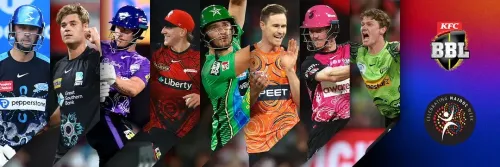
Big Bash League privatisation: Cricket Australia, six states agree in principle
Synopsis
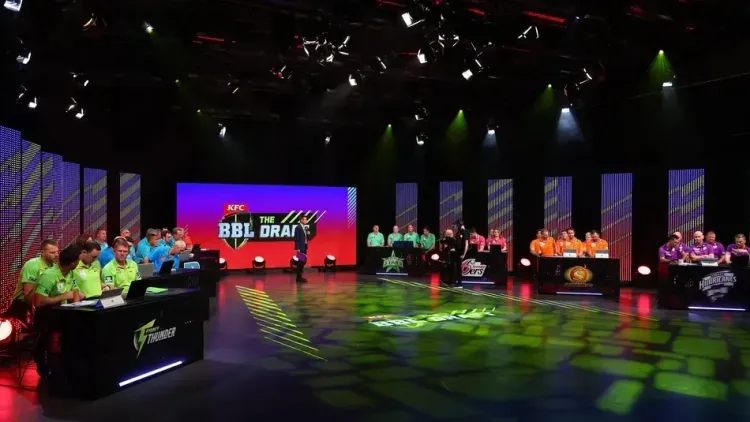
Cricket Australia and its six state associations have agreed in principle to allow private investment in the Big Bash League, with Cricket Victoria set to be the first state to test the market. The move — contingent on four key conditions including a governance overhaul and a new player agreement — could permanently alter the financial architecture of Australian domestic cricket.
Key Takeaways
Cricket Australia (CA) and six state associations reached an in-principle agreement on 15 June to allow private investment in the Big Bash League (BBL) .
The self-determination model lets individual states decide whether to sell part or all of their BBL licences.
Cricket Victoria is set to be the first state to go to market, following its earlier announcement to sell one of its licences ahead of the 2026/27 BBL season .
The agreement hinges on four conditions : new BBL governance, CA governance reform, a deal with the Australian Cricketer's Association , and revised state funding agreements.
Cricket NSW , Queensland Cricket , and SACA had entered talks with reservations; all state boards must now ratify the agreement through independent votes.
Cricket Australia (CA) and its six state associations have agreed 'in principle' to a self-determination model of private investment in the Big Bash League (BBL), following a meeting in Melbourne on Monday, 15 June. The landmark agreement, if ratified, would allow individual states to decide whether to sell part or all of their BBL licences — a structural shift that could fundamentally reshape the league's ownership landscape.
What Triggered the Agreement
The push for privatisation gained momentum after Cricket Victoria announced plans to sell one of its BBL licences ahead of the 2026/27 season. The in-principle agreement, once all conditions are met, would position Cricket Victoria as the first state to go to market, enabling a formal valuation of club licences through a market-testing process.
The Four Key Conditions
The agreement is not unconditional. CA outlined four requirements that must be satisfied before any sale proceeds: agreement on a new BBL governance structure; changes to CA's existing governance framework to reflect the new operating model; finalisation of the self-determination model's mechanics with the Australian Cricketer's Association; and new funding and distribution agreements between CA and each state. Each state board must also independently ratify the in-principle agreement through its own vote.
What CA's Chair Said
CA chair Mike Baird described the discussions as 'very productive' and expressed confidence in the process. 'We're confident this will lead to the best possible outcome for everyone including grassroots participants and volunteers and professional players and provide certainty for the future of cricket in Australia,' Baird said. He added that states had agreed to take the proposals back to their boards to address questions on governance, player support, and state distributions.
States With Reservations
Cricket New South Wales (NSW), Queensland Cricket, and the South Australian Cricket Association (SACA) had entered the meeting with reservations about long-term financial implications. SACA chair Will Rayner acknowledged progress but was measured in his response. 'While there is a lot to work through, we have made good progress and will now discuss the mechanics of a self-determination model, contingent on several conditions being met, with our respective Boards,' Rayner said. He stressed the need for 'appropriate checks and balances' to ensure the 'long term sustainability and sovereignty' of the game.
What Happens Next
The in-principle agreement now moves to individual state boards for ratification through independent votes. Should those votes pass and the four conditions be met, Cricket Victoria is expected to be the first to formally test the market. The outcome will set a precedent for how — and whether — other states follow suit, with significant implications for the financial model underpinning Australian domestic cricket.
Point of View
Queensland, and SACA are telling: the states with the largest cricket ecosystems are also the most exposed to a deal that reshapes revenue distribution. The four-condition framework is sensible on paper, but the devil will be in the governance details — particularly whether the Australian Cricketer's Association can secure meaningful player protections before private capital sets the terms.
NationPress
19 Sept 2026
Frequently Asked Questions
What is the Big Bash League privatisation agreement?
Cricket Australia and its six state associations have agreed in principle to a self-determination model that would allow individual states to sell part or all of their BBL licences to private investors. The agreement, reached on 15 June in Melbourne, is subject to four conditions being met and ratification by each state board.
Which state will be first to sell its BBL licence?
Cricket Victoria is expected to be the first state to go to market, having already announced plans to sell one of its BBL licences ahead of the 2026/27 season. The in-principle agreement is designed to allow market testing of club valuations starting with Victoria.
What are the four conditions attached to the BBL privatisation deal?
The four conditions are: agreement on a new BBL governance structure; reform of CA's existing governance to reflect the new model; finalisation of the self-determination mechanics with the Australian Cricketer's Association; and new funding and distribution agreements between CA and each state.
Which states had reservations about the BBL privatisation plan?
Cricket New South Wales, Queensland Cricket, and the South Australian Cricket Association entered the 15 June meeting with reservations about long-term financial implications. SACA chair Will Rayner acknowledged progress but stressed that conditions must be met before his board commits.
What happens next in the BBL privatisation process?
Each of the six state boards must independently ratify the in-principle agreement. Once ratified and the four conditions are satisfied, Cricket Victoria is expected to formally test the market, setting a precedent for other states considering licence sales.