Bilbao and San Sebastian unite in single 2030 FIFA World Cup bid
Synopsis
Bilbao and San Sebastian have abandoned their rival World Cup bids to present FIFA with a single Basque proposal — combining San Mames and Anoeta into one venue package, each hosting two group-stage matches. The merger follows reported concerns over FIFA's stringent financial and public-impact requirements, and comes as the 2030 tournament shapes up to be the most geographically expansive in the competition's history.
Key Takeaways
Bilbao and San Sebastian have merged their separate bids into a single joint proposal for the 2030 FIFA World Cup .
San Mames Stadium (Athletic Bilbao) and Anoeta Stadium (Real Sociedad) will function as a combined venue, each hosting two group-stage matches .
The two stadiums are just 101 kilometres apart; the merger followed four years of preparation by Basque institutions.
Both city councils had reportedly raised concerns over FIFA's stringent economic and public-impact requirements .
The 2030 World Cup will be co-hosted by Spain , Portugal , and Morocco — the first edition held in North Africa and the first in Europe since 2018 .
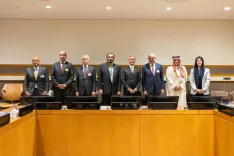
Bilbao and San Sebastian, the two major cities of Spain's Basque region, have formally merged their separate bids into a single joint proposal to host matches at the 2030 FIFA World Cup — a tournament set to span Spain, Portugal, and Morocco. The announcement was made on Monday, 2 June 2025, by the local authorities of both cities alongside the Basque regional government.
What the Joint Bid Entails
Under the merged proposal, Athletic Bilbao's San Mames Stadium and Real Sociedad's Anoeta Stadium — located just 101 kilometres apart — will be treated as a combined single venue for FIFA's purposes. Each stadium is expected to host two group-stage matches, according to the terms outlined in a unified budget submitted to FIFA.
The Basque institutions stated that both cities had been 'working seriously and rigorously for four years to become hosts of the 2030 World Cup' and would continue along the same path through subsequent phases of the selection process.
Why the Separate Bids Were Dropped
In recent weeks, reports had circulated that both city councils harboured reservations about 'the stringent requirements imposed by FIFA... both from an economic standpoint and in terms of their impact on the public.' Rather than withdraw entirely, the two cities opted for a consolidation, presenting a single budget that outlines what both venues would collectively be willing to undertake.
Notably, the decision followed 'a process of consultation between both venues,' according to the Basque institutions — signalling that the merger was a negotiated outcome rather than a top-down directive.
The Historic Scale of the 2030 Tournament
The 2030 FIFA World Cup carries exceptional historical weight. It will be the first World Cup held in North Africa and the first on the African continent since South Africa 2010. It also marks returns to South America for the first time since Brazil 2014 and to Europe for the first time since France 1998 — wait, since Russia 2018.
For individual nations, the tournament represents debuts or long-awaited returns: Morocco, Portugal, and Paraguay will host for the first time; Uruguay last hosted in the inaugural 1930 edition; Argentina last hosted in 1978; and Spain last hosted in 1982.
FIFA's Bidding Framework
FIFA launched the bidding process in 2022. Member associations from AFC and CONCACAF confederations were ineligible to bid, owing to the confederation rotation rule that bars nations from confederations that hosted the two preceding tournaments — Qatar 2022 (AFC) and the United States, Canada, and Mexico 2026 (CONCACAF) — from hosting the next edition.
What Happens Next
The consolidated Basque bid now moves into subsequent FIFA evaluation phases. With the unified budget submitted, the focus shifts to FIFA's technical assessment of infrastructure, logistics, and financial guarantees. The outcome will determine whether San Mames and Anoeta join the confirmed list of 2030 World Cup venues across Spain, Portugal, and Morocco.
Point of View
Home to Athletic Bilbao and Real Sociedad, effectively concluded that neither could absorb FIFA's requirements alone. That is a signal worth noting as the 2030 tournament expands across three continents: the economic burden of hosting is pushing mid-sized European cities toward consolidation or withdrawal. If Bilbao and San Sebastian — with genuine footballing pedigree and modern stadia — find the terms challenging, the question of who truly benefits from FIFA's hosting model remains open.
NationPress
26 Sept 2026
Frequently Asked Questions
Why have Bilbao and San Sebastian merged their 2030 World Cup bids?
The two Basque cities merged their separate bids to present FIFA with a single, consolidated proposal covering both San Mames and Anoeta stadiums. Reports indicate both city councils had concerns about FIFA's stringent economic requirements and the public impact of hosting, making a joint bid more viable than two independent ones.
Which stadiums are included in the joint Basque bid?
The joint bid covers Athletic Bilbao's San Mames Stadium in Bilbao and Real Sociedad's Anoeta Stadium in San Sebastian. The two grounds are 101 kilometres apart and will be treated as a single combined venue, with each stadium expected to host two group-stage matches.
Where will the 2030 FIFA World Cup be held?
The 2030 FIFA World Cup will be co-hosted by Spain, Portugal, and Morocco. It will be the first World Cup held in North Africa and the first on the African continent since South Africa 2010, as well as the first in Europe since Russia 2018.
Which countries are hosting the 2030 World Cup for the first time?
Morocco, Portugal, and Paraguay will host World Cup matches for the first time. Uruguay last hosted in 1930, Argentina in 1978, and Spain in 1982 — meaning all six co-hosts are returning after multi-decade absences or debuting entirely.
Why were AFC and CONCACAF nations barred from bidding for 2030?
FIFA's confederation rotation rule prevents nations from confederations that hosted the two preceding tournaments from bidding for the next edition. Since Qatar (AFC) hosted 2022 and the United States, Canada, and Mexico (CONCACAF) will host 2026, both confederations were ineligible to bid for 2030.