CAB defends governance framework amid Dalmiya's corruption allegations
Synopsis
The Cricket Association of Bengal has fired back at former president Avishek Dalmiya's public corruption allegations, pointing to a sitting retired High Court Chief Justice as its Ombudsman and asking why proper legal channels were bypassed in favour of a Facebook post. The dispute puts West Bengal's cricket governance squarely in the political spotlight.
Key Takeaways
CAB office-bearers wrote to West Bengal Sports Minister Indranil Khan on 17 June , defending the association's governance framework.
The letter was a formal response to an open Facebook post by former CAB president Avishek Dalmiya alleging corruption and systemic rot.
Justice Jyotirmay Bhattacharya , former Chief Justice of the Calcutta High Court , has served as CAB Ombudsman for two years and currently also holds the Ethics Officer role.
The CAB 's grievance redressal system has been in place since 2019 , per the BCCI Constitution.
CAB invited the Sports Minister to visit and meet its 140 members , and urged the government to question why Dalmiya bypassed internal legal channels.
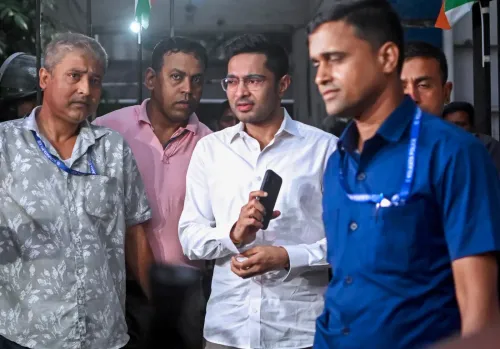
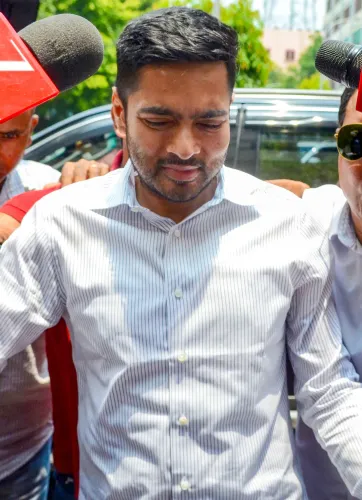
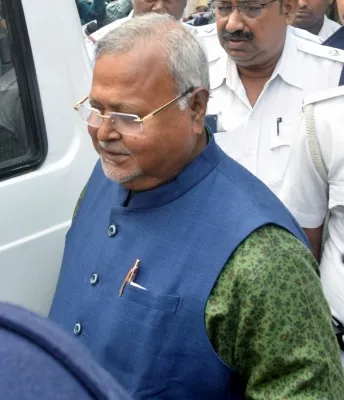
The Cricket Association of Bengal (CAB) has written a formal letter to Indranil Khan, Minister of State (Independent Charge) for the Department of Youth Services and Sports, West Bengal, defending its grievance redressal structure and reaffirming the integrity of its institutional checks and balances. The letter, dated 17 June, came in direct response to an open letter posted on Facebook by former CAB president Avishek Dalmiya, who had raised concerns over alleged corruption, systemic rot, and selection integrity within the association.
The Trigger: Dalmiya's Open Letter
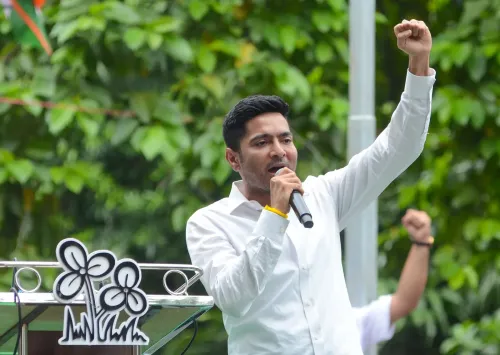
Former CAB president Avishek Dalmiya had posted an open letter on his Facebook page, raising what the incumbent managing committee described as 'generalised apprehensions' regarding corruption and governance lapses. The CAB office-bearers, led by the managing committee under former India captain Sourav Ganguly, responded by asserting that established legal mechanisms already exist to address such concerns — and that bypassing them in favour of public posts undermines the process.
The Ombudsman Framework at the Centre of the Dispute
The CAB's formal response emphasised that the association operates under a compliance structure mandated by the Board of Control for Cricket in India (BCCI) Constitution. This includes an Ombudsman — required to be a retired Chief Justice of a High Court — and a separate Ethics Officer.
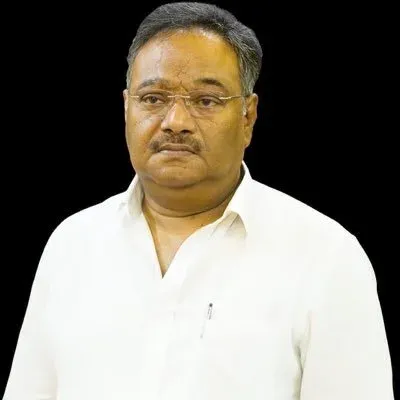
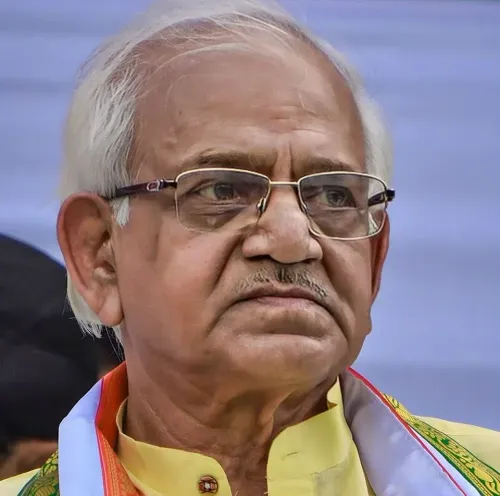
According to the letter, Justice Jyotirmay Bhattacharya, former Chief Justice of the High Court of Calcutta, has served as CAB's Ombudsman for the past two years and is currently also officiating as Ethics Officer. The CAB stated that this system has been operational since 2019, with all complaints handled with 'the highest degree of legal sanctity, impartiality, and transparency, entirely free from the interference of current office-bearers.'
CAB's Pointed Rebuke of the Public Route
The letter did not shy away from a pointed critique of Dalmiya's approach. 'Given that a retired Chief Justice of the High Court heads this apex integrity mechanism within our constitution, bypassing this established judicial forum via open public letters appears to be an attempt to publicise sports governance issues rather than addressing genuine concerns through proper legal channels,' the letter stated.
The office-bearers also urged the State Sports Ministry to 'critically examine why the sender bypassed a robust internal forum to drive a public narrative.' The communication further invited Minister Khan to visit the CAB and interact directly with its 140 members to ascertain the facts on the ground.
CAB's Assurance to the State Government
The managing committee used the letter to restate its commitment to clean governance and infrastructure development for West Bengal. 'The current administration of the CAB remains entirely focused on the meritocracy of clean governance and major infrastructure projects for the state. We assure the Government of West Bengal that any specific evidence-backed complaint submitted to the Hon'ble Ombudsman will be dealt with under the strict rule of law,' the letter read.
The letter also listed the eminent personalities who have led the CAB over the past 30 years, contextualising the association's institutional continuity. Whether Dalmiya responds through the formal Ombudsman channel or continues his public campaign is likely to define the next phase of this governance dispute.
Point of View
The association is signalling institutional credibility — but the very need for such a letter suggests the public narrative has already shifted. Dalmiya's choice of Facebook over the Ombudsman's office is either a calculated political move or an admission that internal channels are perceived as captured. The CAB's invitation to the Sports Minister to 'visit and verify' is an unusual step for a body that insists its processes are robust. West Bengal's cricket politics have long mirrored its general political volatility, and this dispute — with Ganguly's committee on one side and the Dalmiya family legacy on the other — is unlikely to be resolved by a single formal letter.
NationPress
16 Sept 2026
Frequently Asked Questions
Why did the CAB write a formal letter to the West Bengal Sports Minister?
The CAB wrote to Minister Indranil Khan on 17 June to rebut allegations of corruption and governance failure raised by former CAB president Avishek Dalmiya in an open letter posted on Facebook. The association sought to clarify that a robust, judicially supervised grievance mechanism already exists within the organisation.
Who is the CAB Ombudsman and what is his role?
Justice Jyotirmay Bhattacharya, former Chief Justice of the Calcutta High Court, has been serving as CAB's Ombudsman for the past two years and is currently also the Ethics Officer. The Ombudsman independently handles complaints with legal sanctity and impartiality, free from interference by current office-bearers.
What did Avishek Dalmiya allege against the CAB?
Avishek Dalmiya, a former CAB president, posted an open letter on Facebook raising what the CAB described as 'generalised apprehensions' about alleged corruption, systemic rot, and selection integrity within the association. The CAB has not accepted these allegations and has urged him to file specific, evidence-backed complaints with the Ombudsman.
How long has the CAB's grievance redressal system been in place?
According to the CAB's letter, the current grievance and ethics framework has been operational since 2019, structured in line with the BCCI Constitution, which mandates an Ombudsman who must be a retired Chief Justice of a High Court.
What has the CAB asked the West Bengal government to do?
The CAB has invited Sports Minister Indranil Khan to visit the association and interact with its 140 members to verify facts. It has also urged the State Sports Ministry to examine why Dalmiya chose a public platform over the established internal legal forum to raise his concerns.