Pragg, Erigaisi, Carlsen lead 24-star field at Budapest Chess Pilot
Synopsis
Twenty-four of the world's best chess players — including Magnus Carlsen, Praggnanandhaa, and Arjun Erigaisi — have assembled in Budapest for a $650,000 pilot event that could redefine professional chess. The Total Chess format fuses Blitz, Rapid, and Fast Classical into one championship, an audacious experiment to crown the game's most complete player rather than its best specialist.
Key Takeaways
24 elite grandmasters including Magnus Carlsen , R Praggnanandhaa (World No.
7), and Arjun Erigaisi (No.
12) have gathered in Budapest for the Total Chess World Championship Tour Pilot .
The prize fund stands at $650,000 — unusually high for a debut pilot event.
The innovative format combines Fast Classical , Rapid , and Blitz into a single championship to identify the most complete chess player.
Group stage features four groups of six in a double round-robin; knockout rounds blend all three time controls with weighted scoring.
India's Vaishali Rameshbabu and Kazakhstan's Bibisara Assaubayeva (Women's World No.
7) are among the two leading female players in the field.
Results from the pilot are expected to shape the future expansion of the Total Chess World Championship Tour .
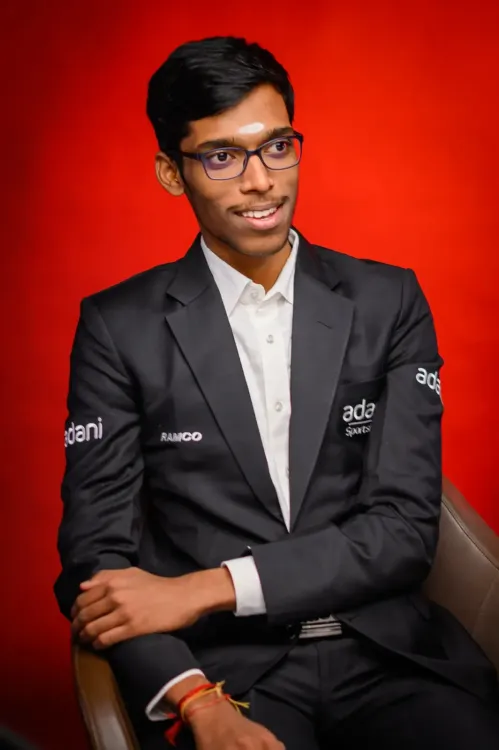
R Praggnanandhaa (World No. 7), Arjun Erigaisi (No. 12), and India's top woman player Vaishali Rameshbabu are among 24 elite grandmasters gathered in Budapest for the pilot event of the Total Chess World Championship Tour, a landmark new competition testing an innovative multi-format structure. The tournament, which kicked off in the Hungarian capital on 10 November 2026, carries a total prize fund of $650,000 — remarkable for a debut event — and signals an ambitious bid to reshape professional chess.
Carlsen Headlines a Historic Field
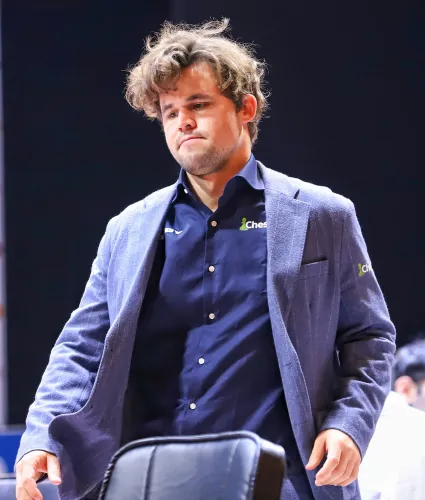
The single biggest draw is the presence of Magnus Carlsen, widely regarded as the greatest chess player of all time, who arrived in Budapest late on Monday evening. Carlsen held the world No. 1 ranking for 15 consecutive years, and his participation injects extraordinary star power into an already elite line-up. Alongside him are former world championship challengers and top-10 players including Fabiano Caruana, Anish Giri, Levon Aronian, Ian Nepomniachtchi, and Maxime Vachier-Lagrave.
The full confirmed field spans continents and generations: Wesley So (USA), Vincent Keymer (Germany), Nodirbek Abdusattorov (Uzbekistan), Alireza Firouzja (France), Jan-Krzysztof Duda (Poland), Liem Le (Vietnam), Richard Rapport (Hungary), Hans Moke Niemann (USA), Shakhriyar Mamedyarov (Azerbaijan), Jorden van Foreest (Netherlands), Haik M. Martirosyan (Armenia), Vladislav Artemiev (FIDE), Abhimanyu Mishra (USA), Andrew Hong (USA) — the world's youngest grandmaster at the time of his title — and Women's World No. 7 Bibisara Assaubayeva (Kazakhstan).
A Ground-Breaking Format Under Trial
The Total Chess concept sets itself apart by measuring chess mastery across all three major time controls — Fast Classical (45 minutes + 30-second increment), Rapid (15+10), and Blitz (3+2) — within a single championship structure. The organisers describe their goal as identifying 'the world's most complete chess player,' rather than a specialist in any one format.
The 24 players are divided into four groups of six for a double round-robin group stage lasting five days, with each player contesting ten Fast Classical games. Victories earn three points; draws are worth one point. A nine-round Blitz Swiss tournament held before the competition determines tie-break rankings.
Top finishers then advance to knockout brackets, where each match spans two days and combines four Blitz games, two Rapid games, and one Fast Classical game. Weighted scoring deliberately rewards success in longer time controls — a nod to the traditional view that classical chess remains the deepest test of the game.
India's Stake in the Pilot
The participation of Praggnanandhaa, Erigaisi, and Vaishali underscores India's rapid ascent as a chess superpower. This is the first time three Indian players of this stature — two in the global top 12 and a leading women's contender — have featured together in a single elite invitational event of this scale. Their presence reflects the depth that Indian chess has built since Viswanathan Anand's world-title era and raises expectations of a podium challenge.
Broadcast and Production Ambitions
Beyond the board, the organisers have committed to an enhanced broadcast experience featuring professional production, an expert commentary panel, live strategic insights, and post-match studio analysis. The declared aim is to bring global audiences closer to player psychology and in-game decision-making — a gap that traditional chess broadcasts have historically struggled to bridge.
'But the Total Chess Pilot is about more than finding a champion. At its heart is the testing of a new competitive format designed to bring a fresh dimension to elite chess, creating a more dynamic, engaging and compelling experience for players, fans and audiences worldwide,' the organisers said.
What Comes Next
The pilot's results — both on the board and in terms of audience response — are expected to inform whether the Total Chess World Championship Tour expands into a full multi-event calendar. With a $650,000 prize fund on the line and the sport's biggest names already on board, Budapest is effectively a live stress-test of professional chess's next possible chapter.
Point of View
Where classical has always been the gold standard and blitz a sideshow. By weighting longer formats in the knockout scoring while still demanding blitz competence, the organisers are trying to have it both ways — broadening appeal without alienating purists. The $650,000 prize fund for a mere pilot signals serious financial backing, but the real test will be whether the format survives contact with elite players who may tactically optimise for the weighted scoring rather than playing 'complete' chess. India's three-player presence is the clearest sign yet that the country's chess pipeline is now a global force, not just an Anand afterthought.
NationPress
11 Nov 2026
Frequently Asked Questions
What is the Total Chess World Championship Tour Pilot?
It is a new elite chess tournament held in Budapest that tests an innovative format combining Fast Classical, Rapid, and Blitz chess into a single championship. The pilot event features 24 of the world's top grandmasters and carries a prize fund of $650,000.
Who are the top players competing in the Budapest chess pilot?
The field includes Magnus Carlsen, R Praggnanandhaa (World No. 7), Arjun Erigaisi (No. 12), Vaishali Rameshbabu, Fabiano Caruana, Ian Nepomniachtchi, Levon Aronian, Maxime Vachier-Lagrave, Alireza Firouzja, and Nodirbek Abdusattorov, among others.
How does the Total Chess format work?
The 24 players are split into four groups of six for a double round-robin group stage of ten Fast Classical games each. The top finishers advance to knockout rounds where each match spans two days and combines four Blitz games, two Rapid games, and one Fast Classical game, with weighted scoring favouring longer formats.
Why is Magnus Carlsen's participation significant?
Carlsen is widely regarded as the greatest chess player of all time and held the world No. 1 ranking for 15 consecutive years. His presence at a pilot event lends it immediate global credibility and media attention.
What is at stake for Indian chess players at this event?
Praggnanandhaa, Erigaisi, and Vaishali represent India's strongest-ever simultaneous presence at a single elite invitational. A strong performance would reinforce India's status as a rising chess superpower and boost the profile of Indian grandmasters ahead of future world-level competitions.