China clinch 16th Suhandinata Cup, beat Malaysia in BWF World Junior Team C'ships final
Synopsis
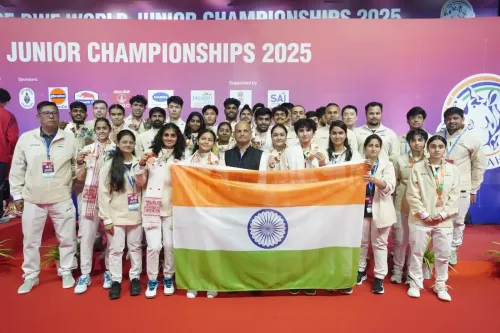
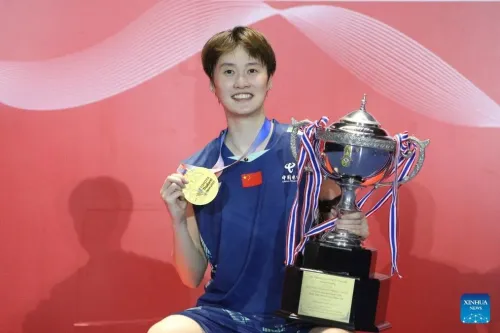
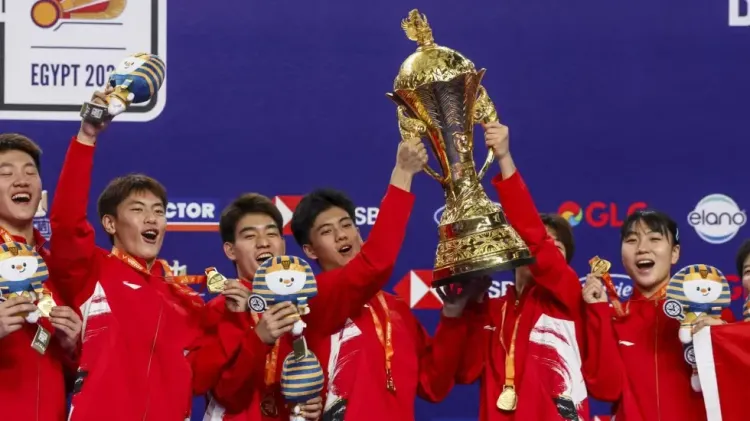
China survived a spirited Malaysian fightback to clinch the BWF World Junior Team Championships 2026 in Cairo, winning 55-46, 55-53, 55-45 in the final. The victory hands China a record 16th Suhandinata Cup — a testament to a junior pipeline that converts depth and tactical flexibility into titles almost every time.
Key Takeaways
China defeated Malaysia 55-46, 55-53, 55-45 in the BWF World Junior Team Championships 2026 final in Cairo .
The title is China's record 16th Suhandinata Cup triumph.
Malaysia won the second game 55-53 to level and force a decider, with Low Zi Yu , Irfan Shazmir , Genevie Lim , and Ahmad Redzuan leading the fightback.
China restricted Malaysia's first two singles players in the decider to a combined nine points to seize control.
Doubles coach Liu Cheng credited the team's adaptability and tactical substitutions as decisive factors.
Malaysia's Low Zi Yu admitted a slow start in the third game made recovery against the depth of China's squad near-impossible.
China reaffirmed their dominance in junior badminton on 11 October 2026 in Cairo, defeating Malaysia in a gripping three-game final to lift the BWF World Junior Team Championships 2026 title and extend their record tally to 16 Suhandinata Cup titles.
How the Final Unfolded
China prevailed 55-46, 55-53, 55-45 across three games, surviving a determined Malaysian fightback before reasserting control in the decider. The opening game appeared to be heading comfortably China's way, but Malaysia rallied with renewed intensity to level the contest in the second game.
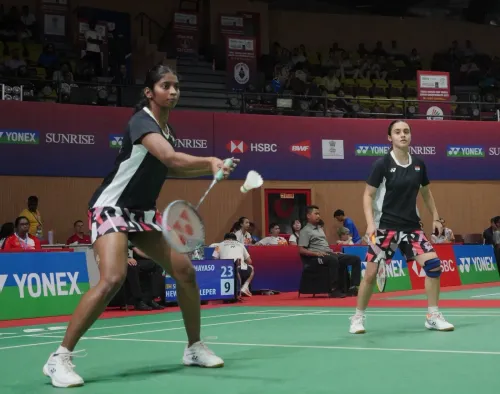
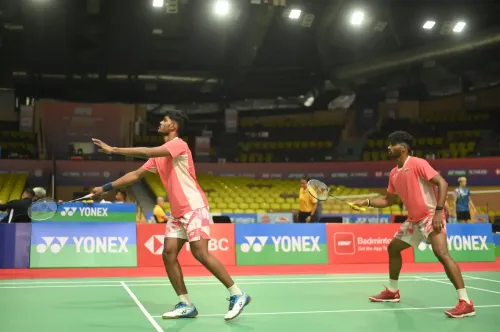
Tiew Wei Jie handed over the baton in men's singles at 18-22, leaving Malaysia's doubles contingent to keep the title dream alive. Genevie Lim and Low Zi Yu in women's doubles, Irfan Shazmir and Genevie Lim in mixed doubles, and Shazmir and Ahmad Redzuan in men's doubles rose to the occasion, helping Malaysia edge the second game 55-53 and force a decider.
China Reassert Authority in Decider
With momentum shifting towards Malaysia heading into the third game, an upset appeared possible. China, however, quickly re-established control, restricting Malaysia's first two singles players to a combined nine points and building a commanding lead that Malaysia could never reel in.
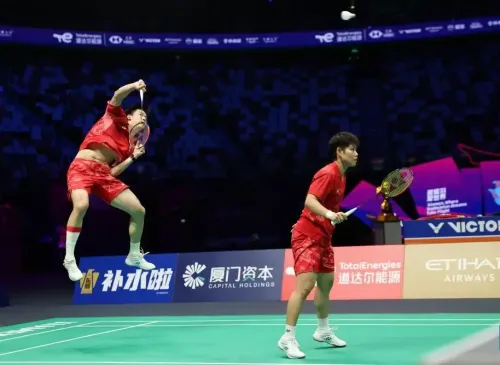
Women's doubles pair Shi Si Chen and Wei Yue Yue, mixed doubles combination Feng Yi Lang and Li Meng Han, and men's doubles duo Tu Yi Chen and Zheng Wei Gang were pivotal in maintaining China's grip as the defending champions closed out the championship with composure.
What the Coaches and Players Said
China's doubles coach Liu Cheng credited the team's adaptability and collective effort for the successful title defence. 'We're happy to have won,' Cheng said. 'We always prioritise team events and the whole team worked very hard for this. So winning this title means all our players are super players!'
Cheng highlighted tactical flexibility as a key factor: 'We had to adapt to uncertainty, mainly in the doubles because it's very fast. We trained the players' adaptability, decision-making and problem-solving — not so much on the physical side, but with the adaptability. We noticed that when Malaysia played the second set they used a substitution, so we analysed it and we also substituted our men's singles, and we got the result we wanted.'
For Malaysia, Low Zi Yu acknowledged that a slow start in the deciding game proved fatal. 'In the second set we were always close, and so we could fight. We were never far behind. We got confident and more self-belief. In the third we didn't start well and we trailed by a big margin,' Low said. 'Of course I wanted us to win the gold, and after winning the second set, I thought the gold was within reach. We gave it our all.'
Historical Context and What It Means
This is the 16th time China have won the Suhandinata Cup, reinforcing their status as the pre-eminent force in junior team badminton globally. This comes amid a broader pattern of Chinese dominance across both junior and senior BWF events, where they consistently convert depth in doubles and singles into team-event titles. For Malaysia, the narrow second-game victory demonstrated genuine competitive progress at junior level, even as the final scoreline reflects the gap that still exists at the elite end.
With the 2026 BWF World Junior Team Championships now concluded, attention turns to how both nations' junior rosters will transition to senior competition in the coming seasons.
Point of View
Or whether headline scorelines are masking a continuing gulf. One close set does not rebalance a competition that China have dominated for decades.
NationPress
11 Oct 2026
Frequently Asked Questions
Who won the BWF World Junior Team Championships 2026?
China won the BWF World Junior Team Championships 2026, defeating Malaysia 55-46, 55-53, 55-45 in the final held in Cairo on 11 October 2026. It is China's record 16th Suhandinata Cup title.
What was the final score of the China vs Malaysia match?
China defeated Malaysia 55-46, 55-53, 55-45 across three games. Malaysia won the second game to force a decider, but China reasserted control in the third to seal the championship.
How many Suhandinata Cup titles does China now hold?
China now hold a record 16 Suhandinata Cup titles following their 2026 victory in Cairo, cementing their status as the most successful nation in BWF World Junior Team Championship history.
Which players stood out for Malaysia in the final?
Low Zi Yu, Genevie Lim, Irfan Shazmir, and Ahmad Redzuan were key contributors as Malaysia's doubles players rallied to win the second game 55-53 and push the final to a decider. Low Zi Yu acknowledged that the team's poor start in the third game ultimately cost them the title.
Where was the BWF World Junior Team Championships 2026 held?
The BWF World Junior Team Championships 2026 final was held in Cairo, Egypt on 11 October 2026.