Cricket Australia backs ODI rethink but flags broadcast revenue risk
Synopsis
Cricket Australia CEO Todd Greenberg has put a number on the ODI reform debate's central dilemma: bilateral series are a 'significant portion' of broadcast agreements, meaning any push for more meaningful fixtures must come with an answer on what replaces the lost revenue. His voice on the ICC's own working group makes that tension impossible to ignore.
Key Takeaways
Cricket Australia CEO Todd Greenberg endorsed the ICC's push for greater 'context and jeopardy' in bilateral ODI cricket on 15 August in Darwin .
Greenberg warned that removing bilateral ODIs from the Future Tours Programme could significantly damage boards' broadcast revenues.
ICC CEO Sanjog Gupta had previously called for an end to 'randomly scheduled' bilateral series, linking ODI cricket's future to the World Cup cycle.
Greenberg is a member of the ICC working group finalising the 2028–31 Future Tours Programme and reviewing the 2032–35 schedule.
Cricket Australia has formally advocated to the ICC for larger squad sizes at the expanded ODI World Cup , backing coach Andrew McDonald's position.
Greenberg acknowledged Associate nations' frustration over limited ODI World Cup spots but said CA supports routing more Associates toward the T20 World Cup .
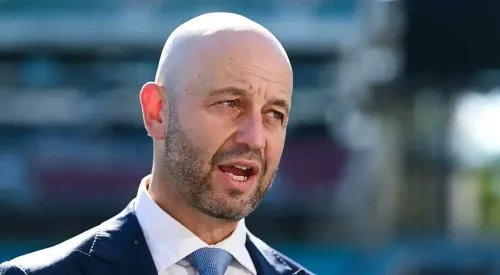
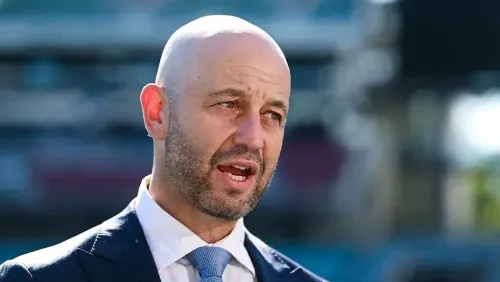
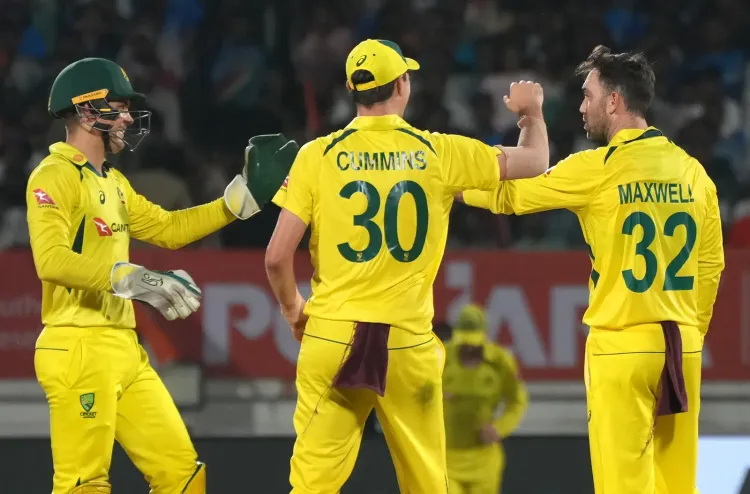
Cricket Australia chief executive Todd Greenberg has endorsed the ICC's drive to inject greater context and competitive stakes into bilateral ODI cricket, while cautioning that scrapping the format from the Future Tours Programme altogether could deal a severe financial blow to member boards. Greenberg made the remarks in Darwin on Thursday, 15 August, on the sidelines of Australia's first Test against Bangladesh.
Greenberg's Core Position
The CA chief said he agreed with the underlying principle articulated by ICC CEO Sanjog Gupta, who had made similar observations during a recent visit to Melbourne. 'I think the principle of his comments are that the games that are played need to matter and have context and jeopardy,' Greenberg said. 'We fundamentally believe that.'
However, Greenberg was candid about the commercial constraints. 'Bilateral ODIs make up a significant portion of our broadcast agreements, so we've got to find a way if we're going to create more jeopardy and meaning, and we're going to move them, what are we replacing them with, and how do you replace the revenues that go with those?' he said. 'Creating jeopardy and meaning into the games we play is important. But it's not an easy solve.'
The ICC's Push to Reform ODI Cricket
Earlier, Sanjog Gupta had stated that the era of 'randomly scheduled' bilateral series must end, arguing that the long-term future of ODI cricket is closely tied to meaningful competition and the World Cup cycle. Greenberg sits on the ICC working group tasked with finalising the Future Tours Programme for the 2028–31 cycle, with the group also examining what a more expansive 2032–35 schedule might look like. This positions him as a central voice in decisions that will shape international cricket's commercial and competitive architecture for the next decade.
Expanded World Cup and Squad Size Concerns
Greenberg also threw his weight behind Australia head coach Andrew McDonald, who has publicly called for larger squad sizes ahead of the expanded ODI World Cup later this year. With the tournament's broadened format placing greater physical demands on players, Greenberg confirmed that Cricket Australia had already raised the issue with the ICC.
'We've advocated strongly,' he said. 'Andrew's made it pretty clear to me that's a position he wants to carry. So we've passed that feedback on to the ICC. There are a number of countries that have said similar, given the change to it, that those squad sizes are important.'
Associates Left Out — and Greenberg's Response
Cricket Australia did not push as forcefully for greater Associate nation inclusion at the ODI World Cup, despite criticism from Scotland and the Netherlands over the revised format. Greenberg acknowledged the frustration but framed the ICC's decision as commercially driven.
'I assume it's just about trying to extract commercial value for those World Cups,' he said. 'I saw some recent comments that some of the Associates are unhappy. I get that. Hopefully, there's a pathway for more Associates to look at the T20 World Cup as opposed to the ODI World Cup — so I think that's what the ICC is planning.' He added that Cricket Australia would support that strategy.
What This Means for the Future of ODIs
Greenberg's remarks crystallise the tension at the heart of the ongoing ODI cricket debate: boards want more meaningful fixtures, but they are reluctant to surrender the broadcast income that bilateral series generate. Notably, this is not the first time the format has faced an existential reckoning — similar debates surfaced after the rise of T20 leagues in the 2010s, yet bilateral ODIs endured largely due to their broadcast value. Whether the ICC working group can engineer a model that satisfies both competitive integrity and commercial imperatives will be the defining question for cricket's next programming cycle.
Point of View
Protect the income. The harder question, which neither Greenberg nor Gupta has answered publicly, is whether any restructured ODI calendar can actually replicate bilateral revenue, or whether boards are being asked to accept a smaller pie in exchange for a more credible product. With Greenberg sitting inside the very working group designing the next FTP, his commercial caution will likely shape the outcome more than any reformist rhetoric.
NationPress
15 Aug 2026
Frequently Asked Questions
What did Cricket Australia CEO Todd Greenberg say about bilateral ODI cricket?
Greenberg said he agreed with the ICC's principle that matches must carry 'context and jeopardy' to remain relevant, but cautioned that bilateral ODIs form a significant part of Cricket Australia's broadcast agreements. He argued that any move away from the current format must come with a clear answer on revenue replacement.
What is the ICC's current position on the future of ODI cricket?
ICC CEO Sanjog Gupta has stated that the era of 'randomly scheduled' bilateral ODI series must end, arguing the format's future is closely tied to meaningful competition and the World Cup cycle. The ICC is currently reviewing the Future Tours Programme for the 2028–31 and 2032–35 cycles.
Why is Cricket Australia pushing for larger squad sizes at the ODI World Cup?
Australia head coach Andrew McDonald has called for bigger squads to manage the increased player workload created by the expanded ODI World Cup format. Greenberg confirmed Cricket Australia has formally raised the issue with the ICC, noting that several other nations have made similar requests.
Why are Associate nations like Scotland and the Netherlands unhappy with the ODI World Cup format?
Scotland and the Netherlands have criticised the revised ODI World Cup format for limiting Associate nation participation. Greenberg acknowledged their frustration but said the ICC's decision appeared driven by commercial considerations, and suggested the T20 World Cup may offer a better pathway for Associates.
What is the ICC Future Tours Programme working group and what is it deciding?
The ICC working group, of which Greenberg is a member, is responsible for finalising the international cricket schedule for the 2028–31 cycle and is also examining the broader 2032–35 programme. Its decisions will determine how bilateral ODIs are structured, how many are played, and what replaces them if the format is scaled back.