Doull Confident in New Zealand's Performance for T20 World Cup Final in Ahmedabad
Synopsis
As the T20 World Cup final approaches, former New Zealand bowler Simon Doull expresses confidence in the Black Caps' ability to adapt to any pitch conditions in Ahmedabad, emphasizing their tactical strength and player readiness for this crucial match against India.
Key Takeaways
New Zealand's adaptability to pitch conditions is crucial for success.
Slower balls may be more effective on mixed soil pitches.
Retention of key players like Neesham enhances both batting and bowling depth.
The Black Caps' culture emphasizes thorough preparation and teamwork.
Casual contracts provide players with opportunities in leagues while maintaining national commitments.
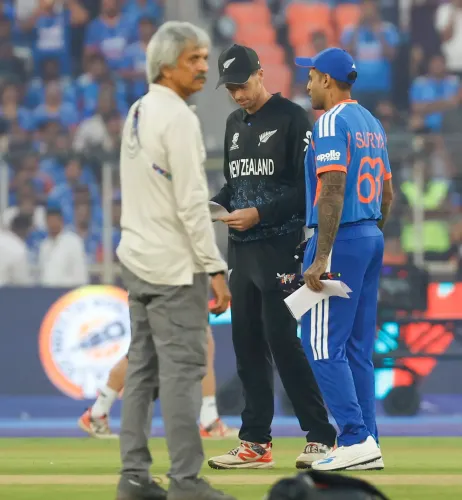
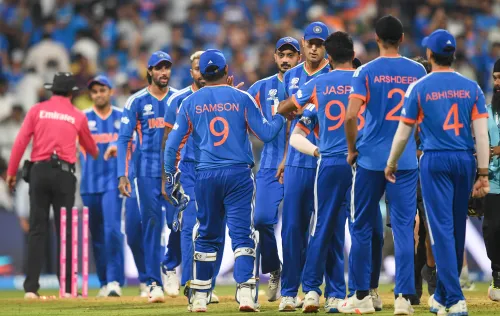
New Delhi, March 7 (NationPress) Former New Zealand fast bowler Simon Doull believes that the Black Caps will remain unfazed by the type of soil present in the pitch for this Sunday’s Men’s T20 World Cup final against India, scheduled at the Narendra Modi Stadium in Ahmedabad.
In an exclusive interview with IANS, Doull elaborated on how pacers can modify their strategies to incorporate more slower deliveries, the potential adjustments to their lineup, and the support for Mitchell Santner in the spin department. He also discussed their tactical acumen and the casual contracts system.
Q. How significantly does the decision to potentially play the final on a mixed soil pitch affect the tactics for both teams? Will dew make the toss crucial?
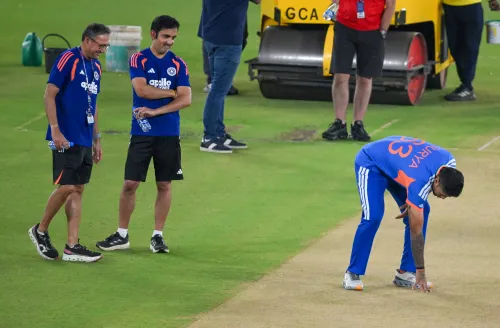
A. The characteristics of soils vary slightly across India. For instance, black soil behaves differently in one region compared to another due to factors like humidity, heat, and rainfall. Regardless of the pitch type in Ahmedabad, it is expected to provide a solid surface.
Historically, IPL finals and international matches there have shown that it’s generally a favorable pitch. The New Zealand team will not worry about whether it’s red or black soil; they recognize it will be a quality surface, and their focus should be on performing at their best on that pitch.
We haven’t noted as much dew in Ahmedabad compared to other locations, but there was a significant dew presence during the T20 World Cup in Dubai and Abu Dhabi that practically guaranteed a win for the team winning the toss.
It’s undesirable to witness that scenario, and I believe it won’t play out this time. However, should there be considerable dew, I would advocate for umpires to ensure the ball is changed every two to three overs to maintain fairness for both teams, regardless of the toss outcome.
I’ve long advocated for this measure, as dew is an uncontrollable element. Bowling with a soaked ball creates a significant disadvantage, especially when batting second.
With dew present, the ball will naturally slide more, but combining that with a wet ball can make it nearly impossible for bowlers. Fortunately, Ahmedabad hasn’t showcased as much dew as other areas. Here’s hoping it doesn’t impact either side.
Q. Statistics indicate that slower deliveries from pacers yield better economies and quicker wickets than pace-on balls in Ahmedabad. How might the New Zealand pacers adapt their strategies based on the surface?
A. New Zealand had one experience against South Africa there that didn’t go in their favor, but they will have learned valuable lessons about bowling strategies suitable for a larger ground, which will certainly help.
They can leverage the square boundaries more effectively with off-pace deliveries. The wicket has shown a tendency to hold rather than slide, but Ahmedabad generally offers a very good surface, combined with an excellent stadium. Thus, it’s all about adapting to the conditions and the surrounding atmosphere, which will be lively.
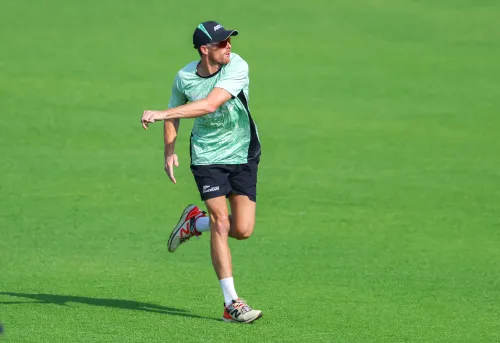
Henry is highly skilled at the beginning, but New Zealand will likely need him to secure one or two overs early on. When he picks up a wicket in the power play, it sets the tone for the side and boosts his confidence. Ferguson has been effective with the new ball and during the middle overs.
The selection dilemma revolves around whether to include Jacob Duffy, who has been outstanding for the past 18 months but was slightly off form in that series against India before the World Cup. This means he has mostly been on the sidelines during the tournament. If they choose to incorporate an additional genuine seam bowler, he will have the chance to prove himself at the elite World Cup level.
Q. Duffy leads in T20I wickets during power plays since 2025, yet his economy stands at 10.1 in this World Cup. New Zealand didn’t field him in the semi-final. Should he return for the final or should they continue with Neesham?
A. The choice lies between Sodhi and Duffy, as they are likely the two candidates. If the surface is expected to turn more, similar to conditions in Sri Lanka, they might consider Ish Sodhi. Conversely, if the pitch favors pace, they may opt for Duffy.
Neesham adds substantial value with his batting, extending the batting order, which allows players like Allens, Seiferts, Phillips, Chapmans, and even Rachin Ravindra to play more aggressively.
His bowling is decent, but the question is how New Zealand will manage the final overs. My concern is that Matt Henry is primarily a front-line bowler; while capable at the end, he may not be the most reliable option.
So, should New Zealand include Duffy in this scenario, or can they manage with Ferguson, Henry, and perhaps one from Neesham? Alternatively, could Mitchell Santner contribute an over in the final overs?
Personally, I wouldn’t alter the team; I would retain Jimmy Neesham. Rachin Ravindra has performed admirably, so four overs from Neesham aren’t essential, and his batting certainly strengthens the lineup. Regarding Jacob Duffy, I’m inclined not to reinstate him for this match, though New Zealand might have a different view.
Q. Ravindra and Cole McConchie have excellently supported Santner in spin duties. How significant has their contribution been for the Black Caps, who have successfully chased in all four games so far?
A. I’m highly impressed with Cole McConchie. He and Rachin Ravindra have been effective backup spinners for Mitch Santner, a world-class left-arm bowler. McConchie’s story is inspiring; it exemplifies that one can debut for the national team at any age.
His extensive experience in domestic cricket, along with his batting and bowling talent, equips him with the necessary skills. His late-entry into the New Zealand setup has been pivotal, showcasing his strong performance. Rachin Ravindra has also emerged as a standout bowler, which was unexpected, as there were doubts about his consistency.
Currently, he has been delivering commendably throughout the tournament. Santner has benefitted from the ability to turn to another left-arm spinner when two right-handers are at the crease, and to call upon McConchie when a left-hander comes in, which has been a significant advantage.
We haven’t seen Glenn Phillips bowl much during the tournament, so we have two right-arm off-spin options in McConchie and Phillips, with Ravindra effectively supporting Santner. Their performance worked brilliantly in Sri Lanka, and notably, McConchie’s couple of wickets in the semi-final were impressive. Both he and Ravindra have done exceptionally well.
Q. Discuss the team culture of the Black Caps, which enables data-driven match strategies like utilizing McConchie in the power play during the semi-final against South Africa.
A. I’m not deeply familiar with the analytics that the Black Caps utilize, but their thorough preparation is evident, and they leave no stone unturned, ensuring they come into the final as well-prepared as possible. They embody a culture of striving for peak performance.
People often say New Zealand punches above its weight; however, they view themselves as a consistently strong team rather than a collection of superstars. There’s a modesty in Mitchell Santner as a captain, but he is evolving with each game, enhancing his tactical and leadership skills. Rob Walter, the coach, has done excellent work with the support staff.
Their preparation has reached impressive levels, reminiscent of their efforts in the 2019 50-over World Cup. They will deliver a strong performance, and if that’s not sufficient on the day, so be it; they will have given their all as they advance towards the final.
Q. Several New Zealand players, such as Allen and Seifert, have gained experience in numerous franchise leagues via casual contracts with NZC. Have they developed a robust temperament and skill set suitable for this unpredictable format?
A. Regarding casual contracts, New Zealand has no choice; they lack the funds to offer substantial salaries. These players are committed to ICC events and World Cups, which is all that is expected, especially from white-ball players.
They prefer playing in global leagues rather than four-day cricket in New Zealand but are available for national selection about one to two weeks before ICC events. New Zealand Cricket has successfully ensured these players remain accessible and don’t drift into obscurity.
This arrangement may not be replicable in every country, but given the limited resources of New Zealand cricket, it allows players to participate in multiple leagues each year while still playing for New Zealand in World Cups.
Take a look at Finn Allen—over the past several months, particularly in the Big Bash League, he has continued to showcase strong form, and Tim Seifert has also excelled. I see no issue with this approach, and New Zealand Cricket will need to maintain this system if they wish to field their best team during short-format World Cups.
Point of View
Simon Doull’s insights reveal the adaptability and tactical strength of the New Zealand team, suggesting a promising performance against India. The emphasis on careful preparation and player readiness underscores the team's commitment to excellence.
NationPress
3 Oct 2026
Frequently Asked Questions
How will the pitch conditions affect the T20 World Cup final?
Simon Doull believes that regardless of the pitch type in Ahmedabad, the Black Caps will perform well due to their adaptability and understanding of different soil conditions.
What strategies can New Zealand's bowlers employ?
Doull suggests that New Zealand's pacers should incorporate more slower balls and adapt their strategies based on the pitch characteristics to maximize effectiveness.
Should New Zealand change their lineup for the final?
Doull recommends sticking with the current team, highlighting that players like Jimmy Neesham strengthen both the batting and bowling options.
What role does team culture play in New Zealand's success?
Doull emphasizes that the Black Caps' culture fosters thorough preparation and adaptability, allowing them to execute data-driven strategies effectively.
How do casual contracts benefit New Zealand players?
Casual contracts allow players to participate in various leagues while remaining committed to ICC events, helping them gain valuable experience and skills.