Colombia FIFA WC exit: FCF condemns death threats against Jaminton Campaz
Synopsis
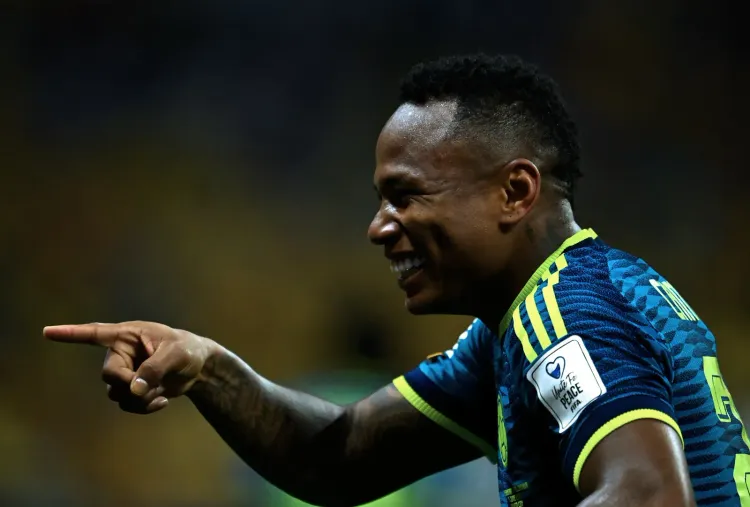
A missed shot in extra time cost Colombia a World Cup quarter-final spot — and may have cost Jaminton Campaz his sense of safety. The Colombian Football Federation has formally asked prosecutors to hunt down those threatening the 26-year-old midfielder, in a case that chillingly echoes the 1994 murder of Andrés Escobar.
Key Takeaways
The Colombian Football Federation (FCF) on 11 July urged the attorney general's office to investigate death threats against midfielder Jaminton Campaz .
Campaz missed a clear chance in extra time during Colombia's 4-3 penalty shootout defeat to Switzerland in the FIFA World Cup round of 16 in Vancouver .
The 26-year-old Rosario Central player did not return to Colombia after the match and publicly apologised to fans on social media.
The FCF 'categorically condemned' the threats and called for those responsible to be identified, prosecuted, and punished.
The incident recalls the 1994 World Cup assassination of Colombian defender Andrés Escobar in Medellín after he scored an own goal.
The Colombian Football Federation (FCF) on Saturday, 11 July called on prosecutors to urgently investigate and punish those responsible for death threats targeting midfielder Jaminton Campaz following Colombia's elimination from the FIFA World Cup in the round of 16. The threats emerged on social media after Campaz missed a crucial chance in extra time during a 4-3 penalty shootout defeat to Switzerland in Vancouver.
What Triggered the Threats
Colombia's World Cup campaign ended on Tuesday after a goalless draw against Switzerland led to a penalty shootout that the Swiss won 4-3. With only the goalkeeper to beat during extra time, Campaz blazed his shot over the crossbar — a miss that, had it gone in, would have sent Colombia into the quarter-finals. The moment immediately drew a wave of online abuse and, according to the FCF, threats against his life and safety.
The 26-year-old, who represents Argentine club Rosario Central, did not return to Colombia after the defeat. In a social media post, he shared a photograph of himself with his face covered in anguish, accompanied by a personal apology to supporters.
'I deeply regret not being able to give you the joy we all hoped for, but I want you to know that I never lacked commitment, dedication or love for this shirt. I gave everything I had on the field, and I would do it again a thousand times for my country,' Campaz wrote.
FCF's Official Response
The federation issued a firm statement expressing unconditional solidarity with Campaz, his family, and the entire Colombian delegation. 'We express our full solidarity and support for Jaminton Campaz, his family, all the players of the Colombian national team and the delegation as a whole,' the FCF said.
The federation also formally requested that the attorney general's office 'urgently carry out the necessary investigations to identify, prosecute and punish those responsible for these acts.' It categorically condemned the threats and stressed that every player who wears the Colombia jersey does so with deep commitment and patriotism.
A Grim Historical Echo
The episode has drawn comparisons to one of football's darkest chapters — the 1994 FIFA World Cup, when Colombian defender Andrés Escobar was assassinated in Medellín just days after scoring an own goal against the United States. That tragedy cast a long shadow over Colombian football and remains a sobering reminder of the dangers players can face when public anger turns violent.
The FCF directly invoked the spirit of that history in its statement: 'Football must be a space for unity, respect and hope, never a stage for hatred, intimidation or violence.'
Broader Context and What Comes Next
The threats against Campaz are part of a wider, troubling pattern in which footballers — particularly in Latin America — face severe online and offline backlash after high-profile misses or defeats. Authorities in Colombia have yet to confirm whether formal charges have been filed, but the FCF's public call for prosecution signals that the federation intends to pursue the matter through official channels.
Whether Campaz returns to Colombia in the near term remains unclear. The focus now shifts to the attorney general's office and whether swift legal action can be taken to deter further threats against players.
Point of View
But the real test is whether Colombia's attorney general acts swiftly enough to deter copycats. The shadow of Andrés Escobar's 1994 murder has never fully lifted from Colombian football, and each episode like this one is a reminder that the sport's tribal passions can turn lethal. Federations across the region must move beyond statements and push for enforceable legal frameworks that treat online death threats as the serious crimes they are.
NationPress
10 Oct 2026
Frequently Asked Questions
Why is Jaminton Campaz receiving death threats?
Campaz received death threats on social media after missing a clear chance in extra time during Colombia's FIFA World Cup round-of-16 match against Switzerland. The miss proved costly as Colombia were eliminated in a 4-3 penalty shootout following a goalless draw.
What has the Colombian Football Federation said about the threats?
The FCF issued an official statement categorically condemning the threats against Campaz's life and safety, expressing full solidarity with him and his family, and formally requesting the attorney general's office to urgently investigate, prosecute, and punish those responsible.
How did Colombia exit the FIFA World Cup?
Colombia were knocked out in the round of 16 after drawing 0-0 with Switzerland in Vancouver and losing the subsequent penalty shootout 4-3. Campaz's missed opportunity in extra time was a pivotal moment in the match.
What is the historical parallel being drawn to this incident?
The episode has been compared to the 1994 FIFA World Cup, when Colombian defender Andrés Escobar was assassinated in Medellín days after scoring an own goal against the United States. It remains one of the most tragic incidents in football history.
Where does Jaminton Campaz play his club football?
Campaz, who is 26 years old, plays for Argentine club Rosario Central. He did not return to Colombia following the World Cup defeat and posted a public apology to fans on social media.