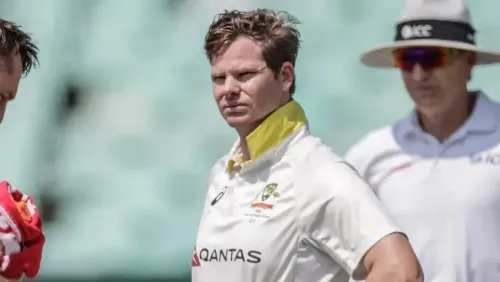
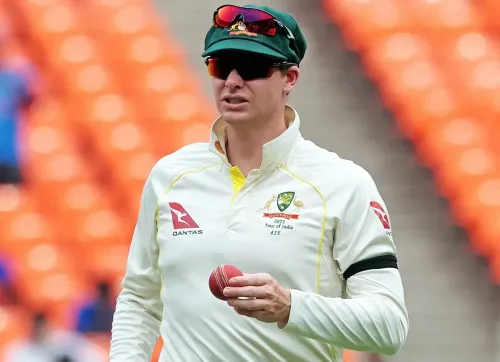
Steve Smith best player I've played with by a mile: Aaron Finch
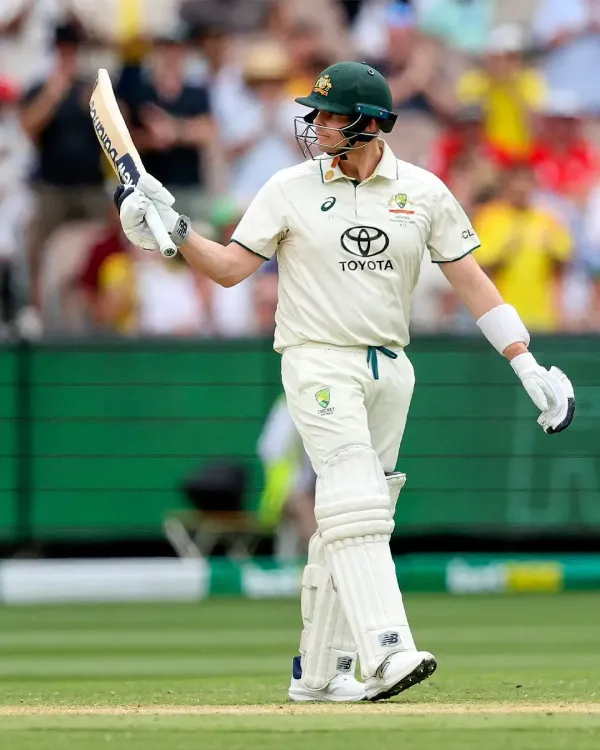
Synopsis
Aaron Finch, who captained Australia to a T20 World Cup, hasn't minced words: Steve Smith is the best cricketer he has ever played alongside — 'by a mile'. His account of Smith's journey from number-eight leg-spinner to Bradman-tier batter, and how the 2018 ban may have paradoxically freed him, is the most candid insider portrait of Smith's genius in years.
Key Takeaways
Aaron Finch named Steve Smith the best player he has ever played with, speaking on Cricinfo's 'Cricketers on Cricketers' show.
Smith began his career as a leg-spinner batting at number eight before evolving into a number-four batter ranked at the top of the ICC Test rankings.
Finch credited Smith's mental independence — 'I'm doing it this way; I don't care what it looks like' — as a key superpower.
The 2018 Cape Town ball-tampering scandal cost Smith a 12-month playing ban and a two-year leadership ban ; Finch believes the absence of captaincy responsibility made him a more relaxed batter.
Smith scored a 100 off 89 balls in the 2015 World Cup semi-final against India and an unbeaten 56 in the final against New Zealand, impressing Finch with his complete absence of nerves in knockout cricket.
Former Australia white-ball captain Aaron Finch has named Steve Smith the greatest cricketer he has ever shared a dressing room with, describing the veteran batter's journey from a fringe leg-spinning all-rounder to one of the finest Test batters in history as the product of a rare combination of natural talent, relentless hard work, and an unshakeable belief in his own unconventional methods.
From Number Eight to Australia's Best Since Bradman
Smith's origin story in international cricket is now legendary: he was introduced to the Australian setup as a leg-spinner who batted at number eight, widely tipped as a potential heir to the great Shane Warne. What followed defied every early projection. He climbed to number four in the batting order, scaled the top of the ICC Test rankings, captained Australia across all formats, and is widely regarded as the country's finest batter since Sir Donald Bradman.
'Steve Smith went from being touted as Shane Warne's replacement, starting at eight in the batting order, bowling a few overs of leg spin, getting the odd runs as the finisher. Then something changed overnight. He turned into this absolute gun of a batter that took the world by storm,' Finch said on Cricinfo's 'Cricketers on Cricketers' show.
The Technical Click That Changed Everything
Finch offered rare insight into the technical evolution that underpinned Smith's ascent. He recalled that Smith was always a 'handsy' player with big footwork and pronounced movement at the crease, but at a certain point he stripped that back to its essentials — and everything fell into place.
'He was always a handsy player with big movements, moving his feet a lot. Then he simplified that and everything clicked... something clicked with his batting in Test cricket, and he worked it out,' Finch explained. 'The ability to go from number six and five for so long and then slip into number four in the batting order was extraordinary.'
What Finch admires most is not the statistics but the mental architecture behind them. 'He says, I'm doing it this way; I don't care what it looks like to the outside world. This is what will make me most successful. That is a superpower,' Finch said, adding that neither he nor David Warner could replicate what Smith consistently produced — something Finch attributes to a blend of innate gift and extraordinary hours of practice.
Life After the 2018 Ball-Tampering Ban
Smith's international career was derailed by the 2018 ball-tampering scandal in Cape Town, which resulted in a 12-month ban from the game and a separate two-year ban from any leadership role. He subsequently returned as a player under the captaincy of Pat Cummins, serving as vice-captain after completing the leadership ban.
Finch believes the removal of the captaincy burden paradoxically liberated Smith as a batter. 'After the 2018 incident, coming back into the international setup, Steve Smith was more relaxed as a player because he didn't have the captaincy for obvious reasons... finding that balance, not having that captaincy pressure post 2018, was probably a weight off his shoulders because he sits there and goes, now I can just worry about myself,' Finch said.
Finch also confessed to the awkwardness of captaining a side that included a player he had long played under. 'I found it really difficult to captain with him in the side at the start, because I'd played under him for quite a bit of time and tactically, I thought he was an outstanding captain. So, I found myself at times being like, is this the right move? What would Smith think?' he recalled. He said Smith's response was blunt: 'Why do you keep asking me? Just make your own decision.'
Three Knockout Knocks at the 2015 World Cup
Finch singled out Smith's batting during the knockout rounds of the 2015 ICC Men's Cricket World Cup — which Australia won on home soil — as among his most cherished memories of playing alongside him.
Smith batted at number three through the knockout stages and delivered in every game: he stood firm at the other end during the famous Wahab Riaz vs Shane Watson quarter-final against Pakistan, scored a hundred off 89 balls in the semi-final against India, and remained unbeaten on 56 in the final against New Zealand. 'He didn't show even one bit of nervousness in those three games,' Finch said.
'Those three knockout stages are the most pressure games of a World Cup, and this guy was batting with absolute calmness. Not one thing enters his mind negatively about batting. I see it as a secret power, because it means that they don't carry any baggage into the next innings,' Finch concluded.
Finch himself led Australia to the 2021 Men's T20 World Cup title, making him one of the few cricketers to assess Smith's genius from the vantage point of a peer, a captain, and a teammate across formats. As Smith continues to feature in Australian cricket, Finch's assessment — delivered by someone who stood in the same dressing room for years — adds fresh weight to a legacy still being written.
Point of View
Number eight, next Shane Warne) bore no resemblance to his eventual identity says something important about talent identification in elite cricket. What mainstream coverage underplays is Finch's uncomfortable admission: that captaining Smith was psychologically difficult, because he himself was not sure his decisions were better. That is a remarkable confession from a World Cup-winning captain, and it speaks to just how dominant Smith's cricketing intelligence is perceived to be even among his own peers.
NationPress
28 Oct 2026
Frequently Asked Questions
Why did Aaron Finch call Steve Smith the best player he's ever played with?
Finch praised Smith's transformation from a leg-spinning all-rounder who batted at number eight into one of the world's finest Test batters, describing the combination of natural talent, hard work, and mental independence as a 'superpower'. He made the remarks on Cricinfo's 'Cricketers on Cricketers' show.
How did Steve Smith's batting career evolve over time?
Smith began his international career as a leg-spinner tipped to succeed Shane Warne, batting as low as number eight. He gradually moved up the order to number four, reached the top of the ICC Test rankings, and is widely regarded as Australia's best batter since Sir Donald Bradman.
What was Steve Smith's role in Australia's 2015 World Cup campaign?
Smith batted at number three during the knockout stages and delivered consistently under pressure: he played a key role in the quarter-final against Pakistan, scored a hundred off 89 balls in the semi-final against India, and hit an unbeaten 56 in the final against New Zealand as Australia won the tournament on home soil.
How did the 2018 ball-tampering ban affect Steve Smith?
The Cape Town ball-tampering scandal in 2018 resulted in a 12-month ban from all cricket and a two-year ban from any leadership role. According to Finch, the removal of captaincy responsibilities after his return may have actually freed Smith to focus entirely on his batting, making him more relaxed as a player.
What did Aaron Finch say about captaining a team that included Steve Smith?
Finch admitted he initially found it difficult to captain a side that included Smith, because he had long played under Smith and respected his tactical acumen. He recalled second-guessing his own decisions and asking Smith for input, until Smith told him directly to stop asking and trust his own judgment.