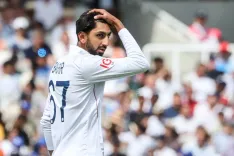
Gambhir backs India reset after 125-run T20I loss to England at Trent Bridge
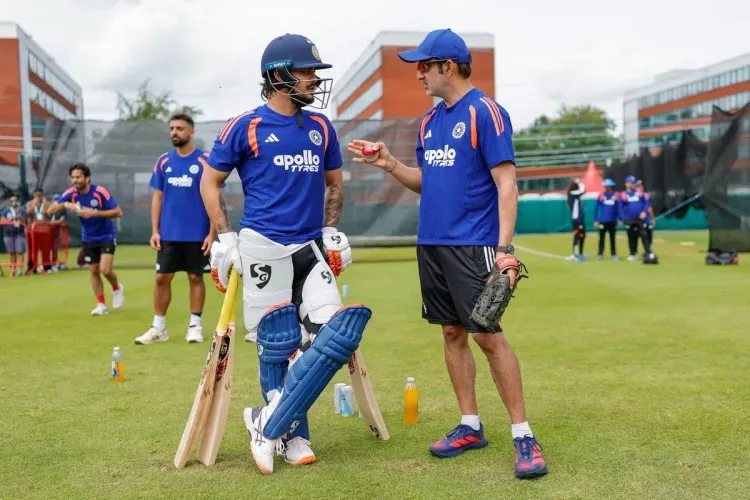
Synopsis
India's head coach Gautam Gambhir refused to panic after a 125-run T20I hammering at Trent Bridge, but the numbers are stark: bowled out for 76 chasing 202, trailing 2-0 with two games left. His argument — that a post-World Cup reset takes time — is reasonable, but England are running out of patience for India on this tour.
Key Takeaways
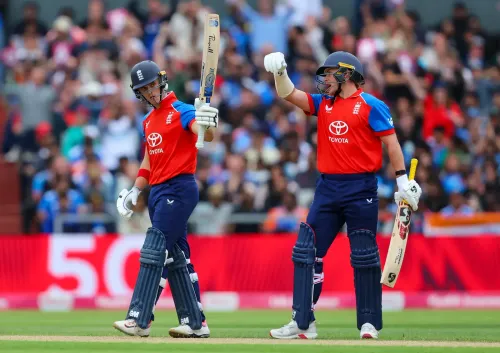
England beat India by 125 runs in the third T20I at Trent Bridge on 8 July .
India were bowled out for 76 chasing 202 , their lowest total of the series.
India trail the five-match series 2-0 after the opening game was washed out.
Coach Gautam Gambhir cited the post- T20 World Cup squad overhaul, noting the absence of Hardik Pandya and Jasprit Bumrah .
A 15-year-old opened the batting; Prince Yadav played only his second T20I; Harshit Rana returned from injury.
Sanju Samson 's omission was defended on form grounds, with Gambhir leaving the door open for a recall.
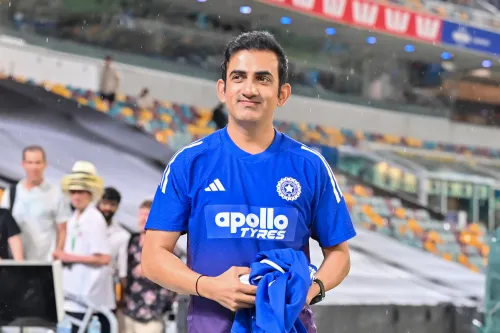
India head coach Gautam Gambhir defended the team's rebuilding phase after England handed India a heavy 125-run defeat in the third T20I at Trent Bridge, Nottingham on 8 July, arguing that a personnel overhaul inevitably produces uneven results before consistency returns.
The Scale of the Defeat
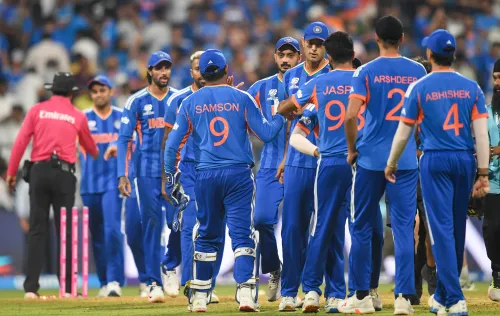
India were bowled out for just 76 while chasing 202, leaving them trailing 2-0 in the five-match series after the opening game was washed out. England now need only one win from the remaining two matches to seal the series.
Gambhir's Case for the Reset
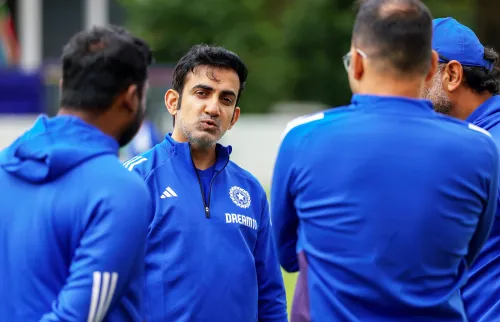
Gambhir drew a direct comparison between the T20 World Cup-winning XI and the side that took the field on Tuesday, pointing to the absence of several stalwarts. 'If you see the playing XI of the World Cup final and the one today, there are a lot of changes. Whether you take the captain, the opening batters... Hardik Pandya is not there, Jasprit Bumrah is not there. So when you go to reset again, it takes a little time,' he told reporters at the post-match press conference.
The coach also urged perspective, adding: 'You don't become a bad team after four games. Sometimes, if the opposition plays better than you... sometimes you don't assess the conditions better, you don't read the conditions better. We haven't done that since Ireland.'
Youth and Inexperience in Focus
Gambhir flagged the inexperience of several players in the current squad as a mitigating factor. He noted that a 15-year-old was opening the batting, while Prince Yadav was playing only his second T20I and Harshit Rana was returning from injury. 'If you push players into such a deep sea, give them a little time and they will eventually develop,' he said, while acknowledging England's quality as a 'high-quality side.'
Conditions, Game Reading, and Middle-Order Responsibility
The head coach pointed to India's failure to adapt to Trent Bridge's conditions — particularly the breeze and the contrasting boundary dimensions — as a key factor in the collapse. He called on the experienced middle order to read situations better rather than defaulting to high-risk batting throughout. 'When everyone in the batting line-up starts playing high risk, high reward, sometimes these things can happen,' Gambhir observed.
He drew a contrast with India's T20 World Cup campaign, where the top order attacked freely because the middle order anchored the innings when required. 'That is something that we've lacked today and that's why we got the result,' he said.
Sanju Samson's Absence and Selection Criteria
On the omission of Sanju Samson, Gambhir was measured, affirming the wicketkeeper-batter's contributions during the World Cup while stressing that current form would drive selection decisions. 'There is no such thing that there is any hard and fast rule that he cannot make a comeback in this series,' he noted, adding that the playing XI would always reflect 'the best combination to give us the results.'
With two matches still to play, Gambhir maintained that India's attacking philosophy would not change, even as the team works to improve its record against pace bowling.
Point of View
But it sidesteps a harder question: was this the right moment to blood so many inexperienced players against England, arguably the most aggressive T20 side in the world on home soil? Being bowled out for 76 is not a conditions misread — it is a structural batting failure. The World Cup middle-order anchor Gambhir praises was built over years; it cannot be conjured in a five-match series. With two games left and a series already slipping, India need results, not timelines.
NationPress
6 Oct 2026
Frequently Asked Questions
Why did India lose the third T20I against England at Trent Bridge?
India were bowled out for 76 while chasing 202, losing by 125 runs at Trent Bridge on 8 July. Coach Gautam Gambhir attributed the defeat to a failure to read conditions, high-risk batting from the entire line-up, and the inexperience of a squad undergoing a post-World Cup reset.
What is India's current standing in the T20I series against England?
India trail the five-match series 2-0 after the opening game was washed out and defeats in the second and third T20Is. England need one more win from the remaining two matches to seal the series.
Why are Hardik Pandya and Jasprit Bumrah not playing in the T20I series?
Coach Gautam Gambhir confirmed that both Hardik Pandya and Jasprit Bumrah are not part of the current T20I squad, citing them as examples of the significant personnel changes made since India's T20 World Cup triumph. He said such absences are part of a deliberate squad reset.
Will Sanju Samson return to India's playing XI in this series?
Gambhir did not rule out a recall for Sanju Samson, saying 'there is no hard and fast rule that he cannot make a comeback in this series.' He stressed that selection would be based on current form and the combination best suited to deliver results.
Who are the new or inexperienced players in India's current T20I squad?
Gambhir highlighted a 15-year-old opening the batting, Prince Yadav playing only his second T20I, and Harshit Rana returning from injury as examples of the youth and inexperience in the current squad. He asked for patience as these players develop against high-quality opposition.