NZ coach Rob Walter admits 'finishing touches' missing after twin T20I losses to India

Synopsis
New Zealand have lost both T20Is to India by identical four-wicket margins, and coach Rob Walter's post-mortem points to a pattern — 80 percent of good cricket undone by a no-ball wicket, two spills in the field, and an inability to apply the 'finishing touches.' With the series at 2-0 and the third T20I at Wellington's wind-swept Hnry Stadium on Tuesday, the Black Caps must find that final 20 percent or risk conceding the series.
Key Takeaways
New Zealand lost both T20Is to India at Hagley Oval, Christchurch by four wickets each.
Coach Rob Walter cited a no-ball wicket and a couple of dropped catches as the pivotal moments in both defeats.
Bevan and Glenn rescued New Zealand from three down in the powerplay to post 180 in the second T20I, which Walter called 'a defendable total.' The team entered the series with limited competitive cricket, but Walter expressed satisfaction with their performance across roughly 80 percent of each game.
The third T20I is scheduled for Tuesday at Hnry Stadium, Wellington , where swirling winds and a drop-in pitch will present fresh challenges.
India lead the five-match T20I series 2-0 .
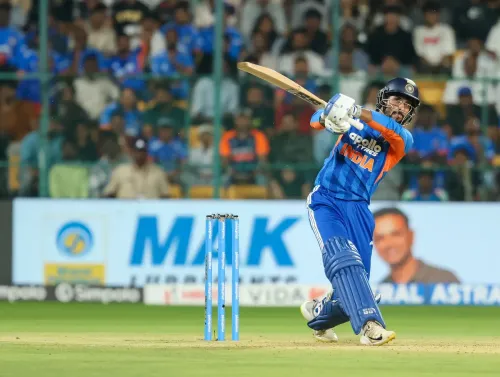
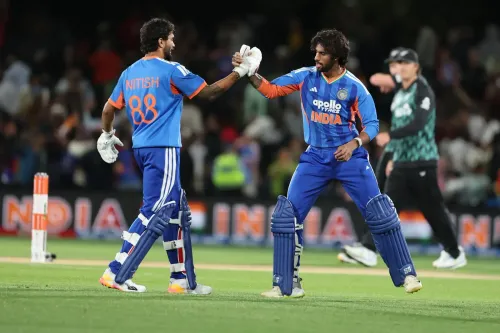
New Zealand head coach Rob Walter acknowledged on Sunday that his side's inability to close out games had been the decisive difference in their back-to-back T20I defeats to India at Hagley Oval, Christchurch — even as he expressed satisfaction with how well the Black Caps had competed for the bulk of both contests.
The Margins That Hurt
New Zealand lost both matches by the same margin of four wickets, falling agonisingly short in a series where they are yet to register a win. Walter was candid about the fine lines in T20 cricket. 'In both games we could easily have been on the winning side of it but weren't,' he said in a video shared by New Zealand Cricket (NZC) after the team arrived in Wellington. 'Probably missed out on a couple of opportunities each time where you probably would have sealed the game off for us.'
Walter pointed to specific moments that shifted the momentum — a no-ball that denied New Zealand a wicket, and a couple of spilled chances in the field. 'No one's ever trying to make those errors, but it does creep in, and it can cost you,' he said, while conceding that India too may have had their own missed opportunities.
Bright Spots in the Batting Unit
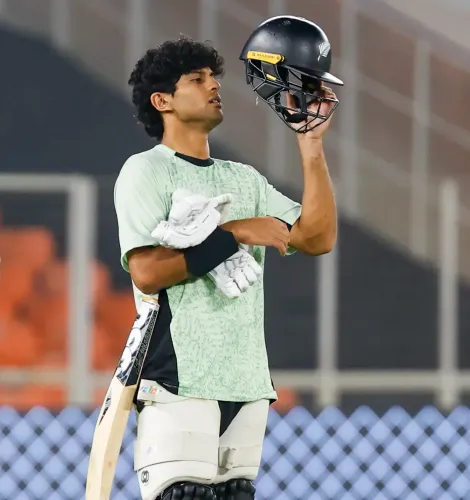
Despite the results, Walter highlighted the batting unit's resilience, particularly in the second match. 'Three down in the powerplay, it's not often you get to 180 from that position. So Bevan and Glenn did a hell of a job there to get us to 180 in the end, which was a defendable total, if we're honest,' he said. He stressed that the team had 'played pretty well in probably 80 percent of each game,' noting the side had entered the series with limited competitive cricket under their belts.
The bowling unit, too, showed improvement from the first game to the second, according to Walter, with fielding intensity drawing particular praise. 'Our fielding intensity and effort can't be questioned. The guys have been amazing, throwing themselves around,' he noted, adding that converting a couple of missed chances would, in his view, have been enough to flip the results.
Conditions at Hagley Oval Shifted Between Games
Walter reflected on how the pitch and conditions had evolved across the two matches, making batting slightly more difficult in the second encounter. 'The surface was a little bit different. The starts to the game are different. Nothing ever flows the exact same way,' he observed. Both bowling units, having drawn lessons from the first night, also raised their game — a dynamic he described as 'a touch trickier, but still a great game of cricket.'
Eyes on Wellington and the Hnry Stadium Test
With the third T20I scheduled for Tuesday at Hnry Stadium, Wellington, Walter flagged fresh challenges. The venue's swirling, unpredictable winds and a drop-in pitch will test adaptability on both sides. 'There's no prevailing wind or specific direction that the wind comes from. It can make outfield fielding quite difficult if the ball goes up in the air,' he warned. He added that drop-in pitches introduce further variability, as their preparation and lead-in conditions can make them inconsistent from one game to the next.
'It's going to test our adaptability, and we did that really well over two games. Now it's about having to do it a third time on a third surface,' Walter said, remaining optimistic that New Zealand could put together a complete performance. India currently lead the five-match series 2-0, and New Zealand face the prospect of falling further behind if Tuesday's contest goes India's way.
Point of View
In the same venue, against the same opponent suggests a structural issue more than a one-off execution lapse. The 'we played well for 80 percent of the game' framing is a trap coaches fall into: in T20 cricket, the final 20 percent is where games are won and lost, and consistently failing to convert is not bad luck. New Zealand's bigger concern heading into Wellington should be whether their death-overs bowling blueprint holds up under the specific atmospheric conditions at Hnry Stadium — a venue that demands rapid tactical recalibration. If they cannot find that answer on Tuesday, the series could be over before the halfway mark.
NationPress
25 Oct 2026
Frequently Asked Questions
Why did New Zealand lose both T20Is against India in Christchurch?
New Zealand lost both T20Is at Hagley Oval, Christchurch by four wickets each, with coach Rob Walter identifying a no-ball that negated a wicket and a couple of dropped catches as the moments that proved decisive. Walter acknowledged the team had played well for roughly 80 percent of each game but failed to apply the 'finishing touches' when it mattered most.
What did Rob Walter say about New Zealand's batting in the second T20I?
Walter praised Bevan and Glenn for rescuing New Zealand after they slipped to three wickets down in the powerplay, ultimately reaching 180 — a total he described as 'a defendable total, if we're honest.' He said the batting unit had done 'an exceptionally good job' across both matches despite limited competitive cricket before the series.
When and where is the third T20I between New Zealand and India?
The third T20I is scheduled for Tuesday at Hnry Stadium in Wellington. Walter has flagged swirling, unpredictable winds and a drop-in pitch as fresh variables that will test both teams' adaptability.
What is the current series score between India and New Zealand?
India lead the five-match T20I series 2-0 following back-to-back wins at Hagley Oval, Christchurch. New Zealand need to win at Wellington to stay alive in the series.
What challenges does the Hnry Stadium pitch pose for both teams?
Hnry Stadium in Wellington features swirling winds with no fixed prevailing direction, making outfield catches and bowling lines unpredictable. The ground also uses a drop-in pitch, which Walter noted can be inconsistent depending on its preparation, meaning neither side will have a guaranteed read on conditions before the game begins.