CM Bhajan Lal chairs Sikar worker meet at Khatu Shyamji ahead of Panchayat polls
Synopsis
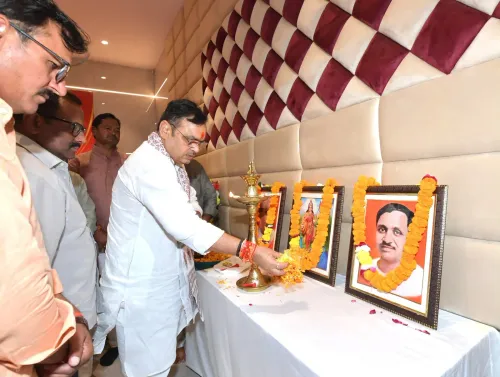
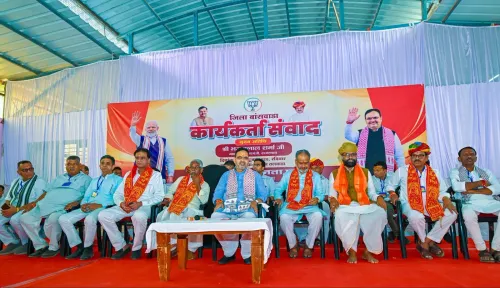
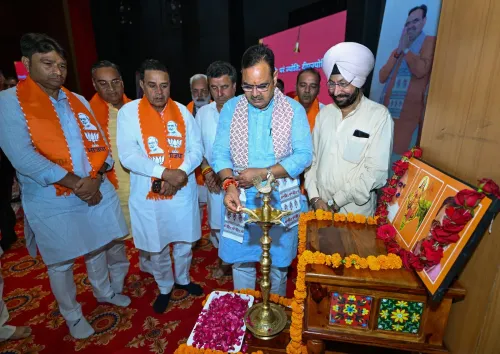
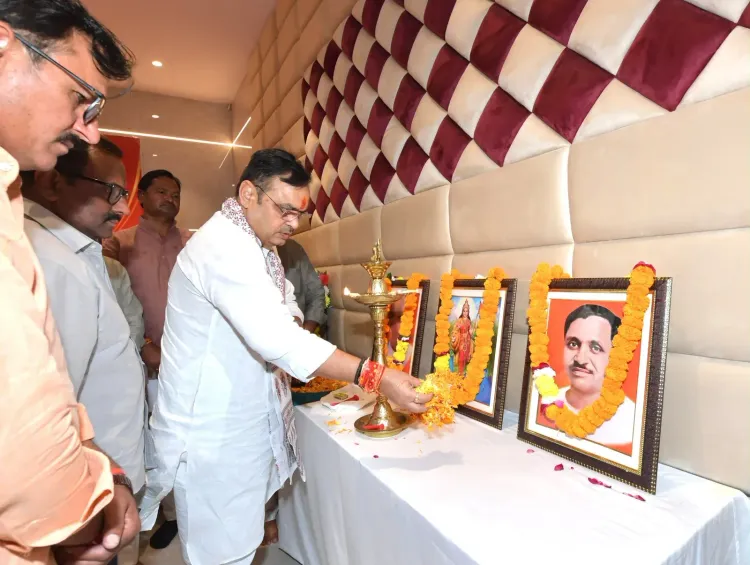
Rajasthan CM Bhajan Lal Sharma held a strategy session with Sikar district BJP workers at Khatu Shyamji on 25 October, focusing on grassroots mobilisation, booth-level strengthening, and welfare scheme delivery ahead of state gram panchayat elections.
Key Takeaways
CM Bhajan Lal Sharma chaired a meeting of BJP workers from Sikar district at Khatu Shyamji on 25 October 2026 .
The meeting focused on preparations for the upcoming Rajasthan gram panchayat elections and strengthening the party organisation at the grassroots level.
Sharma called workers' dedication to public service the 'strong foundation' of the organisation and urged expanded rural outreach ( jansamparka ).
The agenda included ensuring every eligible family receives benefits of government welfare schemes and prioritising rural development needs.
Elected representatives and party office-bearers, in addition to grassroots workers, attended the session.
The meeting follows BJP's post-2023 strategy of maintaining direct organisational contact at the village level ahead of local body polls.
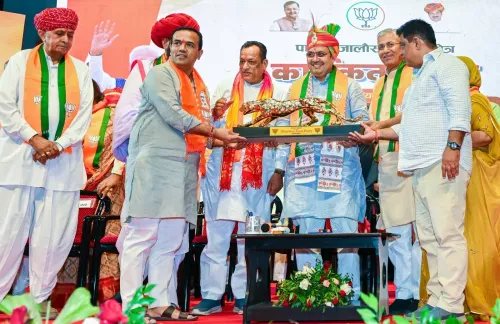
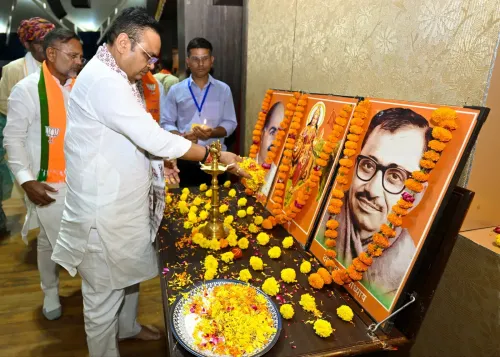
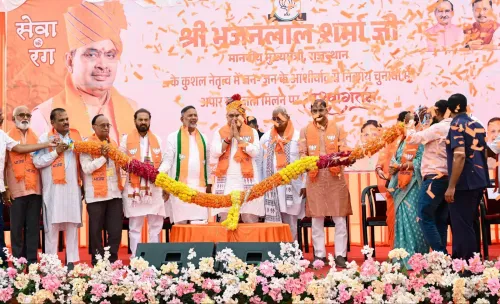
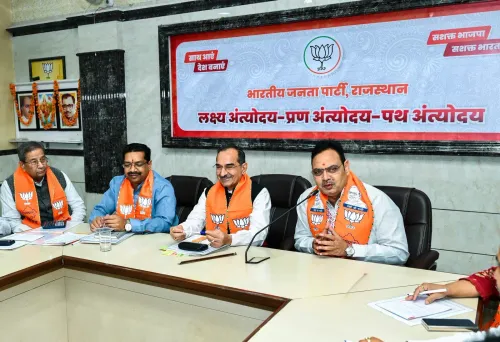
With Rajasthan's gram panchayat elections drawing closer, Rajasthan Chief Minister Bhajan Lal Sharma convened a grassroots strategy meeting with BJP workers from Sikar district at the temple town of Khatu Shyamji on Sunday, 25 October 2026 — taking the party's election engine straight to the heartland of Shekhawati.
Speaking to party workers, elected representatives, and organisational office-bearers gathered at the meeting, Sharma framed the upcoming local body polls as a test of ground-level commitment. 'Janseva ke prati karyakartaon ka samarpan' — the dedication of workers towards public service — he said, is 'the strong foundation of the organisation.'
What Sharma told Sikar's BJP ranks
The Chief Minister outlined a dual agenda for the party's rural cadre: expand public contact (jansamparka) in village areas and ensure that every eligible family receives the benefits of government welfare schemes. Sharma stressed that development work must be driven by the actual needs of rural communities, not just administrative targets.
The meeting covered preparations for the upcoming panchayat elections and ways to strengthen the organisation at the booth level — the basic unit of BJP's electoral machinery. Party leaders and workers present were asked to align their outreach with the expectations of ordinary citizens.
Khatu Shyamji as a political staging ground
Khatu Shyamji, located in Sikar district in Rajasthan's Shekhawati region, is one of the most visited pilgrimage sites in northern India, drawing millions of devotees annually. Its high footfall and cultural resonance make it a natural venue for political gatherings — a platform where a meeting carries both organisational and symbolic weight in the region's rural belt.
Sikar district itself is a significant electoral constituency, spanning a mix of agrarian communities and small towns where welfare delivery and rural infrastructure are perennial voter concerns.
BJP's rural mobilisation playbook in Rajasthan
Since the BJP swept the 2023 Rajasthan assembly elections and installed Sharma as Chief Minister, the state unit has placed grassroots outreach at the centre of its governing strategy. Pre-panchayat meetings of this kind — where the Chief Minister himself sits with district-level workers — are a deliberate signal that the party intends to contest local body polls as seriously as state elections.
The approach is standard BJP electoral architecture: shore up booth-level presence, map welfare scheme beneficiaries, and activate cadre well before official polling dates are announced. What distinguishes Sunday's meeting is the Chief Minister's direct participation, raising the pitch of organisational urgency ahead of the rural vote.
If the party can translate this booth-level energy into panchayat wins, it would cement BJP's dominance from the state secretariat all the way down to the village council — the full vertical of governance that every ruling party in India covets.
Point of View
Translating the 2023 assembly mandate into local body wins would validate BJP's claim to full-spectrum electoral dominance in Rajasthan. The Khatu Shyamji venue choice is also strategic: a pilgrimage hub with massive rural catchment area doubles as an implicit assertion of cultural connect. The real test will be whether booth-level energy converts to votes once election dates are announced.
NationPress
25 Oct 2026
Frequently Asked Questions
Why did CM Bhajan Lal Sharma visit Khatu Shyamji on 25 October 2026?
CM Bhajan Lal Sharma visited Khatu Shyamji in Sikar district to chair a strategy meeting with BJP workers ahead of the upcoming Rajasthan gram panchayat elections, focusing on grassroots strengthening and welfare scheme delivery.
When are Rajasthan gram panchayat elections scheduled?
The exact date and phase schedule for Rajasthan's upcoming gram panchayat elections had not been officially notified as of the CM's meeting on 25 October 2026; the BJP was using this period for preparatory groundwork.
What did CM Bhajan Lal Sharma discuss with Sikar BJP workers?
He discussed preparations for the panchayat elections, ways to strengthen the party organisation at the booth level, expanding public contact in rural areas, and ensuring eligible families receive government welfare scheme benefits.
Where is Khatu Shyamji located and why is it significant?
Khatu Shyamji is a major pilgrimage town in Sikar district in Rajasthan's Shekhawati region. It draws millions of devotees annually and serves as a culturally resonant venue for political and organisational gatherings in the region.
How has BJP Rajasthan approached grassroots outreach since 2023?
Since winning the 2023 assembly elections, BJP Rajasthan has prioritised direct public contact, booth-level presence, and welfare scheme beneficiary mapping, with senior leaders including the Chief Minister personally engaging district-level workers.