Puri Hails IIT Madras Innovators After Mann Ki Baat
Synopsis
Union Petroleum Minister Hardeep Singh Puri celebrated IIT Madras breakthroughs — gold verification, flying EVs, AI defence tools — spotlighted by PM Modi in Mann Ki Baat's 139th edition, framing youth-led deep-tech as the engine of Viksit Bharat 2047.
Key Takeaways
PM Narendra Modi highlighted IIT Madras innovations in the 139th edition of Mann Ki Baat on October 25, 2026 .
Innovations cited include gold purity verification , flying electric vehicles , fast-charging drone batteries , and AI-powered defence applications .
Union Petroleum Minister Hardeep Singh Puri amplified the broadcast, linking the breakthroughs to the Make in India and Viksit Bharat 2047 visions.
The post connects youth-led innovation to the Atmanirbhar Bharat self-reliance framework launched in May 2020 .
Puri described India's young population as 'an extraordinary reservoir of talent, dreams, and determination.' Mann Ki Baat has served as a monthly national broadcast since October 2014 , amplifying citizen stories and policy priorities.
India's demographic dividend is no longer just a statistic — it is being soldered, coded, and test-flown at IIT Madras. Union Petroleum Minister Hardeep Singh Puri amplified the message on Sunday, October 25, 2026, praising the youth-led deep-tech breakthroughs that Prime Minister Narendra Modi spotlighted in the 139th edition of Mann Ki Baat.
Puri's post drew a direct line from laboratory to national vision: 'The youth will be the leaders, drivers and beneficiaries of Viksit Bharat and beyond. They are turning ideas into reality with their boundless energy, bold aspirations, and confidence.' The innovations Modi highlighted range from gold purity verification systems and flying electric vehicles to fast-charging batteries for drones and AI-powered defence applications — each one a node in India's ambition to export technology rather than import it.
What IIT Madras Put on the Mann Ki Baat Stage
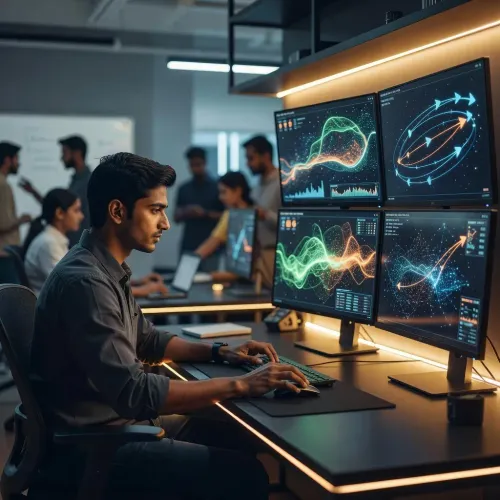
IIT Madras has long been one of India's most prolific deep-tech incubators, and the Prime Minister's decision to name it in a national broadcast is a signal in itself. The specific innovations cited — gold purity verification, electric flying vehicles, fast-charging drone batteries, and AI-driven defence tools — span consumer finance, urban mobility, logistics, and national security. That breadth matters. It is not a single headline; it is an argument that institutional research can simultaneously serve a street-level goldsmith and a frontline defence application.
Puri framed this as proof of 'indigenous research and entrepreneurial ambition' addressing 'real-world challenges' — language that maps precisely onto the Atmanirbhar Bharat campaign launched in May 2020, which repositioned self-reliance as an innovation imperative, not merely an import-substitution exercise.
Mann Ki Baat as a Policy Megaphone
Mann Ki Baat has run as a monthly radio address since October 2014, and over more than a decade it has evolved into something more than a feel-good broadcast. When the Prime Minister names a specific institution or technology, it tends to send a signal to ministries, funding bodies, and procurement desks. Puri's immediate amplification on social media — watched by a large professional and policy-engaged audience — compounds that signal further.
The timing also reinforces the Make in India narrative, the flagship manufacturing self-reliance drive launched in September 2014. What began as a pitch to global manufacturers to set up factories on Indian soil has gradually incorporated a second chapter: home-grown startups and IIT spinouts that build for India first and sell to the world next.
Youth as the Architecture of Viksit Bharat 2047
Puri closed his post with the overarching frame: 'With one of the world's largest young populations, India has an extraordinary reservoir of talent, dreams, and determination.' Viksit Bharat — the government's vision for a fully developed India by 2047, a century after independence — is explicitly built on converting that demographic reservoir into economic and technological leadership. The argument is structural: a young, educated, innovation-oriented population is not just a growth asset; it is the primary mechanism by which a middle-income country breaks into the top tier.
Every Mann Ki Baat that names a specific young innovator or institution by name is, in that sense, doing double duty — it celebrates an achievement and simultaneously tells the next generation of researchers that the national broadcast is watching.
The soldering irons are lit. The question now is whether the policy architecture — funding, procurement, regulatory sandboxes — keeps pace with the ideas pouring out of the labs.
Point of View
The messaging tries to move the national narrative from aspirational demographics to demonstrated technological output. The choice of application areas — EVs, drones, AI-defence — is deliberate: they straddle commercial and strategic sectors, making the case that indigenous innovation is both an economic and a security argument. The real test will come in subsequent budget cycles and procurement decisions, where rhetoric either converts into rupees or quietly fades.
NationPress
25 Oct 2026
Frequently Asked Questions
What did PM Modi say about IIT Madras in Mann Ki Baat?
In the 139th edition of Mann Ki Baat on October 25, 2026, PM Modi highlighted breakthrough innovations from IIT Madras including gold purity verification systems, flying electric vehicles, fast-charging batteries for drones, and AI-powered defence applications.
What is Viksit Bharat and when is the target year?
Viksit Bharat is the Indian government's vision to make India a fully developed nation by 2047, marking a century of independence, with youth-led innovation and indigenous technology identified as core drivers.
What is Mann Ki Baat and how often does PM Modi address it?
Mann Ki Baat is a monthly radio address by Prime Minister Narendra Modi that began in October 2014. It highlights citizen stories, national priorities, and policy themes to a nationwide audience.
What is the Make in India initiative?
Make in India is a flagship scheme launched in September 2014 to promote domestic manufacturing, reduce import dependence, and position India as a global manufacturing and technology hub.
Why did Hardeep Singh Puri post about Mann Ki Baat?
As a senior Union Minister and BJP leader, Hardeep Singh Puri amplified PM Modi's Mann Ki Baat remarks to extend the message about IIT Madras innovations and India's deep-tech ambitions to his social-media audience.