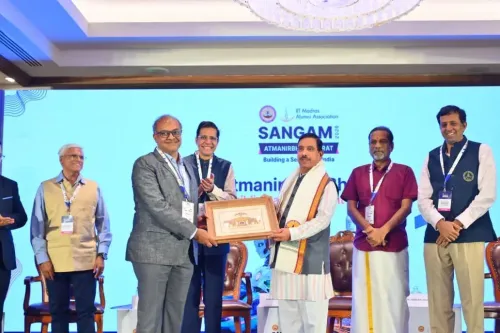
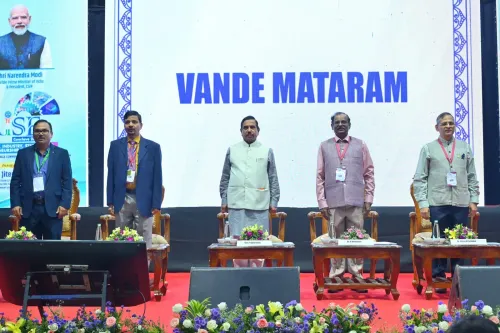
Pralhad Joshi addresses IIT Madras Sangam 2026 in Bengaluru
Synopsis
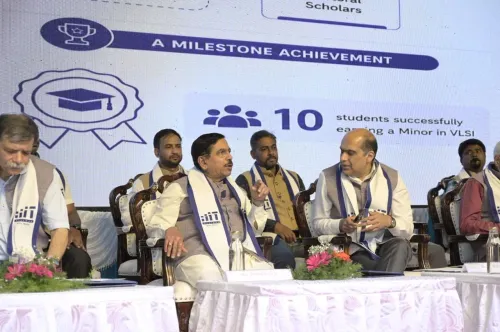
Union Minister Pralhad Joshi addressed IIT Madras's Sangam 2026 alumni conference in Bengaluru on 26 September, calling on senior alumni to mentor innovators, commercialise technology and connect India's deep-tech ecosystem to global markets under the Atmanirbhar Bharat and Viksit Bharat 2047 vision.
Key Takeaways
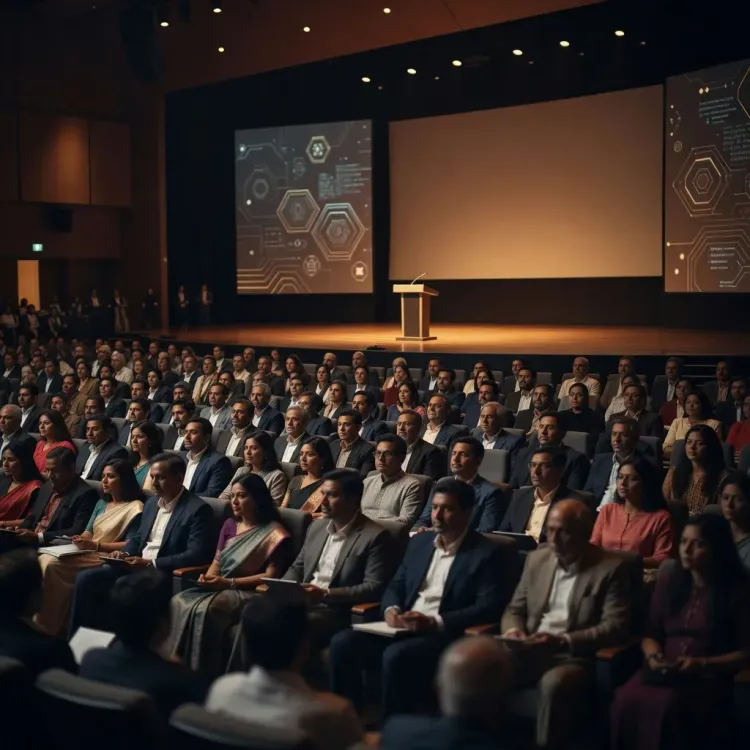
Pralhad Joshi spoke at the seventh edition of Sangam 2026 , the IIT Madras alumni conference held in Bengaluru on 26 September 2026 .
The conference theme was 'Atmanirbhar Bharat — Building a Self-Reliant India' , linking the event directly to the government's 2020 self-reliance policy framework.
Joshi called on senior IIT Madras alumni to mentor young innovators, accelerate technology commercialisation, and support deep-tech entrepreneurship.
He urged the alumni network to connect India's innovation ecosystem to global markets and opportunities .
The speech aligns with the government's Viksit Bharat 2047 vision to make India a developed economy by the centenary of independence.
IIT Madras was cited as a model for converting scientific research into real-world industrial solutions .
In Bengaluru's buzzing deep-tech corridor, Union Minister Pralhad Joshi stepped up to address the seventh edition of Sangam 2026 — the annual alumni conference of IIT Madras — on Saturday, 26 September 2026, anchoring his remarks to the vision of an Atmanirbhar Bharat (self-reliant India) and the government's Viksit Bharat 2047 development goal.
Posting in Kannada on X, Joshi described the conference as 'moments spent addressing the convergence of technology, education, industry and entrepreneurship' — a gathering he framed as the living embodiment of India's national innovation journey. 'IIT Madras continuously proves how scientific research and knowledge can be converted into solutions for modern technology, industries and real-world challenges,' he wrote.
The call Joshi put to IIT Madras seniors
The minister did not limit himself to applause. He issued a direct call to senior IIT Madras alumni to play a more active role on four specific fronts: mentoring young innovators, accelerating the commercialisation of technology, supporting deep-tech entrepreneurship, and connecting India's innovation ecosystem to global markets and opportunities. The ask was pointed — India's premier institutions should not just teach; they should translate.
Sangam 2026 and the Atmanirbhar Bharat thread
Organised under the theme 'Atmanirbhar Bharat — Swavalambi Bharatada Nirmana' (Building a Self-Reliant India), Sangam 2026 brought together IIT Madras alumni in Bengaluru, Karnataka's capital and one of Asia's densest clusters of IT, aerospace and deep-tech startups. The choice of city underlined the conference's practical ambition: this was not a nostalgia reunion but an industry-facing platform.
The Atmanirbhar Bharat framework — announced by Prime Minister Narendra Modi in May 2020 — set out five pillars: economy, infrastructure, systems, vibrant demography and demand. Its declared aim was to reduce India's import dependence across manufacturing, technology and defence, and to give domestic innovation chains the policy headroom to scale.
IITs as engines of the Viksit Bharat 2047 mission
Joshi's speech fits neatly into a broader pattern that has shaped India's higher-education policy since 2014: systematically expanding the mandate of IITs from teaching institutions into research-commercialisation and startup-incubation hubs. The Viksit Bharat 2047 vision — articulated in official government documents and budget speeches from 2023 onward — sets the target of a developed economy by India's centenary of independence. Deep-tech incubators at IITs are seen as a critical pipeline feeding that goal.
The Startup India initiative, launched in 2016, laid earlier groundwork by easing the regulatory path for technology ventures. What Joshi urged at Sangam 2026 amounts to the next layer: alumni networks and senior professionals actively closing the gap between laboratory research and live market deployments — globally, not just domestically.
With the next Union Budget likely to be watched for fresh allocations to deep-tech funds and IIT incubation centres, Joshi's Bengaluru address signals that the political case for those investments is being made loudly — and directly to the people who would carry them out.
Point of View
The BJP signals it wants the prestige of elite technical institutions aligned with its Viksit Bharat 2047 political brand. The specific four-point ask — mentoring, commercialisation, deep-tech support, global linkage — also functions as a preview of the policy asks the government may formalise in the next budget cycle. It is a soft-power investment as much as a policy speech.
NationPress
26 Sept 2026
Frequently Asked Questions
What is Sangam 2026?
Sangam 2026 is the seventh edition of the IIT Madras alumni association's annual conference, held in Bengaluru with a focus on technology, education, industry and entrepreneurship under the theme of building a self-reliant India.
What did Pralhad Joshi say at IIT Madras Sangam 2026?
Joshi called on senior IIT Madras alumni to mentor young innovators, speed up technology commercialisation, support deep-tech entrepreneurship, and link India's innovation ecosystem to global markets, framing this as essential for the Viksit Bharat 2047 goal.
What is Atmanirbhar Bharat?
Atmanirbhar Bharat is a self-reliance policy framework announced by Prime Minister Narendra Modi in May 2020, built on five pillars — economy, infrastructure, systems, vibrant demography and demand — aimed at reducing India's dependence on imports across manufacturing, technology and defence.
What is Viksit Bharat 2047?
Viksit Bharat 2047 is the Indian government's overarching development vision to transform India into a fully developed economy by 2047, the centenary of independence, articulated in official documents and budget speeches from 2023 onward.
Why was the IIT Madras alumni event held in Bengaluru?
Bengaluru is Karnataka's capital and one of Asia's leading hubs for IT, aerospace and deep-tech startups, making it a fitting venue for a conference centred on technology commercialisation and entrepreneurship.