Pralhad Joshi at RISE Conclave 2026: Agri-Tech Key to Viksit Bharat
Synopsis
Union Consumer Affairs Minister Pralhad Joshi addressed the RISE Conclave 2026 valedictory in Bengaluru on June 14, championing agri-food technology and CSIR-led indigenous innovation as critical drivers of the Viksit Bharat 2047 vision, and calling for stronger research-industry collaboration to scale solutions for rural India.
Key Takeaways
Minister Pralhad Joshi addressed the valedictory session of RISE Conclave 2026 in Bengaluru on June 14, 2026 .
He emphasised that agri-food technology and innovation are critical to achieving the Viksit Bharat 2047 national development goal.
Joshi called for indigenous lab-developed technologies to be scaled to mass-market adoption to benefit common citizens and strengthen the rural economy .
He praised CSIR institutions for their commendable contribution to India's self-reliance in science and food technology.
Narayanan , CSIR-CFTRI Director Dr.
Giridhar Parvatam , CSIR-NAL Director Shri Abhay Pashilkar , and CSIR-HPI Director Dr.
Gopalakrishna Patra were among the dignitaries present.
The minister stressed the need for research and industry collaboration to position India as a global innovation hub under #AatmanirbharBharat .
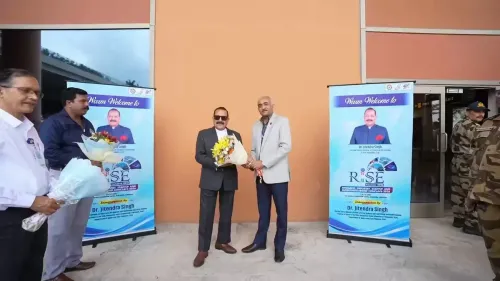
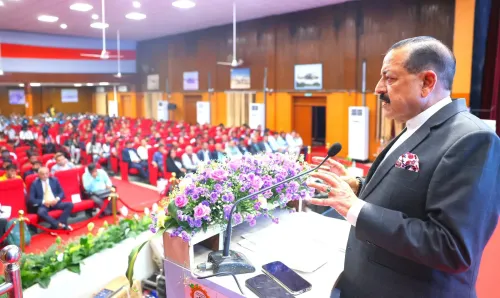
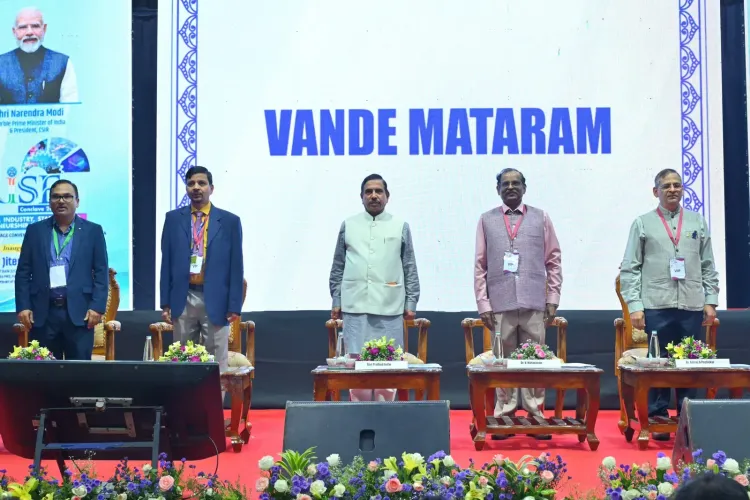
Union Consumer Affairs Minister Pralhad Joshi on Sunday, June 14, 2026, addressed the valedictory session of the RISE Conclave 2026 in Bengaluru, urging young researchers and entrepreneurs to scale indigenous agri-food technologies to the market as a cornerstone of India's development agenda.
Context
Speaking at the closing ceremony of #RISEConclave2026, Minister Joshi underlined the centrality of agri-food technology and innovation in achieving the Viksit Bharat 2047 vision — the national goal of transforming India into a fully developed economy by the centenary of its independence. His remarks, posted on X in both Kannada and English, captured the spirit of the event: 'ಲ್ಯಾಬ್ಗಳಲ್ಲಿ ಸಿದ್ಧವಾಗುವ ತಂತ್ರಜ್ಞಾನಗಳು ಮಾರುಕಟ್ಟೆಯನ್ನು ತಲುಪಿ ಸಾಮಾನ್ಯ ಜನರ ಜೀವನವನ್ನು ಸುಗಮಗೊಳಿಸಬೇಕು' ['Technologies developed in laboratories must reach the market and ease the lives of common people']. He also praised the contribution of CSIR institutions in putting India on a strong path toward that goal.
The conclave, held in Bengaluru — India's foremost technology and research hub — brought together young researchers, agri-food innovators, and startup founders. Joshi said he was 'inspired by the enthusiasm of our young entrepreneurs who are strengthening the rural economy through food security and technology.'
Policy Backdrop
The event sits at the intersection of two flagship national programmes. The Aatmanirbhar Bharat initiative, launched in 2020, set the template for indigenous technology development and reducing import dependence, with an explicit push for translating laboratory research into market-ready solutions. The Viksit Bharat @2047 vision, articulated in 2022–23, built on this foundation by emphasising long-term R&D collaboration across public institutions and private enterprise.
The Council of Scientific and Industrial Research (CSIR), India's largest public R&D network, has been a key vehicle for both programmes. Its constituent labs — including CSIR-CFTRI (Central Food Technological Research Institute) and CSIR-NAL (National Aerospace Laboratories) — have historically worked on applied science with direct socioeconomic impact, particularly in food processing and rural technology. Minister Joshi specifically called out the need for 'indigenous solutions developed in-house and expanded at a mass scale.'
Stakeholders and Impact
The conclave drew a high-profile audience of science and technology leaders. Among those present were ISRO Chairman Dr. V. Narayanan, CSIR-CFTRI Director Dr. Giridhar Parvatam, CSIR-NAL Director Shri Abhay Pashilkar, and CSIR-HPI Director Dr. Gopalakrishna Patra, alongside scientists and other distinguished guests. The presence of the ISRO chief at an agri-food innovation conclave signals the growing cross-sectoral ambition of India's science establishment, with space-based technologies increasingly relevant to agriculture and rural logistics.
For the agri-food startup ecosystem, ministerial attention at this level carries policy weight. Young entrepreneurs working on food security solutions for rural India stand to benefit from stronger academia-industry linkages, which Joshi explicitly called for, stressing that 'research and industry must work together to make India a global hub of innovation.'
What's Next
The immediate focus will be on whether the momentum from RISE Conclave 2026 translates into concrete policy follow-through — particularly around R&D funding for CSIR agri-food projects and commercialisation support for startups. Upcoming Union Budget deliberations and science ministry announcements will be closely watched for fresh allocations that could accelerate the lab-to-market pipeline Joshi advocated. With India's rural economy still heavily dependent on agriculture, the push to embed technology-driven food security solutions at scale remains both a political priority and an economic imperative under the Viksit Bharat 2047 framework.
Point of View
Not merely as a welfare ministry. By invoking both Aatmanirbhar Bharat and Viksit Bharat 2047 in the same breath as CSIR's agri-food work, the minister is stitching together a policy arc that links scientific self-reliance to rural economic empowerment — a message with clear electoral resonance in Karnataka and beyond. The presence of ISRO's chairman alongside food-tech directors also reflects an emerging cross-institutional alignment that could shape how science budgets are justified in upcoming fiscal cycles. Whether this translates into funding or regulatory reform for agri-food startups will be the real test of the conclave's political weight.
NationPress
14 Sept 2026
Frequently Asked Questions
What is RISE Conclave 2026?
RISE Conclave 2026 is a research and innovation conclave held in Bengaluru focused on young researchers and entrepreneurs working in agri-food technology and related fields, aimed at advancing India's self-reliance and development goals.
What did Pralhad Joshi say at RISE Conclave 2026?
Minister Pralhad Joshi called for agri-food technologies developed in laboratories to be scaled to mass markets to benefit ordinary citizens, praised CSIR institutions for their contributions, and stressed the need for research-industry collaboration to make India a global innovation hub.
What is Viksit Bharat 2047?
Viksit Bharat 2047 is India's national vision to become a fully developed economy by 2047, the centenary of independence, with technology-driven growth and R&D collaboration as key pillars.
What is CSIR and why is it important for agri-food technology?
CSIR, the Council of Scientific and Industrial Research, is India's largest public R&D network. Its labs like CSIR-CFTRI have worked for decades on food processing and rural technology, making it central to the government's push for indigenous, scalable agri-food solutions.
Who attended RISE Conclave 2026 with Pralhad Joshi?
ISRO Chairman Dr. V. Narayanan, CSIR-CFTRI Director Dr. Giridhar Parvatam, CSIR-NAL Director Shri Abhay Pashilkar, CSIR-HPI Director Dr. Gopalakrishna Patra, and various scientists and dignitaries attended the conclave alongside Minister Joshi.