Pralhad Joshi at IIT Madras SANGAM 2026: Alumni Must Lead India's Deep-Tech Push
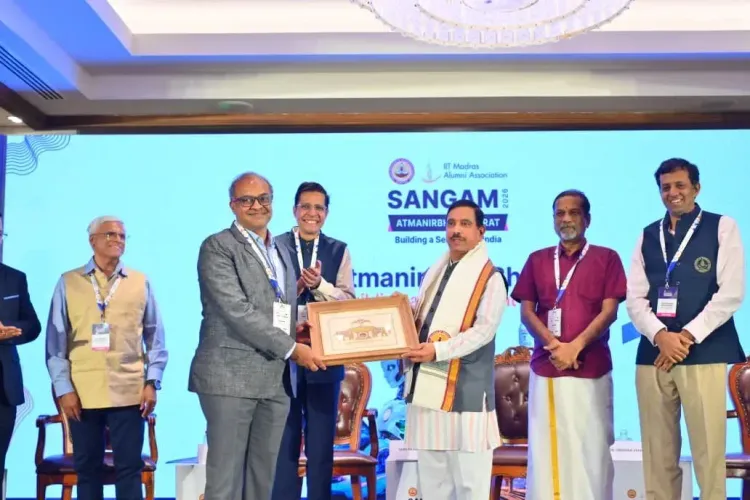
Synopsis
Union Minister Pralhad Joshi addressed IIT Madras Alumni Association's SANGAM 2026 on September 26, calling on alumni to mentor innovators, accelerate tech commercialisation, support deep-tech startups, and connect India's ecosystem with global markets under the Atmanirbhar Bharat and Viksit Bharat 2047 frameworks.
Key Takeaways
Union Minister Pralhad Joshi spoke at the 7th edition of IIT Madras SANGAM on September 26, 2026 .
The summit's theme was 'Atmanirbhar Bharat – Building a Self-Reliant India' , linking academia, industry and entrepreneurship.
Joshi made a four-point ask of alumni: mentor young innovators, accelerate technology commercialisation, support deep-tech entrepreneurship, and connect India with global markets.
The Atmanirbhar Bharat initiative was launched in May 2020 ; the Viksit Bharat 2047 vision was formally articulated in 2023 .
IIT Madras has established one of India's strongest on-campus deep-tech startup ecosystems, making it a key node in the government's indigenisation push.
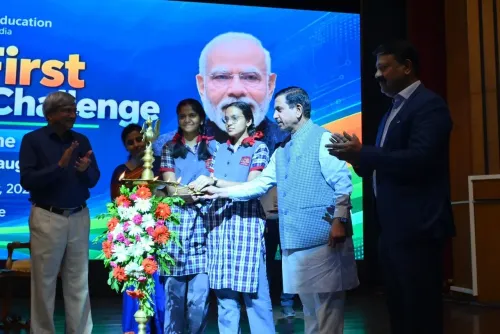
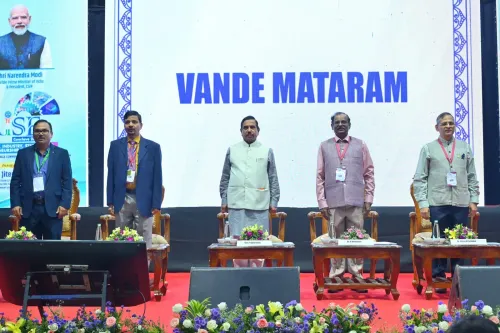
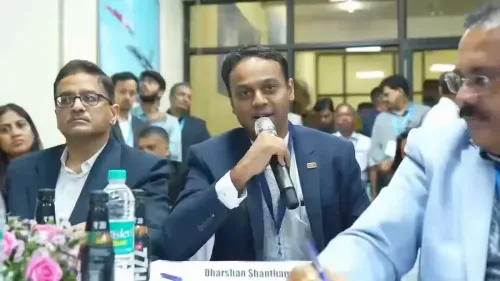
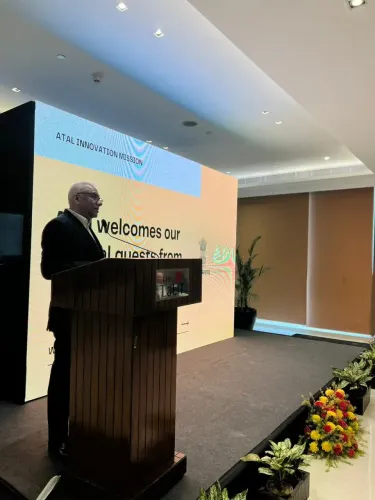
India's innovation ambition found a prominent platform on Saturday, September 26, 2026, when Union Consumer Affairs and New and Renewable Energy Minister Pralhad Joshi addressed the 7th edition of the IIT Madras Alumni Association's SANGAM summit, urging one of the country's most accomplished alumni networks to put their weight behind Viksit Bharat 2047.
The summit's theme — Atmanirbhar Bharat: Building a Self-Reliant India — was not window-dressing. It framed a pointed ask: that IIT Madras graduates stop being spectators and become architects of India's technology future. Joshi called on alumni to take on four concrete roles — mentoring young innovators, accelerating technology commercialisation, backing deep-tech entrepreneurship, and bridging India's innovation ecosystem with global markets.
Why SANGAM, and why now
The SANGAM summit is the flagship convening of the IIT Madras Alumni Association, designed to fuse academia, industry and entrepreneurship under one roof. By its seventh edition, it has evolved into a live demonstration of what the institute's own leadership describes as translating research and knowledge into enterprises and solutions for real-world challenges. The minister's presence signals how seriously the government now views such forums — not as feel-good reunions, but as active levers of national policy execution.
IIT Madras has, over the past decade, built one of India's densest deep-tech startup ecosystems, with its on-campus incubator spawning companies across semiconductor design, healthcare diagnostics and clean energy. That track record makes it a natural fit for the government's indigenisation narrative.
Atmanirbhar Bharat's pivot to talent networks
When Prime Minister Narendra Modi launched the Atmanirbhar Bharat initiative in May 2020, the immediate focus was on supply-chain resilience and manufacturing capacity. Six years on, the emphasis has visibly shifted toward the demand side of the innovation chain: who will commercialise research, who will build deep-tech companies, and who will pull Indian startups into global value chains. That is precisely the gap Joshi was pointing alumni toward on Saturday.
The Viksit Bharat 2047 vision — formally articulated in 2023 as India's roadmap to developed-economy status by its centenary of independence — depends on exactly this kind of private-sector and diaspora mobilisation. Ministers addressing IIT forums to enlist alumni networks has become a consistent instrument of that strategy.
The ask: mentors, capital and global doors
Joshi's four-point call-to-action was deliberately practical. Mentoring young innovators addresses the thin middle layer between laboratory discovery and market-ready product. Technology commercialisation acceleration targets the notorious 'valley of death' where Indian research stalls. Support for deep-tech entrepreneurship points at capital-intensive sectors — semiconductors, space, defence, clean energy — where patient private money is scarce. And the global-market linkage ask recognises that many IIT Madras alumni sit inside multinational corporations, venture funds and research labs abroad, and carry the networks to open doors India's startups cannot unlock alone.
Taken together, the ask is less a speech and more a recruitment brief — one that positions an alumni community as a distributed national asset rather than a successful diaspora simply sending remittances home.
Whether the alumni of India's most celebrated technical university answer that call in measurable ways will be one quiet benchmark of how seriously the Atmanirbhar framework is being internalised beyond government corridors.
Point of View
Specifically to mobilise private and diaspora networks for technology indigenisation. The Atmanirbhar Bharat framework has visibly pivoted from its 2020 manufacturing focus toward the commercialisation pipeline — a harder, slower problem that requires human networks as much as policy instruments. Positioning IIT Madras alumni as a 'distributed national asset' is a strategic framing that subtly extends government reach into corporate boardrooms and venture funds globally. The real test of this approach will be whether it catalyses traceable mentoring programmes, technology-transfer structures, or alumni-led funding vehicles in the next budget cycle.
NationPress
26 Sept 2026
Frequently Asked Questions
What is SANGAM 2026 organised by IIT Madras Alumni Association?
SANGAM is the flagship annual summit of the IIT Madras Alumni Association that brings together alumni from academia, industry and entrepreneurship to advance innovation and self-reliance goals. The 2026 edition was its seventh, themed around 'Atmanirbhar Bharat – Building a Self-Reliant India'.
What did Pralhad Joshi say at IIT Madras SANGAM 2026?
Union Minister Pralhad Joshi called on IIT Madras alumni to mentor young innovators, accelerate technology commercialisation, support deep-tech entrepreneurship, and help connect India's innovation ecosystem with global markets.
What is the Viksit Bharat 2047 vision?
Viksit Bharat 2047 is India's national development roadmap to achieve developed-economy status by 2047, the centenary of independence. It was formally articulated in 2023 and guides government policy across sectors including technology and innovation.
When was Atmanirbhar Bharat launched and what does it cover?
Atmanirbhar Bharat was launched by Prime Minister Narendra Modi in May 2020. It is a self-reliance policy framework covering manufacturing, technology development and supply-chain resilience across sectors.
Why is IIT Madras important for India's deep-tech ecosystem?
IIT Madras hosts one of India's most active on-campus deep-tech incubators, generating startups in semiconductor design, clean energy and healthcare diagnostics. Its alumni network spans global corporations and venture funds, making it a key bridge between Indian research and international markets.