Puri highlights Punjab women weaving livelihoods from natural cotton
Synopsis
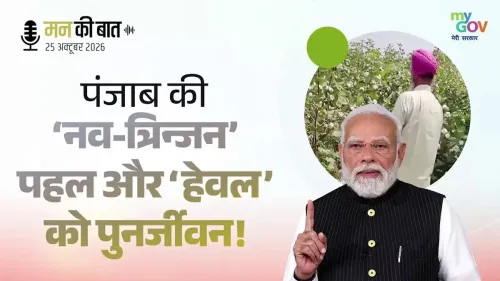
Union Petroleum Minister Hardeep Singh Puri has highlighted Punjab's Nav-Trinjan initiative by Kheti Virasat Mission, which connects natural cotton farming with traditional weaving to empower rural women economically — citing it as a living example of Atmanirbhar Bharat goals.
Key Takeaways
Union Petroleum Minister Hardeep Singh Puri praised Punjab's Nav-Trinjan initiative on 25 October 2026 via a #MannKiBaat -tagged post.
Kheti Virasat Mission , a Punjab-based organisation, runs Nav-Trinjan, linking natural cotton cultivation with traditional handloom weaving.
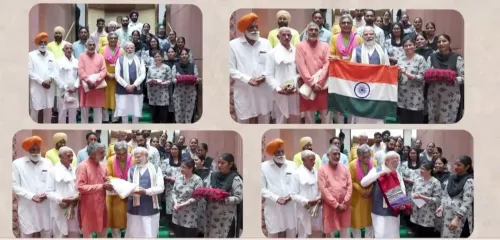
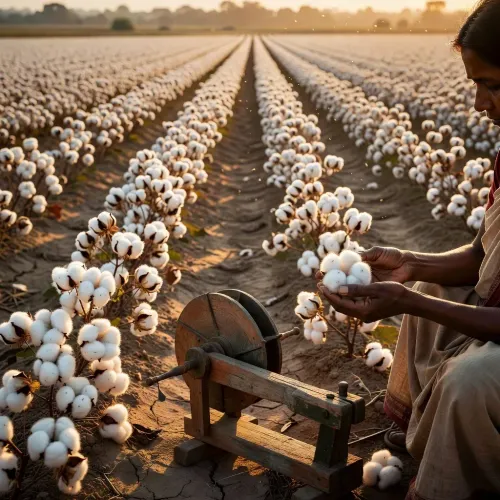
Women previously working as farm labourers or domestic workers are now producing handmade fabrics, shawls, and towels.
The initiative aligns with the central government's Paramparagat Krishi Vikas Yojana (launched 2015 ) and the Atmanirbhar Bharat campaign ( 2020 ).
Puri framed the model as proof that linking tradition with opportunity simultaneously strengthens village economies and advances self-reliance goals.
From farm labour to handloom artisan — that is the journey Union Petroleum Minister Hardeep Singh Puri spotlighted on Sunday, 25 October 2026, praising a Punjab-based initiative that is turning natural cotton fields into a springboard for women's economic independence. The post, tagged #MannKiBaat, draws national attention to a quiet but consequential revival happening in rural Punjab.
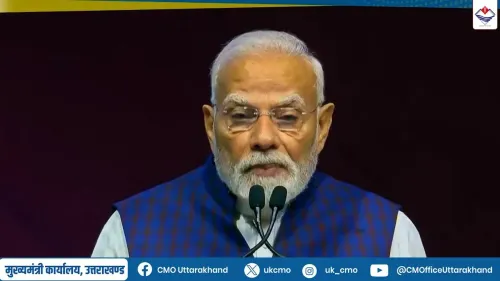
Puri wrote — in Hindi — that under PM Narendra Modi's guidance, the Modi government is 'continuously working to empower farmers, promote natural farming, and create new opportunities in the rural economy.' He singled out Kheti Virasat Mission, a Punjab-based organisation, and its initiative called 'Nav-Trinjan' as 'a beautiful example of this thinking' — one where natural cotton farming is being linked to traditional weaving so that women gain new skills and livelihood opportunities.
Women who worked fields now weave shawls and towels by hand
The minister's post paints a vivid before-and-after: women who once worked as daily-wage labourers in fields or as domestic workers are today producing 'beautiful fabrics, shawls and towels with their own hands.' Puri describes this not merely as a skill revival but as 'a story of women's confidence, economic self-reliance, and giving new identity to indigenous traditions.'
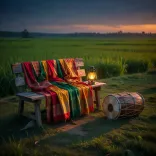
The Nav-Trinjan name itself is evocative — trinjan refers to the traditional gathering space in Punjab villages where women would spin and weave together, a practice that had faded with the arrival of chemical-intensive commercial farming and mass-produced textiles. The initiative attempts to rebuild that social and economic fabric, literally and figuratively.
Natural farming meets Atmanirbhar Bharat goals
The broader policy context is significant. The central government has, since 2015, run the Paramparagat Krishi Vikas Yojana to promote organic and natural farming practices at the state level. That scheme, combined with the Atmanirbhar Bharat campaign launched in 2020, created an institutional push to link agricultural output with indigenous craft and reduce dependence on synthetic inputs and imported goods simultaneously.
Punjab, a state synonymous with the Green Revolution and heavy agrochemical use, is an especially loaded setting for such an initiative. A shift toward natural cotton there carries both environmental and economic symbolism: lower input costs for farmers, chemical-free fibre for weavers, and a product — handloom textiles — that commands premium market value.
Puri closes with a line that doubles as a policy argument: 'From natural farming to indigenous products — when tradition gets opportunity, the village economy strengthens, and so does the dream of an Atmanirbhar Bharat.' That framing — tradition as infrastructure for self-reliance — is a recurring motif in Mann Ki Baat episodes, where the Prime Minister regularly surfaces such state-level examples to build a national narrative around rural enterprise.
A model Punjab may export to other states
The question now is whether the Nav-Trinjan model travels. Natural-farming-plus-weaving clusters could take root in cotton-growing belts of Maharashtra, Telangana, and Gujarat, states already engaged with organic agriculture programmes. Mann Ki Baat's national broadcast reach gives such spotlights a track record of triggering imitation: once a grassroots initiative is named from the national pulpit, state governments and civil-society groups often replicate the design.
For women in Punjab's villages, the loom is no longer just heritage. It is a paycheck — and, by the minister's telling, a statement of self-worth.
Point of View
Giving it national amplification and a ready audience. More broadly, the natural-farming-plus-craft model is emerging as a template the BJP can deploy across agrarian states to simultaneously address farmer distress, women's unemployment, and the political optics of cultural pride in indigenous crafts.
NationPress
25 Oct 2026
Frequently Asked Questions
What is the Nav-Trinjan initiative in Punjab?
Nav-Trinjan is an initiative by Kheti Virasat Mission, a Punjab-based organisation, that connects natural cotton farming with traditional handloom weaving to give rural women new skills and income opportunities. The name revives the concept of the 'trinjan,' a traditional village gathering where Punjab women would spin and weave together.
What is Kheti Virasat Mission?
Kheti Virasat Mission is a Punjab-based organisation that works to promote natural and traditional farming practices. Its Nav-Trinjan initiative has gained national attention for linking chemical-free cotton cultivation with artisan weaving to generate rural livelihoods.
Why did Hardeep Singh Puri post about natural farming and women weavers?
Puri used the post, tagged #MannKiBaat, to highlight how grassroots initiatives in Punjab align with the Modi government's goals of promoting natural farming, empowering rural women, and strengthening the village economy under the Atmanirbhar Bharat vision.
What is the Paramparagat Krishi Vikas Yojana?
Paramparagat Krishi Vikas Yojana is a central government scheme launched in 2015 to promote organic and natural farming practices across Indian states, providing financial support and training to farmers transitioning away from chemical inputs.
How does the Nav-Trinjan model support Atmanirbhar Bharat?
By producing natural cotton without chemical inputs and converting it into handloom textiles locally, the model reduces import dependence, supports indigenous craft traditions, and creates self-employment for rural women — all core goals of the Atmanirbhar Bharat campaign launched in 2020.