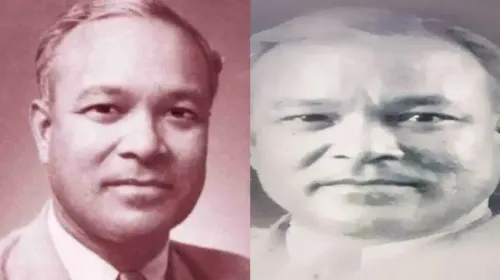
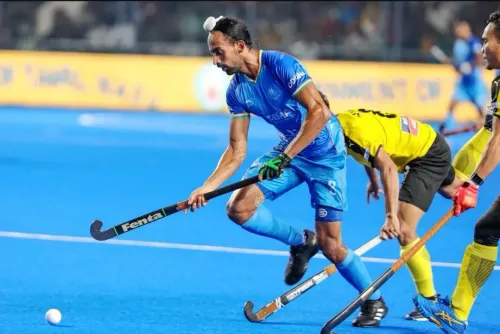
Hockey India Mourns Olympic Medallist Gurbax Singh Grewal, Dead at 84
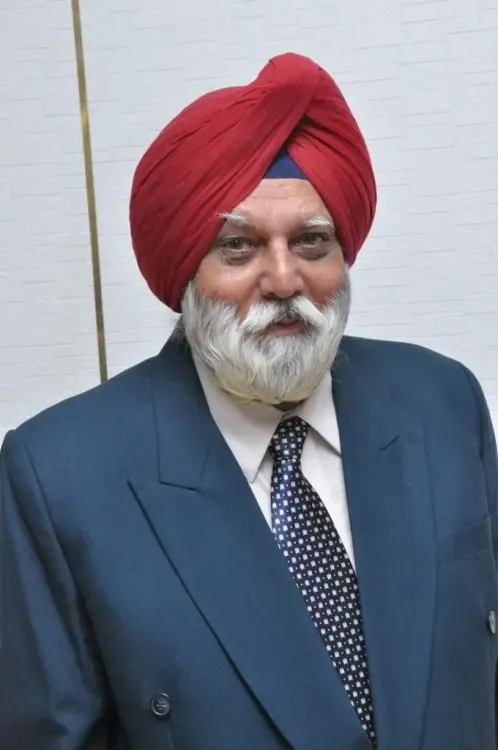
Synopsis
Gurbax Singh Grewal, the Indian hockey forward who won Olympic bronze at the 1968 Mexico City Games and made history by representing India alongside his brother, has passed away at 84. His dual legacy as an Olympian and grassroots hockey administrator leaves an irreplaceable void in Indian sport.
Key Takeaways
Gurbax Singh Grewal , Indian hockey Olympian and 1968 Mexico City Olympic bronze medallist , passed away on April 25, 2025 , at the age of 84 .
He was a speedy forward who represented Western Railways and was a key member of India's 1968 Olympic bronze medal-winning hockey squad .
He made Indian hockey history by playing alongside his brother Balbir Singh Grewal at the 1968 Olympics — the first time two real brothers represented India at the same Olympic Games.
Born on April 1, 1942 , in Lyallpur, Punjab Province of British India (now Faisalabad, Pakistan), he later moved to Mumbai to pursue hockey.
Post-retirement, he coached multiple Mumbai hockey teams and served as Honorary Secretary of the Mumbai Hockey Association .
Hockey India President Dilip Tirkey and Secretary General Bhola Nath Singh both issued formal condolence statements honouring his legacy.
New Delhi, April 25: Gurbax Singh Grewal, a celebrated former Indian hockey player and Olympic bronze medallist from the 1968 Mexico City Games, passed away at the age of 84, sending waves of grief across the Indian sporting community. Hockey India on Saturday, April 25, formally expressed its deep condolences, honouring his extraordinary contributions as a player, coach, and administrator who shaped Indian hockey for decades.
A Bronze Legacy Forged in Mexico City
Gurbax Singh Grewal was a key member of the Indian national hockey team that clinched the bronze medal at the 1968 Mexico City Olympics — one of the most celebrated chapters in Indian sporting history. Known for his blistering pace as a forward, he was among the most dynamic attackers of his generation.
What made his Olympic appearance even more historic was the fact that he represented India alongside his brother, Balbir Singh Grewal — marking the first time in Indian hockey history that two real brothers played together for the country at the same Olympic Games. This milestone remains a unique and cherished record in the annals of Indian hockey.
From Lyallpur to Mumbai: A Life Devoted to Hockey
Born on April 1, 1942, in Lyallpur, Punjab Province of British India (present-day Faisalabad, Pakistan), Gurbax Singh Grewal relocated to Mumbai in his early twenties with a singular ambition — to pursue hockey at the highest level. He went on to represent Western Railways, where he built a distinguished career both on and off the field.
His association with Western Railways extended beyond his playing days. He eventually retired as a Sports Officer with the organisation, a role that reflected his lifelong commitment to nurturing athletic talent within institutional frameworks.
Mentor, Coach, and Administrator: His Off-Field Impact
After hanging up his stick, Gurbax Singh Grewal remained deeply embedded in the sport's grassroots ecosystem. He coached multiple Mumbai-based hockey teams for several years, passing on his technical knowledge and competitive spirit to younger generations of players.
He later served as the Honorary Secretary of the Mumbai Hockey Association, a role in which he worked tirelessly to strengthen the administrative backbone of hockey in Maharashtra. His dual identity — as a decorated Olympian and a dedicated administrator — made him a rare and irreplaceable figure in Indian hockey.
Hockey India Pays Tribute: Key Statements
Hockey India President Dilip Tirkey said, "The Indian hockey fraternity is deeply saddened by the passing of Gurbax Singh Grewal ji. He was a valued member of India's Olympic medal-winning team and a true servant of the sport whose contributions extended far beyond the field. His passion for hockey and his dedication towards nurturing future generations will always be remembered. On behalf of Hockey India, I extend my heartfelt condolences to his family and loved ones in this hour of grief."
Hockey India Secretary General Bhola Nath Singh added, "We have lost a respected member of the Indian hockey family today. Gurbax Singh Grewal ji's achievements as a player and his contributions as an administrator have left a lasting impact on Indian hockey. His legacy will continue to inspire generations to come. We pray for strength and peace for his family during this difficult time."
Broader Context: India's Fading Hockey Legends
The passing of Gurbax Singh Grewal is a sobering reminder of how rapidly India is losing its 1960s Olympic hockey generation — an era when India dominated world hockey with back-to-back Olympic medals. India won gold at the 1964 Tokyo Olympics and bronze at the 1968 Mexico City Olympics, part of a broader golden run that saw the country claim eight Olympic gold medals in field hockey between 1928 and 1980.
This comes amid a renewed push by Hockey India and the Sports Authority of India (SAI) to revive grassroots hockey infrastructure across the country, particularly in states like Punjab, Odisha, and Jharkhand. The stories and sacrifices of legends like Grewal serve as foundational pillars for this revival narrative.
As India's hockey community mourns the loss of one of its finest, the focus now shifts to ensuring that the legacy of the 1968 Mexico City bronze medal squad is formally documented, celebrated, and used as inspiration for the next generation of Indian hockey stars preparing for the 2028 Los Angeles Olympics.
Point of View
The architects of India's golden Olympic hockey era — men like Grewal who built the sport brick by brick from grassroots to the global stage — often fade from public memory long before they pass. India's hockey revival, backed by corporate sponsorships and government schemes today, stands on the shoulders of these unsung giants. The least the system owes them is formal recognition, documented oral histories, and institutional memory — before the last of that generation is gone.
NationPress
26 Sept 2026
Frequently Asked Questions
Who was Gurbax Singh Grewal?
Gurbax Singh Grewal was a former Indian hockey player and Olympic bronze medallist who represented India at the 1968 Mexico City Olympics. He later served as a coach and as Honorary Secretary of the Mumbai Hockey Association.
When did Gurbax Singh Grewal pass away?
Gurbax Singh Grewal passed away on or around April 25, 2025, at the age of 84. Hockey India officially mourned his death on Saturday, April 25, 2025.
What was Gurbax Singh Grewal's historic achievement at the 1968 Olympics?
Gurbax Singh Grewal was part of India's bronze medal-winning team at the 1968 Mexico City Olympics. He also made history by representing India alongside his brother Balbir Singh Grewal — the first time two real brothers played for India at the same Olympic Games.
What did Hockey India say about Gurbax Singh Grewal's death?
Hockey India President Dilip Tirkey called Grewal a 'true servant of the sport' whose dedication to nurturing future generations will always be remembered. Secretary General Bhola Nath Singh said his legacy will continue to inspire generations to come.
What was Gurbax Singh Grewal's contribution to hockey after retirement?
After retiring as Sports Officer with Western Railways, Gurbax Singh Grewal coached multiple Mumbai hockey teams for many years. He also served as Honorary Secretary of the Mumbai Hockey Association, contributing significantly to hockey administration in Maharashtra.