Hockey World Cup 2026 format: No quarterfinals, pool results carry forward
Synopsis
The FIH Hockey World Cup 2026 has quietly rewritten its own rulebook — no quarterfinals, a carry-forward points system, and pool results that can make or break a team's semi-final shot before the crossover phase even starts. For India, drawn against Pakistan in the men's draw and China in the women's, there is no margin for a slow opening.
Key Takeaways
The FIH Hockey World Cup 2026 runs from 15 to 30 August , jointly hosted by Belgium and the Netherlands .
The traditional quarterfinal stage has been scrapped ; the top two from crossover Pools E and F advance directly to the semi-finals.
A carry-forward rule means the Phase 1 head-to-head result between two teams from the same original pool counts in Phase 2.
India men are in Pool D with England , Pakistan , and Wales ; India women face China , England , and South Africa in Pool D .
Men's coach Craig Fulton stressed that goal difference could be decisive in tightly contested pools.
Semi-finals and classification matches are scheduled for 27–28 August ; women's final on 29 August , men's final on 30 August .
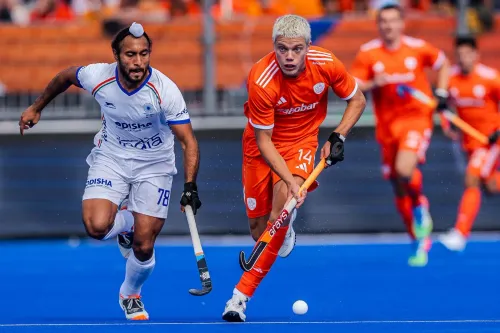
The FIH Hockey Men's and Women's World Cup 2026, jointly hosted by Belgium and the Netherlands from 15 to 30 August, will debut a significantly revamped competition structure — one that eliminates the traditional quarterfinal stage entirely and places far greater weight on pool-stage performance from the very first match.
How the New Format Works
Each competition opens with 16 teams divided across four pools of four, playing from 15 to 20 August. After three pool matches each, teams are redistributed into crossover pools based on their standings. The top two from Pools A and D merge into Pool E, while the top two from Pools B and C form Pool F. Lower-placed teams feed into Pools G and H for classification matches.
The crossover phase, scheduled from 21 to 24 August, introduces a critical carry-forward rule: the result from the Phase 1 head-to-head between two teams that progress from the same original pool is brought into Phase 2. This means a win in the opening stage can hand a team a built-in points advantage before the crossover phase even begins.
The top two finishers from Pool E and Pool F advance directly to the semi-finals, with Pool E winners facing Pool F runners-up and vice versa. There are no quarterfinals.
India's Pool Assignments
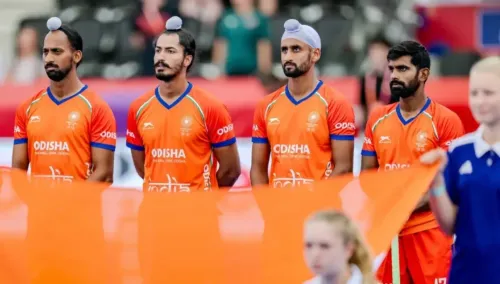
The Indian men's team has been drawn into Pool D alongside England, Pakistan, and Wales. The Indian women's team will contest their Pool D campaign against China, England, and South Africa. Both sides will need to finish in the top two of their respective pools to enter the higher crossover group and keep semi-final ambitions alive.
What the Coaches Said
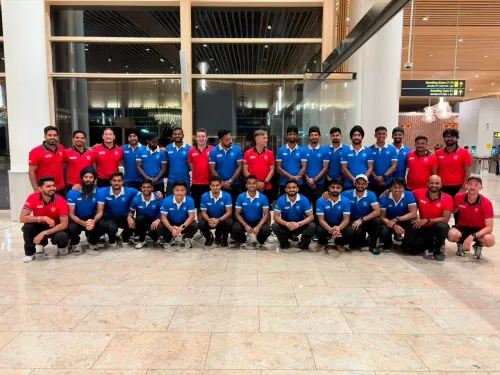
Indian women's chief coach Sjoerd Marijne acknowledged a personal preference for the traditional format but said his side would adapt. 'It's an interesting schedule, but my preference is to have quarterfinals in a tournament format. I understand that for higher-ranked teams in the world they will prefer this, but I think quarterfinal matches are among the most exciting matches in a tournament. But it is how it is, and we will deal with this and make the best of this format. I am always thinking in opportunities, and there are opportunities also within this format,' Marijne said.
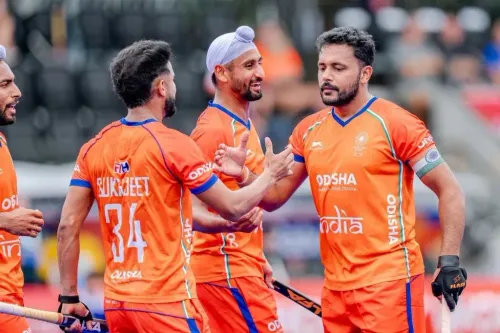
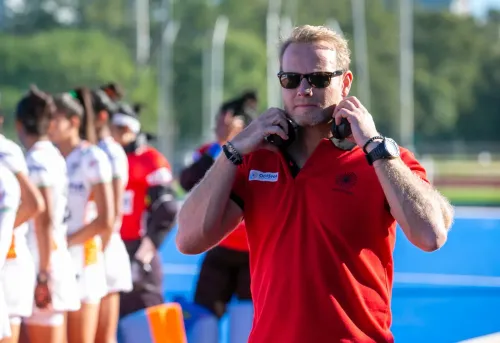
Indian men's coach Craig Fulton was direct about the heightened stakes in the pool stage. 'The format of this tournament has obviously changed drastically — from having quarter-finals to not having them. So the emphasis on the pool games is really, really important, because it's obviously the top two that go through. And the head-to-head result between those two teams matters: if one beats the other, those three points carry into the next round, and that puts you in the driving seat to get out of the next group and into the semi-finals,' Fulton said.
Fulton also flagged goal difference as a potential tiebreaker. 'We really have to manage our goal difference well. The team that finishes top of the group is decided by the most wins, and then it goes to goal difference — so if there's a draw, goal difference decides it,' he added.
Tournament Schedule and Conclusion
Classification matches and semi-finals are scheduled for 27 and 28 August. The women's final will be held in the Netherlands on 29 August, preceded by the bronze-medal match. The men's final takes place in Belgium on 30 August, also following a bronze-medal contest.
What This Means for Title Contenders
By removing the quarterfinal safety net, the 2026 format rewards consistency across both preliminary phases. A strong opening pool campaign now delivers a dual benefit: guaranteed progression to the higher crossover group and a potential points head-start heading into the semi-final push. For teams like India, where knockout-round experience has historically been a differentiator, the new structure compresses the margin for a slow start.
Point of View
A shaky pool stage could be papered over by a single knockout performance; that escape hatch is now gone. The carry-forward rule adds a further wrinkle: a team that loses its pool head-to-head enters the crossover phase already in deficit, compressing the recovery window to near zero. For India's men, whose recent World Cup exits have come in the knockouts rather than the pools, this restructuring demands a different kind of preparation — one built around consistency and margin management rather than peaking for a single defining match.
NationPress
24 Sept 2026
Frequently Asked Questions
What is the new format for the Hockey World Cup 2026?
The FIH Hockey World Cup 2026 replaces the traditional quarterfinal stage with a two-phase pool system. The top two teams from crossover Pools E and F advance directly to the semi-finals, with a carry-forward rule that brings Phase 1 head-to-head results into Phase 2. The tournament runs from 15 to 30 August in Belgium and the Netherlands.
How does the carry-forward rule work at the 2026 Hockey World Cup?
If two teams from the same original pool both qualify for the same crossover pool, their Phase 1 result against each other carries into Phase 2. This means a team that beat its pool rival in the opening stage enters the crossover round with three points already on the board, giving it a significant advantage in the race for the top two spots.
Which pool are India's men's and women's hockey teams in?
The Indian men's team is in Pool D alongside England, Pakistan, and Wales. The Indian women's team is also in Pool D, where they will face China, England, and South Africa. Both sides need a top-two finish to enter the higher crossover group and remain on the semi-final track.
Why was the quarterfinal stage removed from the Hockey World Cup 2026?
The FIH has not publicly detailed the full rationale, but the new structure was acknowledged by coaches as favouring higher-ranked teams. Indian women's coach Sjoerd Marijne noted he would have preferred the traditional quarterfinal format, calling those matches 'among the most exciting in a tournament', but said his team would adapt.
When are the semi-finals and finals at the Hockey World Cup 2026?
The semi-finals and classification matches are scheduled for 27 and 28 August. The women's bronze-medal match and final will be held in the Netherlands on 29 August, while the men's bronze-medal match and final take place in Belgium on 30 August.