Rinku Hooda wins Asian Para Games F46 gold with 65.11m final throw
Synopsis
Javelin thrower Rinku Hooda won F46 gold at the Asian Para Games in Nagoya with a last-gasp 65.11m throw — competing without a single tear-free day since his mother died on 8 August, and through a Grade 1 shoulder tear. It is one of the most emotionally charged Para gold medals India has seen.
Key Takeaways
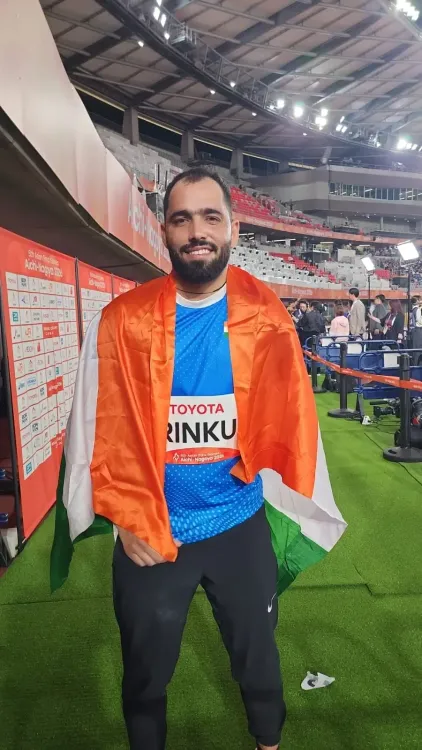
Rinku Hooda won the men's F46 javelin gold at the Asian Para Games, Nagoya on 20 October 2026 with a throw of 65.11m .
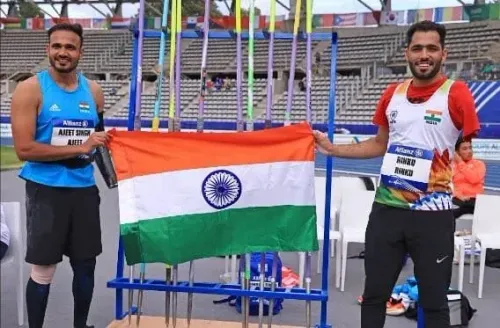
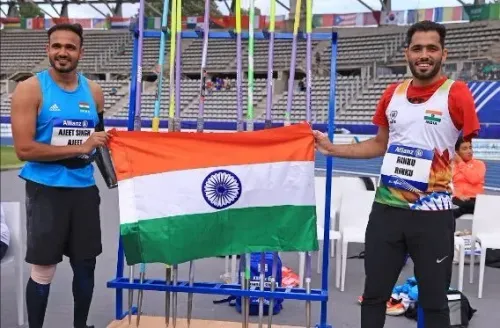
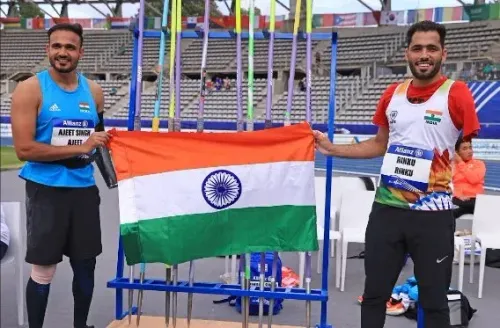
He edged compatriot Ajeet Singh (65.02m) by just nine centimetres on his final attempt; Indonesia's R.
Saktyono took bronze with 55.30m .
Hooda's mother died on 8 August 2026 ; he has not had a day without tears since and resumed training only on 19 August .
A Grade 1 shoulder tear forced him to miss four to five sessions and compete with taping on the throwing arm.
Hooda's pre-competition sessions produced throws of only 61–62 metres , making the winning 65.11m all the more remarkable.
His long-term focus is the LA 2028 Olympics and Paralympics , with a one-to-two-month rest planned before training resumes.
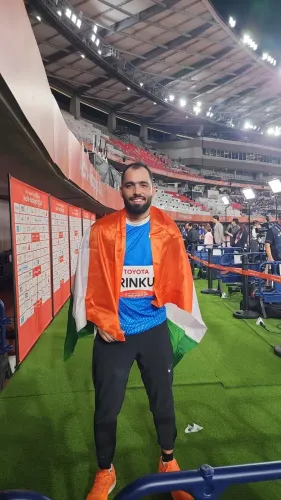
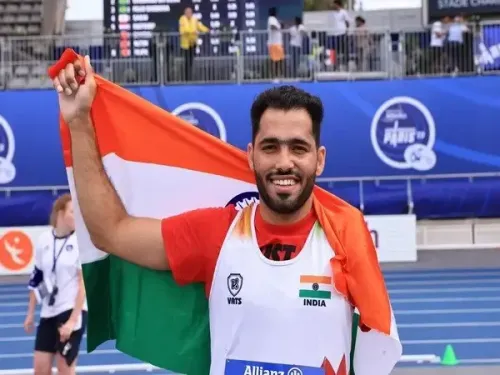
Indian javelin thrower Rinku Hooda clinched the men's F46 gold medal at the Asian Para Games in Nagoya, Japan, on Monday, 20 October 2026, hurling a dramatic last-attempt throw of 65.11m to edge compatriot Ajeet Singh by a mere nine centimetres. The victory came against the backdrop of profound personal grief and a shoulder injury that had cast serious doubt over Hooda's readiness for the competition.
A Gold Sealed in the Final Throw
The contest hinged on the final round. Ajeet Singh had moved into the lead with a throw of 65.02m in his fourth attempt, putting the pressure squarely on Hooda. The 27-year-old from Dhamar, Haryana, responded on his sixth and last attempt, landing at 65.11m to reclaim gold by the narrowest of margins. Indonesia's R. Saktyono finished third with 55.30m.
It was a pattern Hooda himself acknowledged — his best throws habitually arrive late. 'I always try to put all my energy into the last throw. I did the same thing in the last Asian Games. In the 2022 Asian Games, I threw the last throw of 67 metres. And the same thing happened in the World Championships in Paris,' he said. 'I don't know whether it's my body that takes time to warm up or what it is, but my best throws come on the last attempt in most of the competitions.'
Competing Through Grief
Behind the gold lies a story of raw emotional endurance. Hooda's mother passed away on 8 August 2026, leaving him devastated even as he was deep in competition preparation. He has not had a day without tears since. 'There has never been a day when I haven't cried. From morning to evening. Every time, I cry once or twice a day. I miss her. But I never thought that this would happen to me,' he said.
He described a haunting final moment with his mother — she had been resting with her head on his hand until 3:10 pm on the day she died, when he briefly stepped out for a doping test. 'I told my mother that I would be back in 10 minutes after giving the sample. I went to the adjacent house, our second house. I'll remember those 10 minutes throughout my life; the shock that I felt, I still feel that shock,' an emotional Hooda recalled.
The grief made even routine training feel hollow. 'I still win medals. I don't feel that I have won a medal. I have been like this from the inside since my mother passed away,' he admitted. His father urged him to press on, telling him that neglecting his career would not honour her memory. Hooda resumed training on 19 August, less than two weeks after the loss.
A Shoulder Injury Added to the Test
Hooda's return to training was quickly interrupted by a shoulder complaint. An MRI confirmed a Grade 1 tear, forcing him, his doctor Swapnil, strength and conditioning coach Lakshya, and other support staff to map out a careful rehabilitation plan over two to three hours. The team missed four to five sessions and resorted to taping before each subsequent session, including the day before the final.
Before the injury, his throws had been landing consistently at 61–62 metres. With the shoulder compromised, reaching 64–65m looked far from certain. 'After that, when there was pain in the shoulder, we didn't think that the throw would reach 64 or 65,' Hooda said. The last full session on home soil — held on Friday before travelling to Nagoya — produced marks of 61–62 metres, giving little indication of what was to come.
The Competition Strategy and Execution
Aware that his shoulder might not survive all six attempts at full intensity, Hooda and his team decided to go all-out early. 'I wanted to take my bets out on the first throw itself. We had made a plan beforehand — if we do it, we will do it in the first or second throw because we didn't know whether we'd manage to get to the sixth attempt or not,' he explained. That the decisive throw came in the sixth round only underlines the resilience he demonstrated throughout the competition.
A Plea for Junior Para-Athletes
In the aftermath of his win, Hooda used the platform to highlight a structural gap in Indian para-sports. While established athletes benefit from sponsorships, employment security, and institutional support, he said first-time competitors are largely left to fend for themselves. 'The junior players who are playing for the first time, they need more support. They need more sponsorships and help from TOPS. The federation is always backing them; there's no doubt about it. But our new junior players should be supported more,' he said.
With the Los Angeles 2028 Olympics and Paralympics already in his sights, Hooda plans to rest for one to two months before resuming structured training. 'Our plan will always be for the LA 2028 Olympics. Whether we do it or not, that will always be the main focus,' he said. For now, though, a gold won through grief, injury, and a final-throw gamble speaks loudly enough on its own.
Point of View
On throws that had not crossed 62 metres in practice days before the final, his 65.11m is the kind of performance that deserves scrutiny of the support ecosystem, not just applause. His pointed remark about junior para-athletes being under-resourced echoes a long-standing structural deficit: TOPS and federation backing reaches those already on the radar, but does little for first-generation para competitors who need it most. India's para-sports gold rush will stall without that foundation.
NationPress
20 Oct 2026
Frequently Asked Questions
How did Rinku Hooda win gold at the Asian Para Games 2026?
Rinku Hooda won the men's F46 javelin gold in Nagoya on 20 October 2026 with a final-attempt throw of 65.11m, beating compatriot Ajeet Singh — who had led with 65.02m — by nine centimetres. It was the only throw in the competition that exceeded Singh's fourth-round mark.
What personal loss did Rinku Hooda suffer before the Asian Para Games?
Hooda's mother passed away on 8 August 2026, just weeks before the competition. He has said he has not had a single day without crying since her death, and described the moment he left her side for a doping test — never to speak to her again — as a memory that will stay with him for life.
Was Rinku Hooda injured going into the Asian Para Games?
Yes. After resuming training in August, Hooda was diagnosed with a Grade 1 shoulder tear. He and his support team — including doctor Swapnil and strength coach Lakshya — modified his preparation, missed several sessions, and taped the shoulder before every throw, including in the final.
What is Rinku Hooda's next target after the Asian Para Games gold?
Hooda has said his primary long-term goal is the Los Angeles 2028 Olympics and Paralympics. He plans to take a rest of one to two months before resuming structured training.
What did Rinku Hooda say about support for junior para-athletes in India?
Hooda said that while senior para-athletes benefit from sponsorships and employment security, first-time junior competitors need substantially more backing — including greater TOPS support and sponsorships — to build sustainable careers in para-sports.