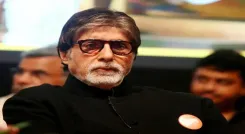
Gavaskar questions India's 18th-over call: 'Would have gone with Arshdeep or Mayank'
Synopsis
Sunil Gavaskar didn't just critique a single over — he laid bare a deeper bowling strategy problem that cost India a 249-run total. West Indies' record 252/4 chase, anchored by Shai Hope's 102 off 45 balls, has levelled the series 1-1 and put India's death-overs planning squarely under the spotlight ahead of the Indore decider.
Key Takeaways
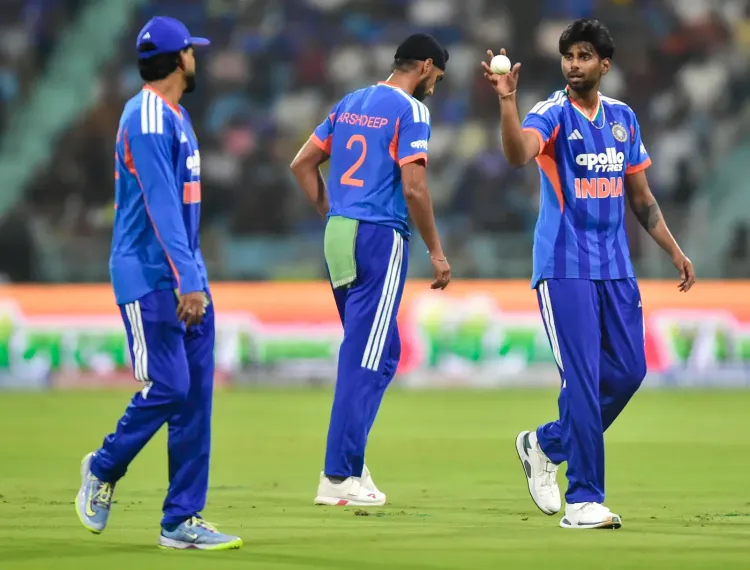
Sunil Gavaskar said he would have bowled Arshdeep Singh or Mayank Yadav in the 18th over instead of Axar Patel during the second T20I in Ranchi .
West Indies chased down 252/4 in 19.2 overs , winning by six wickets — the highest successful T20I chase against India.
Captain Shai Hope scored an unbeaten 102 off 45 balls ; Sherfane Rutherford added 84 off 37 ; the pair put on 120 runs together.
Mayank Yadav took three wickets but finished with an economy rate of around 12 an over .
Gavaskar also questioned the decision to bowl Shivam Dube in the ninth over , preferring Kuldeep Yadav at that stage.
The five-match series is now level at 1-1 , with the third T20I scheduled in Indore .
Cricket legend and former India captain Sunil Gavaskar has publicly questioned the bowling strategy employed by India in the closing overs of the second T20I against West Indies in Ranchi, arguing that Arshdeep Singh or Mayank Yadav would have been better choices for the crucial 18th over rather than Axar Patel, as the visitors completed a record chase to level the five-match series.
Gavaskar's Case Against the 18th-Over Call
'Definitely! I would have gone with either Arshdeep or Mayank. Yes, Arshdeep went for plenty in his final over, but Mayank had struck the early blows. Of the wickets that had fallen, he had taken three. His economy rate was about 12 an over, and at that stage, the West Indies needed more than that. So, if he had taken a wicket, and sometimes when the game is going in your favour, who knows, you would have got a wicket even if it had not been off a great delivery,' Gavaskar said in an interview with JioStar.
The logic Gavaskar advanced was straightforward — Mayank Yadav had already taken three wickets in the match and, despite an economy rate of around 12 an over, the pressure of a fresh delivery from a wicket-taker could have altered the momentum. In T20 cricket, a single breakthrough in such situations can swing an entire innings, a dynamic that India failed to exploit.
Dube in the Ninth: Another Decision Under Fire
Gavaskar's critique extended beyond the death overs. He also raised doubts about the decision to hand the ball to Shivam Dube in the ninth over, arguing that spinner Kuldeep Yadav would have posed a greater threat while West Indian batters were still building their innings.
'For me, I think giving Shivam Dube the ball in that ninth over was not exactly what was required at that stage. When the batters were still trying to get their eye in, maybe Kuldeep coming in would have been a better idea,' he added. The observation points to a broader concern about India's mid-innings bowling rotation — a phase where control can make or break a chase.
How West Indies Pulled Off a Record Chase
The context for Gavaskar's remarks was a stunning West Indies victory. India posted 249/5 — a formidable total — but the visitors overhauled it with ease, reaching 252/4 in just 19.2 overs, winning by six wickets. The successful pursuit is the highest successful T20I chase against India on record, underlining the magnitude of the collapse in bowling execution.
West Indies captain Shai Hope was the architect of the win, stroking an unbeaten 102 off 45 balls, while Sherfane Rutherford hammered 84 off 37 deliveries. The two shared a partnership of 120 runs that decisively shifted the match, reducing India's early gains with the ball to nothing. Mayank Yadav had provided three early breakthroughs, but the hosts could not build on those dismissals to apply sustained pressure.
What This Means for the Series
With the five-match series level at 1-1, attention now shifts to the third T20I in Indore. India's bowling combinations — specifically the sequencing and deployment of their pace and spin options in the middle and death overs — will face renewed scrutiny from both team management and fans. This is the first time in the series that India's bowling blueprint has been exposed at such scale, making the next fixture a critical litmus test. How the team responds to Gavaskar's pointed questions, and whether the management makes tactical adjustments, could define the series from here.
Point of View
No total will be safe. With three games remaining and the series alive, management faces a credibility test that extends well beyond one bad evening in Ranchi.
NationPress
10 Oct 2026
Frequently Asked Questions
Why did Sunil Gavaskar criticise India's bowling in the second T20I?
Gavaskar argued that India should have bowled Arshdeep Singh or Mayank Yadav in the 18th over instead of Axar Patel, given that Mayank had already taken three wickets and could have provided a breakthrough at a critical stage. He also felt Kuldeep Yadav would have been a better choice than Shivam Dube in the ninth over.
What was the result of the second T20I between India and West Indies in Ranchi?
West Indies won by six wickets, chasing down India's 249/5 with 252/4 in 19.2 overs. The successful chase is the highest ever by any team against India in T20I cricket.
How did Shai Hope perform in the second T20I?
West Indies captain Shai Hope scored an unbeaten 102 off just 45 balls, anchoring the record chase. He shared a match-winning partnership of 120 runs with Sherfane Rutherford, who scored 84 off 37 deliveries.
What is the current state of the India vs West Indies T20I series?
The five-match series is level at 1-1 after West Indies won the second T20I in Ranchi. The third game is scheduled to be played in Indore.
How did Mayank Yadav perform in the second T20I against West Indies?
Mayank Yadav took three wickets and provided India with early breakthroughs, but his economy rate was around 12 an over. Despite his wickets, India could not prevent West Indies from building momentum and completing the chase.