PM Modi launches ₹13,000 crore projects in Chennai, inaugurates Metro Phase II stretch
Synopsis
In a single Sunday visit to Chennai, Modi inaugurated over ₹13,000 crore in projects — from a driverless-ready metro corridor and three major port upgrades to a world-class brain-mapping mission at IIT Madras. The breadth of sectors covered in one day makes this one of the largest federal infrastructure deployments Tamil Nadu has seen in a single visit.
Key Takeaways
PM Narendra Modi launched projects worth over ₹13,000 crore in Chennai on 10 October 2026 .
The ₹4,900-crore Poonamallee–Vadapalani metro stretch, part of Chennai Metro Phase II , features a 3.7-km double-decker structure built for driverless operations.
Highway works worth ~ ₹3,700 crore cover the 36-km NH-744 section and the 30-km Madurai Ring Road .
CPCL's ₹1,620-crore lubricant base stocks project at Manali refinery was given a foundation stone, with a capacity of 270,000 tonnes per year .
At IIT Madras , Modi dedicated the Sudha Gopalakrishnan Brain Centre and launched a mission to map over 100 human brains into 3D cellular atlases.
Port upgrades at Chennai , V.O.
Chidambaranar and Kamarajar ports were inaugurated, along with railway works worth over ₹750 crore .
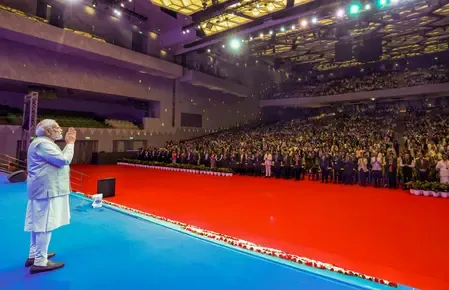
Prime Minister Narendra Modi on Sunday, 10 October 2026 launched development projects worth over ₹13,000 crore during a high-profile visit to Chennai, covering metro rail, highways, railways, ports, petroleum and education. The Prime Minister's Office confirmed the programme on Saturday, describing it as one of the largest single-day infrastructure pushes in Tamil Nadu in recent years.
Metro Phase II: The Centrepiece
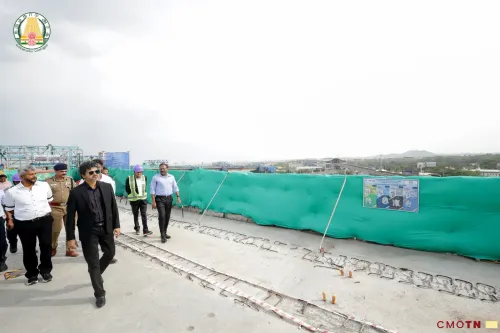
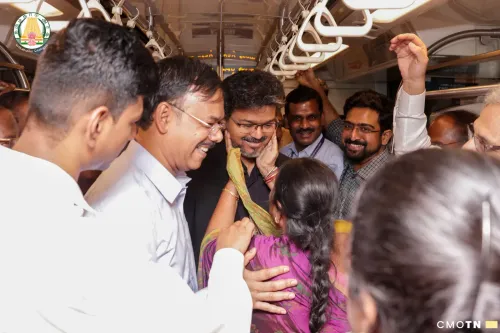
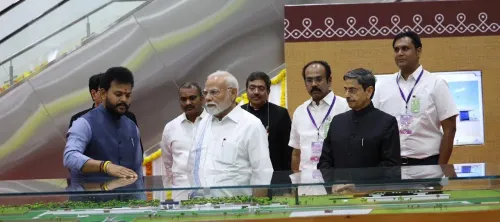
The flagship announcement is the inauguration of the ₹4,900-crore Poonamallee–Vadapalani stretch of Chennai Metro Phase II. The corridor features a 3.7-km double-decker structure and signalling systems engineered for driverless operations, designed to ease daily commutes between the western suburbs and the city centre. Modi rode the metro from Porur Bypass to Poonamallee Bypass and back at 11.30 am, making him the first passenger on the newly opened stretch.
Highways, Railways and Port Infrastructure
Highway works valued at approximately ₹3,700 crore include the 36-km, four-lane Vadugapatti–Therkuvenganallur section of NH-744 and the 30-km Madurai Ring Road on NH-744A. Modi also laid the foundation stone for the four-lane Thiruvarur Bypass on NH-83.
Railway investments worth over ₹750 crore encompass the Karaikal–Peralam rail line and three rail flyovers in and around Coimbatore. Redeveloped stations at Palani, Vellore Cantonment, Ambasamudram, Paramakkudi and Namakkal were also inaugurated.
At Chennai Port, upgraded storage, warehouses, cruise passenger facilities and a Seafarers Club were dedicated to the nation. Eight projects at V.O. Chidambaranar Port will expand cargo capacity, advance cleaner maritime energy and improve logistics. At Kamarajar Port, Modi inaugurated Coal Berth-3 and launched fresh dredging works.
Petroleum and Energy
Modi laid the foundation stone for CPCL's ₹1,620-crore lubricant base stocks project at the Manali refinery, which will have an annual production capacity of 270,000 tonnes. The facility is expected to reduce India's dependence on imported lubricant base stocks and support downstream refining capacity in Tamil Nadu.
IIT Madras Brain Centre and Scientific Mission
At IIT Madras, Modi dedicated the Sudha Gopalakrishnan Brain Centre and formally launched a mission to map more than 100 human brains into three-dimensional cellular atlases — a first-of-its-kind scientific initiative in India. He also released C-STROKE, a comprehensive atlas containing over 1,000 annotated microscopic sections from a stroke-affected brain. The atlas is intended to assist researchers in identifying potential therapeutic targets for stroke, with the broader mapping mission covering brains from foetuses to older adults.
Modi visited the Jalakandeswarar Temple at 12.15 pm before proceeding to IIT Madras, with the main development programme and public address scheduled for 1.30 pm. He later attended the golden jubilee celebrations of Jaigopal Garodia Hindu Vidyalaya Matriculation Higher Secondary School at 3 pm. This visit signals continued federal attention to Tamil Nadu's infrastructure deficit ahead of electoral cycles, and positions the state as a key node in India's broader logistics and research ambitions.
Point of View
Highways, three ports, a refinery, railways and a brain-science mission — reflects a deliberate optics strategy: demonstrate federal delivery in a state governed by the opposition DMK ahead of future electoral cycles. Yet optics and outcomes diverge. The Poonamallee–Vadapalani stretch, while impressive in design, covers only one segment of a Phase II network whose full completion remains years away. The brain-mapping mission at IIT Madras is genuinely path-breaking, but it risks being buried under the infrastructure avalanche in public discourse. The more pointed question is whether the port and highway investments are coordinated into a unified logistics corridor or, as often happens, remain disconnected assets that underperform in isolation.
NationPress
10 Oct 2026
Frequently Asked Questions
What projects did PM Modi launch in Chennai on 10 October 2026?
PM Modi launched over ₹13,000 crore worth of projects in Chennai spanning metro rail, highways, railways, ports, petroleum and education. Key inaugurations included the ₹4,900-crore Poonamallee–Vadapalani Metro Phase II stretch, port upgrades across three Chennai-area ports, railway works worth over ₹750 crore, and the Sudha Gopalakrishnan Brain Centre at IIT Madras.
What is the Chennai Metro Phase II Poonamallee–Vadapalani stretch?
It is a ₹4,900-crore metro corridor connecting Poonamallee and Vadapalani, featuring a 3.7-km double-decker structure and signalling systems designed for driverless operations. The stretch is part of Chennai Metro's Phase II expansion and is intended to improve connectivity between the city's western suburbs and its commercial centre.
What is the Sudha Gopalakrishnan Brain Centre at IIT Madras?
It is a newly dedicated research facility at IIT Madras focused on neuroscience. PM Modi inaugurated it on 10 October 2026 alongside the launch of a mission to map over 100 human brains into three-dimensional cellular atlases, and released C-STROKE — an atlas with over 1,000 annotated microscopic sections from a stroke-affected brain to aid therapeutic research.
Which highway and railway projects were included in the Chennai visit?
Highway projects worth approximately ₹3,700 crore include the 36-km, four-lane Vadugapatti–Therkuvenganallur section of NH-744 and the 30-km Madurai Ring Road on NH-744A. Railway investments of over ₹750 crore cover the Karaikal–Peralam line, three rail flyovers near Coimbatore, and redeveloped stations at Palani, Vellore Cantonment, Ambasamudram, Paramakkudi and Namakkal.
What is the CPCL lubricant base stocks project at Manali refinery?
It is a ₹1,620-crore project at CPCL's Manali refinery in Chennai for which PM Modi laid the foundation stone on 10 October 2026. The facility will produce lubricant base stocks with an annual capacity of 270,000 tonnes, aimed at reducing India's reliance on imported lubricants.