India U-18 hockey teams face Australia in 4-match series ahead of Asia Cup

Synopsis
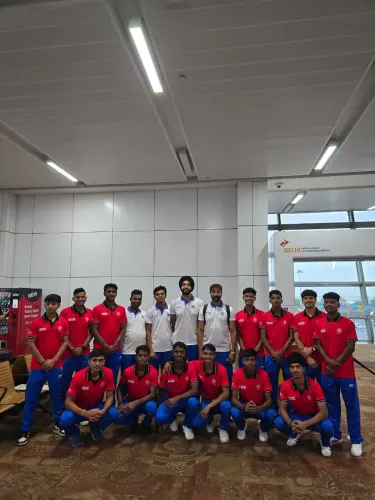
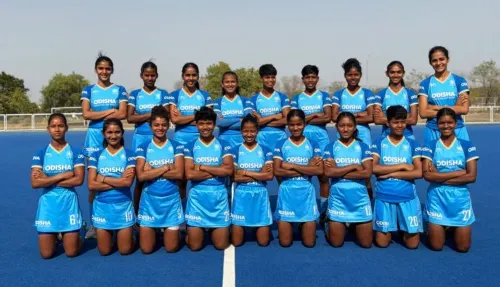
India's U-18 hockey programme enters its final preparation phase with a four-match exposure series against Australia in Bhopal. Coaches Sardar Singh and Rani Rampal are using the matches to test combinations and lock in squad selections for the U-18 Asia Cup in Japan — a tournament that could define the next generation of Indian hockey talent.
Key Takeaways
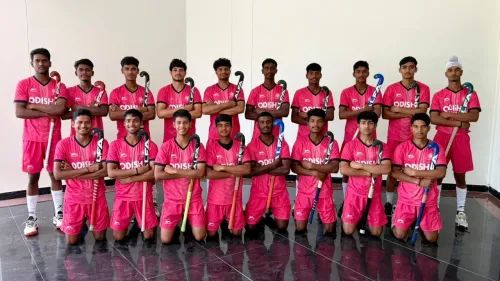
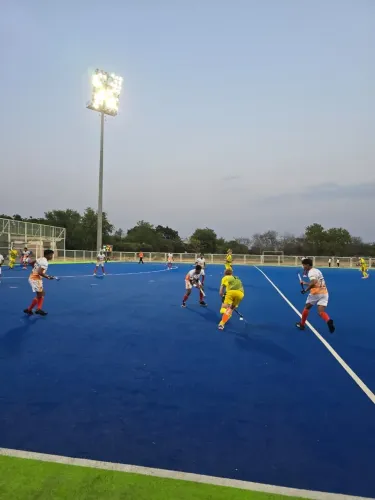
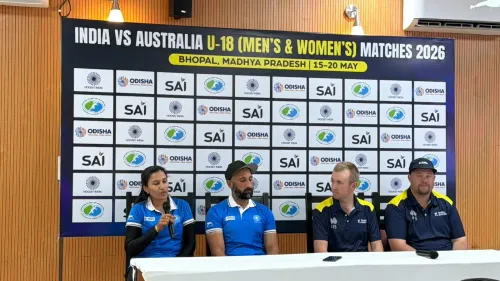
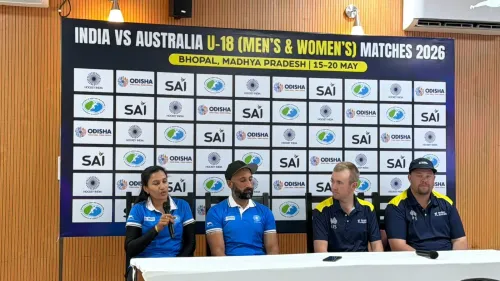
India's U-18 men's and women's hockey teams face Australia's U-18 teams in a four-match series from 15–20 May in Bhopal .
Matches scheduled for 15 May, 17 May, 18 May, and 20 May at the Udhav Das Mehta Central Centre .
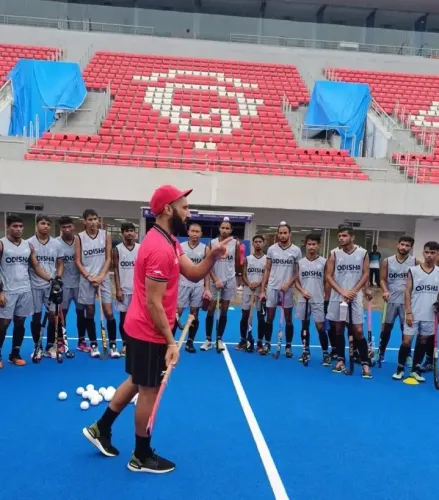
Series follows the U-18 National Coaching Camp at SAI Bhopal , which began on 19 April 2026 .
Men's coach Sardar Singh emphasised "fundamentals and basics" development; women's coach Rani Rampal highlighted player development opportunities.
Exposure series serves as final preparation for the U-18 Asia Cup in Kakamigahara, Japan , later in May.
India's men's and women's U-18 hockey teams will compete against their Australian counterparts in a four-match series from 15–20 May at the Udhav Das Mehta Central Centre in Bhopal. The exposure fixtures follow the U-18 National Coaching Camp at SAI Bhopal, which commenced on 19 April 2026, and serve as critical preparation ahead of the U-18 Asia Cup in Kakamigahara, Japan, scheduled for later this month.
Match schedule
Both the men's and women's teams will play on identical dates: 15 May, 17 May, 18 May, and 20 May. The staggered four-match format allows each squad to test different tactical approaches and player combinations before the continental championship.
Men's team focus
Men's coach Sardar Singh emphasised the progress achieved during the camp, stating that players have "responded well to the intensity and expectations." He highlighted a deliberate focus on "strengthening fundamentals and basics across all positions" to prepare them for modern hockey's demands. Singh framed the Australia series as a platform to "experience high-quality international competition, test combinations, and build match temperament," while also serving as a filter to "identify the best possible squad to represent India" at the Asia Cup.
Women's preparation
Women's coach Rani Rampal similarly noted the productive camp phase, saying players have "approached it" positively. She described the Australia matches as "a great chance to play at a higher level" and stressed that the fixtures offer "each player to showcase their ability and what they have learned." The series doubles as both a developmental platform and a competitive audition for Asia Cup selection.
Broader context
India's U-18 hockey programme has intensified under the Sports Authority of India structure, with multi-week camps now standard before international tournaments. The Asia Cup represents the first major test for this cohort before they transition toward senior-level competitions. Success in Kakamigahara could accelerate pathways to the senior national teams.
Point of View
" suggesting that Asia Cup selection is still fluid. India's U-18 hockey pipeline has historically struggled to translate age-group success into senior impact; these matches will show whether the current cohort breaks that pattern or repeats it.
NationPress
25 Sept 2026
Frequently Asked Questions
When and where will the India U-18 hockey series against Australia take place?
The four-match series will be held from 15–20 May 2026 at the Udhav Das Mehta Central Centre in Bhopal. Both the men's and women's teams will play on the same dates: 15 May, 17 May, 18 May, and 20 May.
Why is this series important for India's U-18 teams?
The series serves as critical preparation for the U-18 Asia Cup in Kakamigahara, Japan, later in May. It allows both teams to test combinations, build match temperament, and helps coaches finalise squad selections for the continental championship.
Who are the coaches of India's U-18 hockey teams?
Men's coach Sardar Singh and women's coach Rani Rampal are leading their respective squads. Both have emphasised the importance of fundamentals development and player exposure during the ongoing SAI Bhopal camp.
What preceded the Australia series?
The U-18 National Coaching Camp at SAI Bhopal began on 19 April 2026 and has been running for several weeks. This camp forms the foundation for the Australia exposure series and the subsequent Asia Cup campaign.
When is the U-18 Asia Cup scheduled?
The U-18 Asia Cup is scheduled for later in May 2026 in Kakamigahara, Japan. India's U-18 teams will use the Australia series to prepare for this continental tournament.