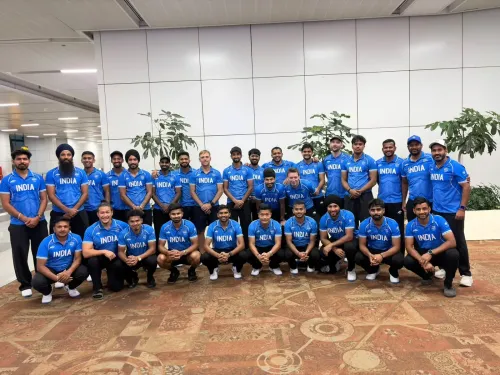
Asian Games 2026: India maps 2,000 Nagoya residents as lodging backup for contingent

Synopsis
India's Asian Games contingent hit an early snag in Nagoya — accommodation problems that forced officials to draft a three-layer emergency plan, including a fallback involving 2,000 Indian diaspora households. It is an unusual measure that underscores both the scale of the challenge and the community's readiness to step in.
Key Takeaways
India has identified around 2,000 Indian residents in Nagoya as a potential emergency accommodation network for the Asian Games contingent.
A three-layer contingency programme has been put in place, coordinated by the Indian Sports Ministry , SAI , the Chef de Mission , and the local Indian diaspora.
Layer one: two personnel stationed at the airport for arrival coordination.
Layer two: three personnel at the Athlete Welcome Centre for accommodation and logistics support.
Layer three: diaspora homes as a last-resort housing option if all other arrangements fall short.
The plan was triggered after some athletes faced lodging difficulties upon arriving in Nagoya.
India has identified approximately 2,000 Indian residents living in Nagoya whose homes could serve as emergency accommodation for the country's Asian Games contingent, as officials put in place a three-layer contingency programme to prevent lodging difficulties from disrupting athlete preparations. The plan is being coordinated jointly by the Indian Sports Ministry, the Sports Authority of India (SAI), the Chef de Mission, and the Indian diaspora in Nagoya.
Why the contingency plan was needed
The emergency framework was triggered after some Indian athletes encountered accommodation-related difficulties following their arrival in Nagoya. Officials moved quickly to put additional arrangements in place so that lodging issues would not affect preparation schedules ahead of the Games. This kind of last-minute scramble, while not unprecedented at multi-sport events, highlights the logistical complexity of managing a large national contingent in an overseas host city.
How the three-layer system works
The first layer stations two personnel at the airport to coordinate the arrival and onward movement of Indian athletes and officials from the moment they land. The second layer deploys three personnel at the Athlete Welcome Centre, providing support for accommodation assignments and broader logistical needs. The third — and most distinctive — layer taps the Indian diaspora in Nagoya: roughly 2,000 local Indian residents have been identified as a potential safety net, with their homes available as temporary accommodation in a worst-case scenario.
Role of the Indian diaspora
The mobilisation of diaspora households as a fallback is a notable feature of the contingency architecture. While the arrangement is described as a last resort, it signals the scale of the concern among Indian officials and the willingness of the local Indian community in Nagoya to step in. Community coordination of this kind has occasionally been used at Commonwealth and Asian Games editions in the past, but it remains an unusual measure.
What happens next
The three-layer mechanism is now active, with airport and Welcome Centre personnel already deployed. Officials have stated that the contingent has since secured additional lodging arrangements, reducing the likelihood that diaspora homes will need to be used. The focus now shifts to ensuring athletes can settle into their pre-competition routines without further disruption ahead of the Asian Games.
Point of View
But the question of why athletes arrived without confirmed lodging in the first place warrants scrutiny. If India is serious about podium performance at the Asian Games, removing pre-competition anxiety — including over something as basic as where athletes sleep — must be part of the mandate, not an afterthought.
NationPress
18 Sept 2026
Frequently Asked Questions
Why has India created an emergency accommodation plan for the Asian Games in Nagoya?
Some Indian athletes faced lodging difficulties after arriving in Nagoya ahead of the Asian Games, prompting officials to establish a three-layer contingency programme. The plan ensures backup housing options are available so that accommodation issues do not disrupt athlete preparations.
What is the three-layer contingency programme India has set up in Nagoya?
The three layers are: airport personnel to coordinate arrivals, staff at the Athlete Welcome Centre to handle lodging and logistics, and a network of approximately 2,000 Indian diaspora residents in Nagoya whose homes could serve as emergency accommodation if needed.
Who is coordinating India's accommodation contingency plan at the Asian Games?
The plan is being handled jointly by the Indian Sports Ministry, the Sports Authority of India (SAI), the Chef de Mission, and the Indian community in Nagoya.
Are Indian athletes at risk of having no accommodation at the Asian Games?
Officials say additional arrangements have already been secured, reducing the likelihood of a worst-case scenario. The diaspora housing network is intended as a last resort rather than a primary solution.
Has this kind of diaspora housing arrangement been used before at major games?
Community-backed accommodation support has occasionally featured at Commonwealth and Asian Games editions in the past, but using diaspora households as a formal contingency layer remains an unusual and noteworthy measure.