Exploring India's World Cup Victories and the Kerala Connection
Synopsis
Discover the curious connection between India's World Cup victories and the presence of Malayalee players. This article delves into how Kerala's cricketers have become a part of India's triumphant cricketing history.
Key Takeaways
Malayalee Presence: Every World Cup win has featured a Malayalee player.
Historical Wins: Significant victories include 1983, 2007, 2011, 2024, and 2026.
Player Contributions: Sunil Valson, S.
Sreesanth, and Sanju Samson have all played key roles.
Cultural Impact: The phenomenon is viewed as a 'lucky charm' by fans.
Cricketing Anecdotes: This connection has become a charming cricketing story in Indian folklore.
Thiruvananthapuram, Mar 9 (NationPress) Cricket boasts a legacy filled with statistics, legends, and superstitions. Fans have long enjoyed discovering patterns that seem too intriguing to overlook. A notable and enduring peculiarity has emerged in Indian cricket: each time India secures a men’s World Cup victory, a Malayalee is part of the team.
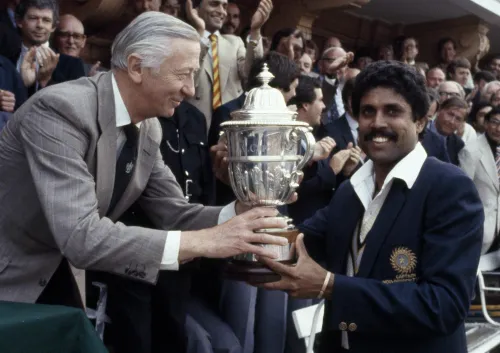
This unusual trend commenced with India's landmark win at the 1983 Cricket World Cup, led by Kapil Dev. Among the players was Kerala's fast bowler, Sunil Valson. Although Valson didn’t play a single match during the tournament, his presence became a cherished anecdote in Indian cricket history once India lifted the trophy at Lord’s.
The curious pattern re-emerged nearly twenty-five years later when India clinched the inaugural 2007 ICC T20 World Cup in South Africa. This time, the Malayalee representation was more pronounced. The dynamic pacer S. Sreesanth played a crucial role in the tournament, famously making the catch that secured India's thrilling final victory.
This Kerala connection persisted when India triumphed in the 2011 Cricket World Cup on home turf. Sreesanth was again part of the squad, further solidifying what fans humorously referred to as a “Malayalee lucky charm” in India's World Cup endeavors.
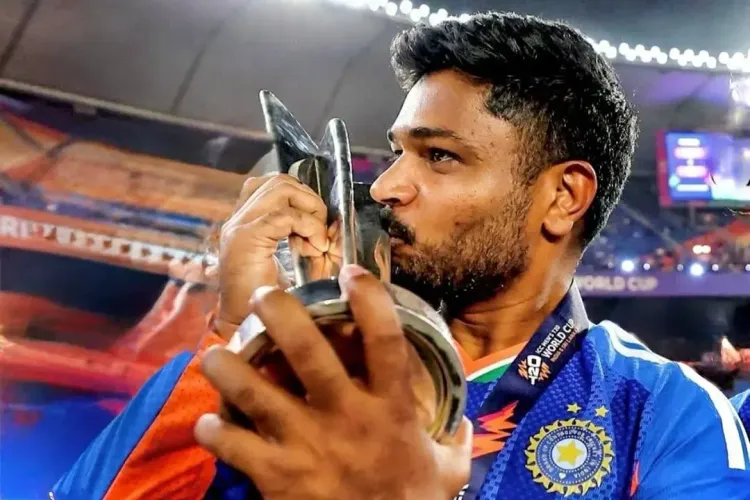
The intriguing trend continued into the modern T20 era as well. When India emerged victorious in the 2024 ICC Men's T20 World Cup, Kerala's wicketkeeper batsman Sanju Samson was included in the winning lineup.
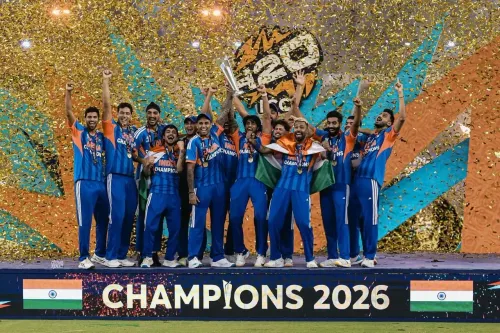
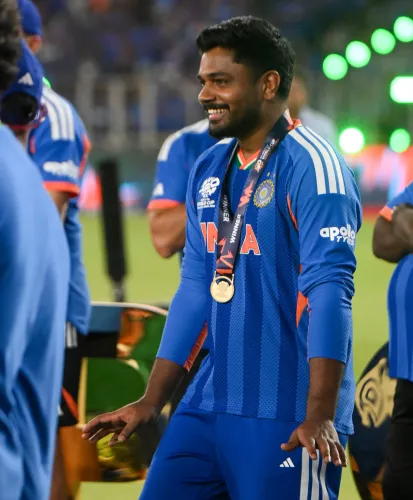
In the latest chapter of this fascinating cricket saga, Samson played a pivotal role in India's triumph at the 2026 ICC Men's T20 World Cup. This time, his contribution was not merely symbolic.
The stylish batsman delivered three consecutive match-winning performances during the knockout stages, leading India to the title.
This quirky trend even caught the eye of former India coach and commentator Ravi Shastri during the broadcast, who playfully highlighted the Kerala connection.
Whether viewed as a coincidence, superstition, or simply an endearing cricket anecdote, the so-called "Malayalee luck charm" has become yet another captivating chapter in India's illustrious World Cup history.
Point of View
I find this unique correlation between Kerala players and India's World Cup successes both intriguing and heartwarming. It reflects the rich tapestry of diversity in Indian cricket and the impact of regional contributions to national glory.
NationPress
26 Sept 2026
Frequently Asked Questions
What is the significance of the Kerala connection in India's World Cup victories?
The Kerala connection highlights the presence of Malayalee players in India's World Cup-winning squads, which fans have affectionately dubbed the 'Malayalee lucky charm.'
Who are the notable Malayalee players in India's World Cup history?
Notable Malayalee players include Sunil Valson, S. Sreesanth, and Sanju Samson, each contributing to India's World Cup triumphs.
How did Sunil Valson's presence impact the 1983 World Cup?
Despite not playing during the tournament, Valson's inclusion became a memorable part of India's historic win in 1983.
What role did S. Sreesanth play in the 2007 T20 World Cup?
Sreesanth was instrumental in the 2007 T20 World Cup, notably making the catch that secured India's victory in the final.
What did Sanju Samson achieve in the 2026 T20 World Cup?
Sanju Samson played a crucial role in India's 2026 T20 World Cup victory, delivering three match-winning performances during the knockout stages.