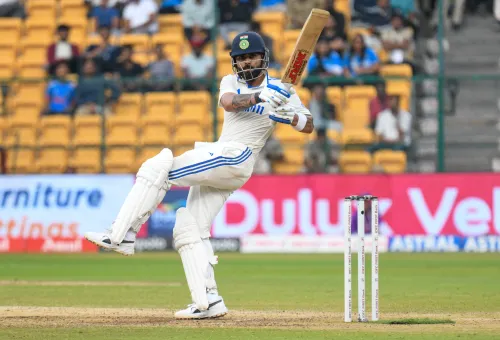
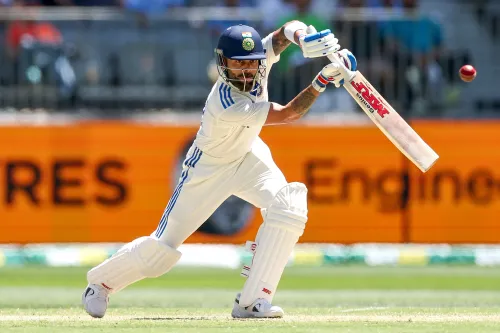
Virat Kohli drops anchor role, eyes 350-360 in ODIs with fresh freedom
Synopsis
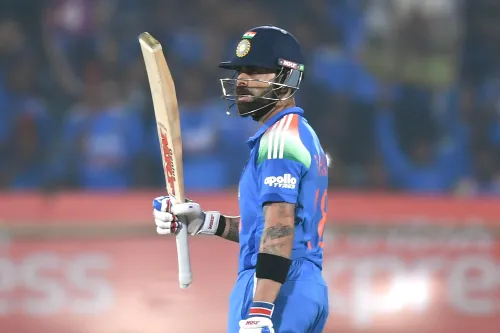
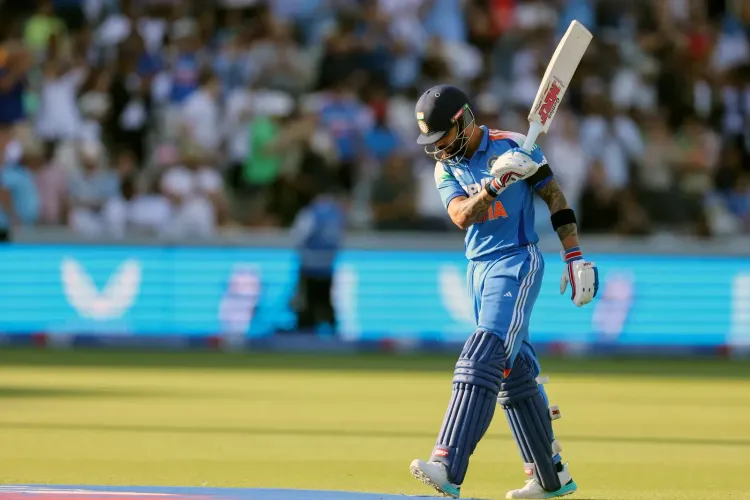
Virat Kohli isn't just in form — he has deliberately rewired how he bats in ODIs. After years of anchoring innings as a stabiliser, the 37-year-old has unlocked a risk-on mindset, backed by three centuries in his last 10 appearances and a stated target of pushing India to 350-360 regularly. The shift could redefine India's ODI batting blueprint heading into the next ICC cycle.
Key Takeaways
Virat Kohli has consciously abandoned his long-held anchor role in ODI cricket , opting to bat with greater freedom and risk-taking.
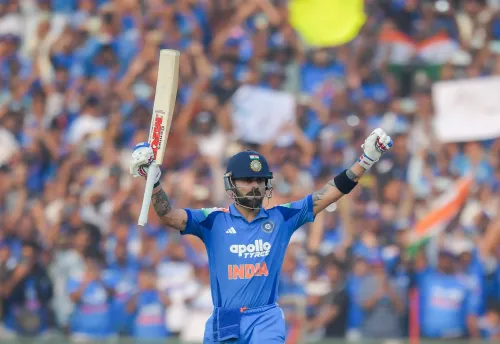
He has scored three centuries , four fifties , and a score above 90 in his last 10 ODI appearances over 18 months .
Kohli's stated goal is to help India consistently reach 350–360 totals, citing the evolving demands of the format.
He credited complete trust in India's batting depth and his own rigorous physical fitness for enabling the shift.
Kohli praised captain Shubman Gill for his tactical sharpness and intensity, predicting he will lead India 'for a long time.' The first ODI against West Indies is scheduled in Thiruvananthapuram on 27 September 2026 .
Virat Kohli has made a decisive tactical shift ahead of India's ODI series against West Indies, revealing on 26 September 2026 that he has consciously shed his long-held stabiliser role in 50-over cricket to bat with greater freedom — with the explicit goal of helping India regularly post totals of 350–360. The senior batter spoke ahead of the first ODI, scheduled in Thiruvananthapuram on 27 September.
The Mindset Shift
Kohli, who turns 38 in November, said the change begins in his own head. 'What's changed is, firstly, I promised myself that I'm going to play more freely. I'm not going to worry about the expectations that people might have around me,' he said in an interview to JioStar. For years, the demands of the team required him to anchor innings through difficult situations — a role he acknowledged he had internalised even when his instincts pushed elsewhere.
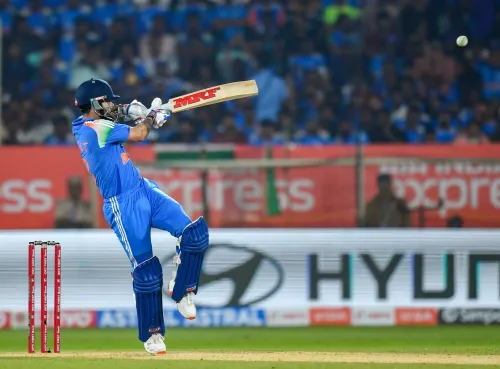
He explained the evolution bluntly: 'The game is changing in a way that, especially if the conditions are fast-paced and good, and other teams are looking to push you towards 340–350, we should be able to get 350–360 as well.' The shift, he added, is also rooted in complete trust in the depth of India's current batting lineup.
Numbers That Back the Claim
The results of this recalibration are already visible. Over his last 10 ODI appearances, Kohli has amassed three centuries, four fifties, and a score above 90 — a sequence spanning 18 months that reflects a batter playing at or near his peak. The numbers suggest this is not a philosophical rebranding but a genuine shift backed by performance data.
Kohli also linked the mindset change to his IPL form. 'I had to unlock a little bit of that freedom in my own mind. That's also helped me in the IPL as well... because I'm not thinking that if I get out, the situation might get difficult for us,' he said.
Bilateral ODIs vs World Cup Intensity
Kohli drew a sharp distinction between bilateral series cricket and the 50-over World Cup environment. 'Bilateral series run at a certain intensity, and you're always working towards a big competition... figuring out combinations and giving players game time under pressure. The intensity of a 50-over World Cup is greater because now it's about 10 games at a T20 level of intensity,' he said. He credited sustained physical training for his ability to maintain that intensity across long tournaments, saying, 'I feel like I can sustain that kind of intensity for 10 games easily if I continue to keep working hard on my fitness.'
Kohli on Captain Shubman Gill
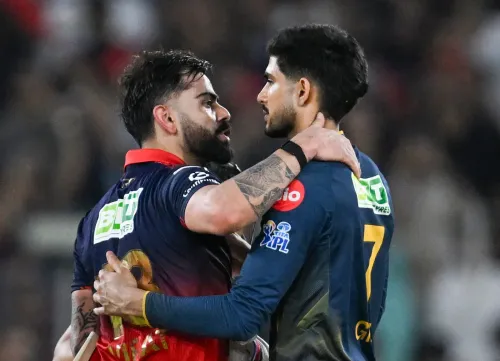
The veteran batter also offered a measured assessment of India's young captain Shubman Gill, praising his tactical instincts while acknowledging the learning curve. 'Shubman, the captain, is still learning. He is still young in the role, but he has got the right perspective and the right kind of intensity to lead the Indian team,' Kohli said. He specifically noted Gill's proactive field placements and his willingness to pressure batters through unconventional bowling combinations.
Kohli expressed long-term confidence in Gill's leadership trajectory. 'With more experience and understanding situations, the kind of calls you take are things that he will keep working on and improving... He has got the desire to lead the Indian cricket team in the right way, which is the most important factor. So, I see him leading for a long time,' he added.
What to Watch in the Series
The first ODI against West Indies in Thiruvananthapuram on 27 September will be an early test of this liberated approach. With Kohli publicly committing to a risk-on batting style and India targeting 350-plus totals as a baseline, the series doubles as a live-fire audition ahead of future ICC events. How Gill manages Kohli's new role at the top will be equally worth tracking.
Point of View
Not rhetorical. The more interesting question is structural — if Kohli is now explicitly licensed to play freely from the top, India's middle-order loading changes, and so does Gill's captaincy calculus. Kohli is effectively declaring himself a powerplay-through-death asset, not a crisis manager, which is a larger shift in India's batting philosophy than any single innings.
NationPress
26 Sept 2026
Frequently Asked Questions
What change has Virat Kohli made to his ODI batting approach?
Kohli has deliberately shed his long-held 'stabiliser' or anchor role in 50-over cricket, opting instead to bat with greater freedom and take more risks. He said the goal is to help India consistently post totals of 350–360, backed by trust in the team's batting depth.
How has Virat Kohli performed in recent ODIs?
Kohli has been in exceptional form over the past 18 months, scoring three centuries, four fifties, and one innings above 90 in his last 10 ODI appearances — figures that reflect the impact of his revised mindset.
When and where is India's first ODI against West Indies?
The first ODI of West Indies' tour of India is scheduled in Thiruvananthapuram on 27 September 2026, starting from 2 PM IST.
What did Kohli say about captain Shubman Gill?
Kohli described Gill as a captain who is 'still learning' but possesses the 'right perspective' and intensity to lead India. He specifically praised Gill's proactive field placements and his ability to pressure batters, predicting the young captain will lead India 'for a long time.'
How does Kohli distinguish between bilateral ODIs and World Cup cricket?
Kohli said bilateral ODI series run at a manageable intensity focused on combinations and player development, whereas a 50-over World Cup demands sustaining T20-level intensity across 10 matches — particularly challenging in foreign conditions. He credited his physical fitness for his ability to handle that extended high-intensity load.