Khelo Bharat Mission: Mandaviya Launches YES-PE at Srinagar Sports Shivir
Synopsis
At Srinagar's Chintan Shivir on April 25, Sports Minister Dr. Mansukh Mandaviya launched the YES-PE school programme and called Khelo Bharat Mission a reflection of India's youth energy — as 15+ state ministers and legends like Abhinav Bindra united to build India's Olympic roadmap.
Key Takeaways
Mansukh Mandaviya , Union Minister for Youth Affairs and Sports, inaugurated the Chintan Shivir in Srinagar on April 25, 2025 , calling for ground-level execution of India's sports roadmap.
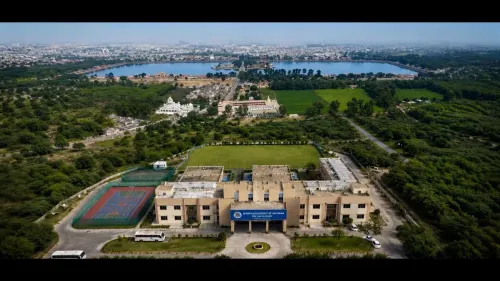
The YES-PE (Young Engagement in Sports & Physical Education) programme was officially launched for Class 9–12 students , developed by the Lakshmibai National Institute of Physical Education, Gwalior .
Over 15 State Sports Ministers participated alongside sports icons Abhinav Bindra, Pullela Gopichand, Adille Sumariwalla, and Gagan Narang .
Lieutenant Governor Manoj Sinha attended the Shivir, underscoring the significance of holding the event in Jammu & Kashmir for national integration.
Key themes included medal strategy, clean sport, talent identification, coaching upgradation, and Centre-State policy convergence .
Mandaviya emphasised that physical education teachers form the backbone of India's grassroots sports ecosystem and called for bridging the gap between State Governments and Sports Federations.
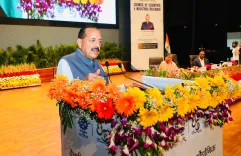
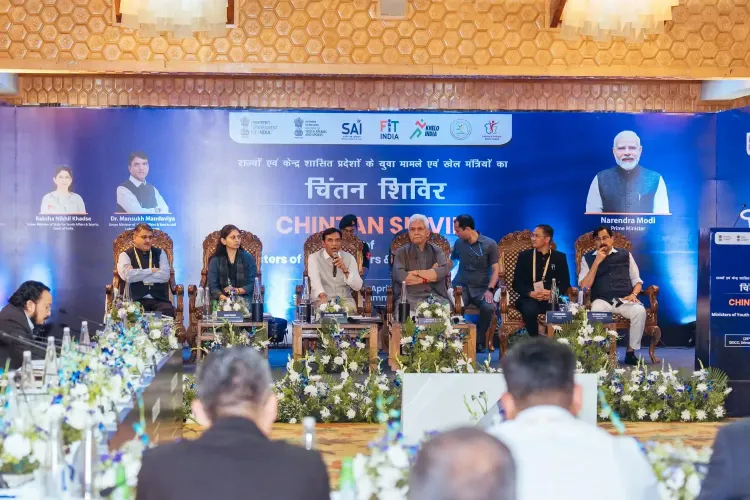
Srinagar, April 25: The Chintan Shivir on Youth Affairs and Sports kicked off in Srinagar on Saturday, April 25, bringing together ministers from states and Union Territories to chart a bold, coordinated course for India's sporting future. Union Minister for Youth Affairs and Sports Dr. Mansukh Mandaviya anchored the inaugural session, declaring that India's ambition to become a global sports powerhouse must translate from policy documents into real action on the ground.
Mandaviya Sets the Tone: Ground-Level Execution Over Paper Plans
Dr. Mandaviya opened with a clear directive: India's 10-year roadmap to sporting excellence cannot remain theoretical. "Our 10-year roadmap to becoming a global sporting powerhouse must not remain on paper — it must come alive in every playground, every district, and every young dream," he declared.
He called on state governments to shift decisively from policy adoption to active implementation, insisting that progress will only be credible when outcomes are visible across districts, training centres, and grassroots sporting ecosystems. The Minister stressed that real accountability lies at the last mile of delivery.
Lieutenant Governor of Jammu & Kashmir, Manoj Sinha, also attended the Shivir, expressing strong support for the vision of transforming India into a sporting powerhouse — a statement that carries symbolic weight given the strategic and social significance of Jammu & Kashmir in India's national integration narrative.
Khelo Bharat Mission: More Than a Statistic
Reaffirming the centrality of the flagship scheme, Dr. Mandaviya stated, "Khelo Bharat Mission is not just a statistic — it is a reflection of the energy of our youth and the commitment of the nation." The remark underscores a deliberate pivot: government sports initiatives are increasingly being framed not merely as welfare schemes but as expressions of national identity and ambition.
He drew attention to the persistent disconnect between State Governments and Sports Federations, urging structural alignment to build a unified and uninterrupted talent pipeline. Without this convergence, he warned, talented athletes risk falling through systemic cracks.
Highlighting the role of education in early talent identification, Dr. Mandaviya pointed to physical education teachers as the foundational layer of the grassroots sports ecosystem — a community that has historically been underfunded and undervalued in India's education policy framework.
YES-PE Programme Launched for School Students
Dr. Mandaviya formally launched the YES-PE (Young Engagement in Sports & Physical Education) programme, developed by the Lakshmibai National Institute of Physical Education, Gwalior. Designed for students in Classes 9 to 12, the initiative aims to promote active sports participation, sportsmanship, and leadership skills among adolescents — a demographic that often loses structured sports access during the critical secondary school years.
This launch is significant because it addresses a well-documented gap: India's school-to-elite athlete pipeline breaks down most severely between the ages of 14 and 18, when academic pressure sidelines physical development. The YES-PE programme is a direct policy response to this structural failure.
Elite Voices, Collective Resolve at the Shivir
The Chintan Shivir drew over 15 State Sports Ministers alongside celebrated sports personalities including Adille Sumariwalla, Abhinav Bindra, Pullela Gopichand, and Gagan Narang — a rare convergence of administrative authority and on-field excellence under one roof.
Secretary (Sports), Shri Hari Ranjan Rao, welcomed participants and framed the gathering as more than a conference: "This is a collective moment of reflection, resolve, and renewed commitment."
Thematic sessions covered medal strategy, policy coordination, clean and safe sport, and talent identification and development. State Sports Ministers broadly endorsed an athlete- and player-centric approach, calling for its replication across regions to build a robust, inclusive sporting ecosystem.
Infrastructure, Coaching, and Technology: The Three Pillars
Deliberations zeroed in on three structural imperatives: strengthening sports infrastructure, upgrading coaching certification systems, and deploying technology-driven talent identification tools. Dr. Mandaviya was categorical: "When infrastructure, talent identification, and trained manpower come together as one unbroken chain, Olympic podiums will follow."
Participants also flagged the need for consistent monitoring, evaluation, and cross-state sharing of best practices — a recognition that India's federal sports structure has often meant that successful models in one state fail to travel to others.
The Shivir reaffirmed a unified Centre-State approach as non-negotiable for India to realise its long-term vision of emerging as a top-tier global sporting nation. With the 2028 Los Angeles Olympics and the 2036 Olympic hosting bid on the horizon, the urgency of converting this resolve into measurable outcomes has never been greater.
Point of View
And the gap between ministerial resolve and district-level delivery remains the country's most persistent sporting failure. The launch of YES-PE is a step in the right direction, but physical education in Indian schools has been structurally neglected for decades — one programme cannot substitute for systemic investment. With India eyeing the 2036 Olympics hosting bid, the window to convert rhetoric into podiums is narrowing fast.
NationPress
27 Sept 2026
Frequently Asked Questions
What is the Chintan Shivir on Sports held in Srinagar about?
The Chintan Shivir is a national-level deliberation of Youth Affairs and Sports Ministers from Indian states and Union Territories, held in Srinagar on April 25, 2025. It focused on strengthening India's sports ecosystem through policy coordination, grassroots execution, talent identification, and Centre-State convergence.
What is the YES-PE programme launched by Dr. Mansukh Mandaviya?
YES-PE, or Young Engagement in Sports & Physical Education, is a programme developed by the Lakshmibai National Institute of Physical Education, Gwalior, for students in Classes 9 to 12. It aims to promote sports participation, sportsmanship, and leadership skills among school-going adolescents.
What did Sports Minister Mandaviya say about Khelo Bharat Mission?
Dr. Mansukh Mandaviya described Khelo Bharat Mission as "a reflection of the energy of our youth and the commitment of the nation," emphasising it is not merely a government statistic. He called for moving from policy adoption to ground-level implementation across every district.
Who attended the Srinagar Chintan Shivir on sports in April 2025?
Over 15 State Sports Ministers attended, along with J&K Lieutenant Governor Manoj Sinha and sports legends including Abhinav Bindra, Pullela Gopichand, Adille Sumariwalla, and Gagan Narang. Union Sports Minister Dr. Mansukh Mandaviya led the inaugural session.
How does the Chintan Shivir connect to India's Olympic ambitions?
The Shivir is part of India's 10-year roadmap to become a global sporting powerhouse, with the 2028 Los Angeles Olympics and India's 2036 Olympic hosting bid as key milestones. Deliberations focused on building a structured athlete pipeline from grassroots identification to elite performance.