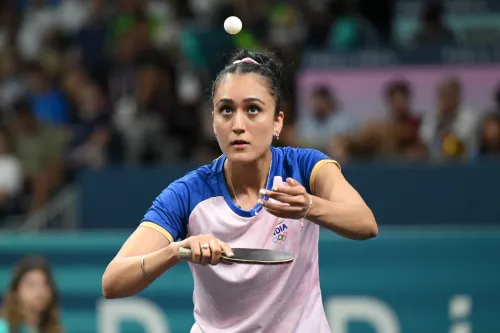
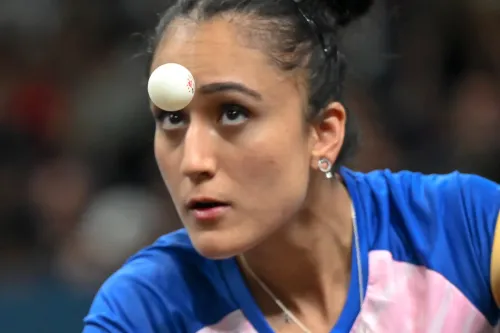
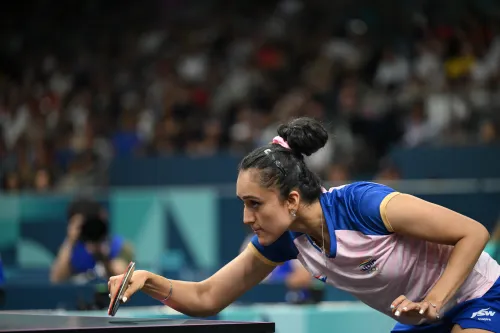
Manika Batra questions Asian Games 2026 exclusion, seeks transparent selection
Synopsis
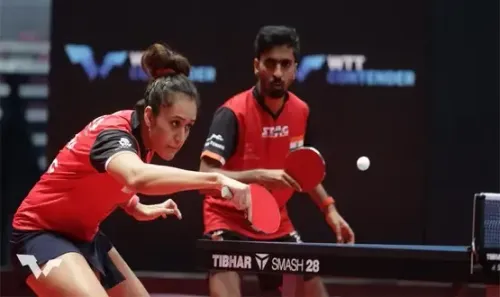
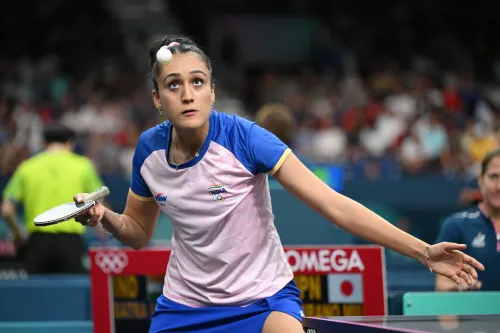
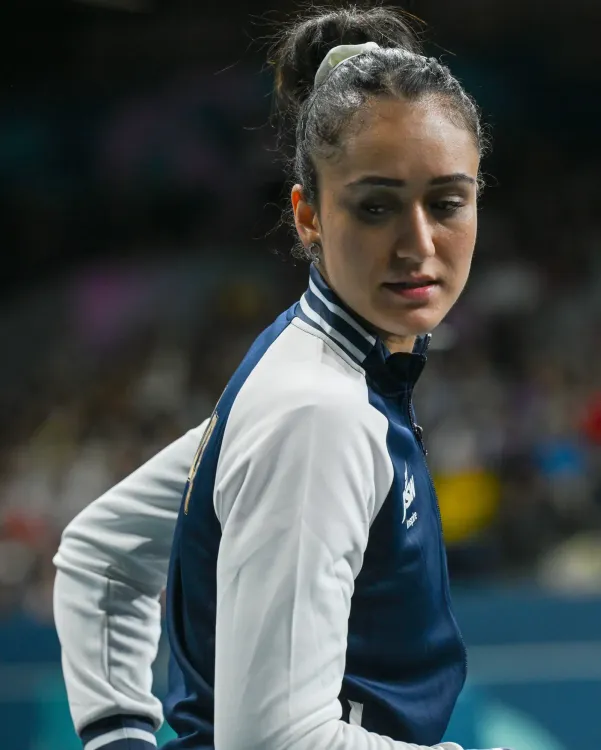
Manika Batra — Commonwealth Games gold medallist and Asian Games bronze medallist — has been left out of India's Asian Games 2026 table tennis squad in favour of a 10-member team led by Sreeja Akula and G Sathiyan. Ranked World No. 51 and just outside the reported top-50 cut-off, she has publicly challenged the TTFI's selection process, writing to the Sports Minister and the IOA. The dispute cuts to a deeper fault line in Indian sport: who controls discretion when rankings alone don't tell the full story.
Key Takeaways
TTFI named a 10-member squad for Asian Games 2026 (Aichi-Nagoya, Japan), led by Sreeja Akula and G Sathiyan ; table tennis events run 20–28 September 2026 .
Manika Batra was placed in the reserves, not the main squad, and has publicly contested the decision.
Batra is currently ranked World No.
51 , just outside the reported top-50 selection threshold, a margin she calls 'extremely narrow.' She has written to Sports Minister Dr.
Mansukh Mandaviya and the IOA seeking a transparent, documented explanation of selection criteria.
Batra holds 2 gold, 1 silver, 1 bronze at the Commonwealth Games and 1 bronze at the Asian Games, and is the first Indian to reach the Round of 16 in Asian Games singles.
The TTFI is yet to issue a detailed public response to her challenge.
Manika Batra, one of India's most decorated table tennis players, has formally challenged her exclusion from the Asian Games 2026 squad, writing to Sports Minister Dr. Mansukh Mandaviya and the Indian Olympic Association (IOA) to demand a transparent and accountable selection process. The Table Tennis Federation of India (TTFI) announced a 10-member squad — five men and five women — led by Olympians Sreeja Akula and G Sathiyan for the Games to be held at Aichi-Nagoya, Japan, with table tennis events scheduled from 20 to 28 September 2026.
The Squad That Left Batra Out
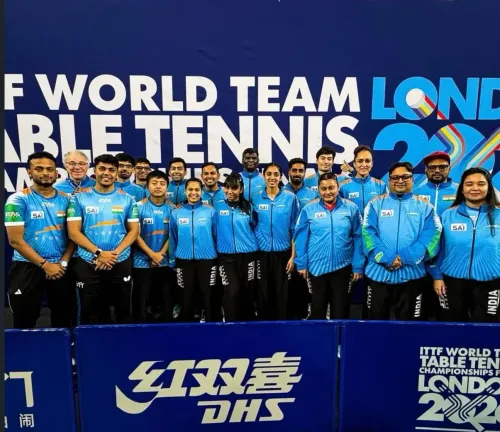
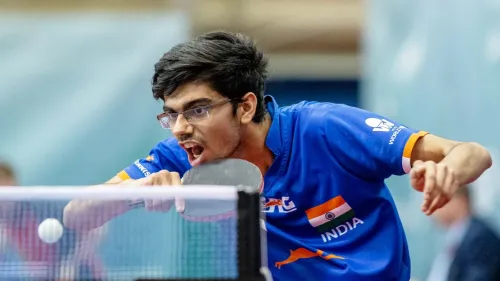
The men's team comprises G Sathiyan, Harmeet Desai, Manav Thakkar, Manush Shah, and Payas Jain. The women's side includes Sreeja Akula, Yashaswini Ghorpade, Diya Chitale, Sutirtha Mukherjee, and Syndrela Das. Batra was placed in the reserves alongside Ankur Bhattacharjee, Ronit Bhanja (men), and Swastika Ghosh (women) — a placement she has described as deeply disheartening.
Batra's Case: Rankings, Form, and Fairness
The 31-year-old Delhi paddler — the first Indian player, male or female, to reach the Round of 16 in singles at the Asian Games — argues that her omission cannot be justified on ranking grounds alone. Currently ranked World No. 51, she notes the margin from the reported top-50 cut-off is 'extremely narrow' and that rankings can shift within a single cycle.
In a statement posted on social media, Batra said: 'My exclusion from the Asian Games 2026 squad is deeply disheartening, not only because of the outcome, but because of the manner in which the selection criteria appear to have been interpreted and applied. No specific reason has been communicated to me.'
She also cited consistent form this season, including wins against under-19 youth champions from China and several top Asian opponents, and questioned how domestic ranking considerations apply to players who prioritise international competition calendars.
The Transparency Demand
Batra's central grievance concerns the consistency with which selection norms — reportedly a combination of World Ranking, National Ranking, and Selection Committee discretion — have been applied. She pointed to the previous Asian Games cycle, where players ranked outside the top 50 in world rankings and outside the top 10 nationally were reportedly included under 'special considerations.'
'This makes it important that the present selection clearly explains how the same or similar principles have been applied or not applied in my case,' she said. She has formally sought a 'detailed explanation' covering the complete basis of the decision, applicable norms, and how each factor was weighted.
What Her Record Brings to the Argument
Batra's medal haul at multi-sport events lends weight to her case. She has won two gold medals, one silver, and one bronze at the Commonwealth Games, and a bronze medal at the Asian Games — a record that critics of the selection argue should factor into discretionary considerations alongside rankings.
The controversy adds to a pattern of high-profile athlete-federation disputes in Indian sport, where selection criteria are frequently contested as opaque. The TTFI is yet to issue a detailed public response. How the Sports Ministry and the IOA respond to Batra's appeal could set a precedent for how selection grievances are handled ahead of a busy international calendar.
Point of View
National ranking, and discretionary criteria, yet communicated none of it to a player with her medal pedigree. The precedent from the previous Asian Games cycle, where players outside the top 50 were included under 'special considerations,' makes the federation's silence harder to defend. Indian sports bodies have a long history of opaque selection that courts and committees have repeatedly been asked to untangle; the Sports Ministry's response here will signal whether athlete grievance mechanisms have matured or remain performative.
NationPress
19 Sept 2026
Frequently Asked Questions
Why was Manika Batra excluded from the Asian Games 2026 squad?
The TTFI has not publicly stated a specific reason for Batra's exclusion. She is currently ranked World No. 51, marginally outside a reported top-50 world ranking threshold used in selection, but the federation has not formally communicated the criteria or their application to her.
Who has been selected in India's table tennis squad for Asian Games 2026?
The 10-member squad includes G Sathiyan, Harmeet Desai, Manav Thakkar, Manush Shah, and Payas Jain (men), and Sreeja Akula, Yashaswini Ghorpade, Diya Chitale, Sutirtha Mukherjee, and Syndrela Das (women). Batra was placed among the reserves.
What has Manika Batra demanded from the Sports Ministry?
Batra has written to Sports Minister Dr. Mansukh Mandaviya and the Indian Olympic Association requesting a transparent, consistent, and fair review of the selection process. She has specifically asked for a documented explanation of how each selection criterion — world ranking, national ranking, and discretionary factors — was weighted in her case.
When is table tennis scheduled at the Asian Games 2026?
Table tennis at the Asian Games 2026 in Aichi-Nagoya, Japan, is scheduled from 20 to 28 September 2026, with medal events across team, singles, and doubles categories.
What is Manika Batra's international record?
Batra has won two gold medals, one silver, and one bronze at the Commonwealth Games, and a bronze medal at the Asian Games. She is also the first Indian player — male or female — to reach the Round of 16 in singles at the Asian Games.