MCC clarifies 'Obstructing the Field' rule after Raghuvanshi's IPL dismissal

Synopsis
The MCC has drawn a sharp line: Raghuvanshi's dismissal was not a grey area but a textbook case of wilful obstruction. By crossing the pitch to place himself between ball and wicket, he violated the law's core principle — that a batter must take the quickest route and not deliberately alter his path. The ruling resets expectations for how umpires should interpret this law across cricket.
Key Takeaways
MCC issued a clarification on Law 37 ('Obstructing the Field') following Angkrish Raghuvanshi's dismissal in IPL 2026 on 30 April .
Raghuvanshi was ruled out after crossing the pitch mid-run, placing himself between the ball and wicket — a wilful act under the law.
Law 37.1.1 requires obstruction to be deliberate; a batter's change of direction to run on the pitch qualifies as wilful.
The MCC clarified that whether a batter would have made his ground is irrelevant to the obstruction determination.
The ruling applies uniformly across international cricket and the IPL , resetting umpiring standards for similar incidents.
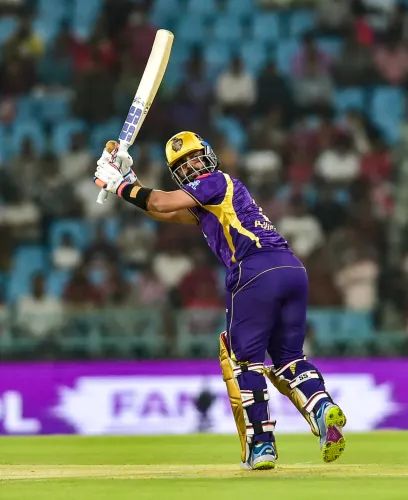
The Marylebone Cricket Club (MCC) on 30 April issued a detailed clarification on the 'Obstructing the Field' law following the controversial dismissal of Kolkata Knight Riders batter Angkrish Raghuvanshi during an IPL 2026 match against Lucknow Super Giants. The incident reignited debate over one of cricket's most contentious laws, with the governing body now spelling out precisely when a batter's movement constitutes a wilful obstruction.
What happened in the Raghuvanshi dismissal
Raghuvanshi was adjudged out by the third umpire after attempting a U-turn to return to the striker's end. He had initially set off for a quick single before being called back by his batting partner. As he turned and dived to regain his ground, a throw from the field struck him, leading to an appeal that resulted in his dismissal under Law 37.
The MCC's definition of wilful obstruction
The MCC reiterated that Law 37.1.1 requires a batter to be dismissed only if there is a deliberate attempt to obstruct or distract the fielding side. The law states: "either batter is out Obstructing the Field if they 'wilfully attempt to obstruct or distract the fielding side by word or action.'" The governing body emphasised that the obstruction must be intentional, a determination that can prove difficult in real-time adjudication.
The decisive factor: crossing the pitch
The MCC applied its long-standing interpretation of the law to the Raghuvanshi case, focusing on a batter's change of direction while running between wickets. According to the governing body's guidelines, "A batter who changes direction while running, particularly one who changes direction to run on the pitch, or takes any other route that would not be the quickest way to the other end, is making a wilful act."
In Raghuvanshi's case, the MCC found that his movement across the pitch was the decisive element. The batter had initially been on the off side of the wicket but crossed to the middle of the pitch — an area he should not have occupied during a run — before turning back on the leg side. This sequence placed him directly between the ball and the wicket, constituting a wilful obstruction by definition.
The MCC noted that had Raghuvanshi remained on the off side throughout, the ball would not have struck him. Similarly, had he begun his return run on the leg side and stayed there before being hit, he would have been ruled not out, despite being in the way — because the action would not have been wilful. It was the deliberate crossing of the pitch that led to his dismissal.
Addressing the 'safe run' argument
The MCC also addressed a counterargument raised by some analysts: that Raghuvanshi would have safely completed the run even without the throw striking him. The governing body clarified that such considerations are irrelevant under Law 37. "Whether a dismissal was likely is not a criterion in Obstructing the Field," the MCC stated, provided the obstruction is not intended to prevent a catch being taken.
Broader implications for the IPL and international cricket
This clarification arrives at a critical moment for the IPL 2026 season, where fast-paced cricket and split-second decisions have already generated multiple controversial calls. The MCC's statement is likely to inform future umpiring decisions not only in the league but also in international cricket, where the law applies uniformly. Teams and broadcasters will now have a clearer framework for understanding when a batter's movement crosses the line from defensive positioning into wilful obstruction.
Point of View
Not a vindication of a controversial call. By anchoring the decision to Raghuvanshi's deliberate pitch-crossing — rather than the harder-to-judge intent question — the governing body has given the third umpire an objective criterion. However, the real test will be consistency: will future umpires apply this same rigour to similar mid-run direction changes, or will the law remain selectively enforced? The IPL's fast-paced environment and commercial pressures make uniform application unlikely without explicit instruction to match officials.
NationPress
19 Sept 2026
Frequently Asked Questions
What is the 'Obstructing the Field' law in cricket?
Law 37.1.1 states that a batter is out if they 'wilfully attempt to obstruct or distract the fielding side by word or action.' The obstruction must be deliberate, not accidental.
Why was Angkrish Raghuvanshi given out?
Raghuvanshi was ruled out because he deliberately crossed the pitch while returning to the striker's end, placing himself between the ball and the wicket. This change of direction to run on the pitch constitutes a wilful act under the law.
Would Raghuvanshi have been safe if he had stayed on one side of the pitch?
Yes. According to the MCC, had Raghuvanshi remained on the off side throughout, he would not have been struck by the throw. Similarly, had he begun his return run on the leg side and stayed there, he would have been not out despite being in the ball's path — because the movement would not have been wilful.
Does it matter if a batter would have made his ground anyway?
No. The MCC clarified that whether a dismissal was likely is not a consideration under Law 37. The focus is solely on whether the obstruction was wilful, not on whether it affected the outcome.
How does this clarification affect IPL 2026 and international cricket?
The MCC's statement provides a clear framework for umpires in both the IPL and international cricket. Future decisions on similar incidents — where a batter changes direction while running — will now reference this explicit guidance on what constitutes wilful obstruction.