Meghalaya CM Sangma outlines youth sports vision at 2026 conclave

Synopsis
Meghalaya is not just building stadiums — it is betting its youth future on sport. With 240 infrastructure projects already underway, a target of 500 by 2028, ₹72.5 crore committed for the 2027 National Games, and 50,000 athletes scouted in under a year, CM Conrad Sangma is making the case that a small northeast state can punch far above its weight on India's sporting map.
Key Takeaways
Chief Minister Conrad K.
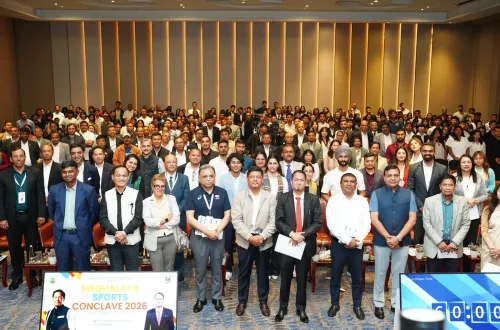
Sangma addressed the Meghalaya Sports Conclave 2026 in Shillong on 16 June 2026 .
Nearly 240 sports infrastructure projects are completed, underway, or under construction; the number is expected to exceed 500 by 2028 .
Meghalaya has allocated ₹72.5 crore for Team Meghalaya's preparations for the 39th National Games in 2027 .
More than 50,000 athletes have been identified through scouting since June 2025 ; over 1,200 are in structured training.
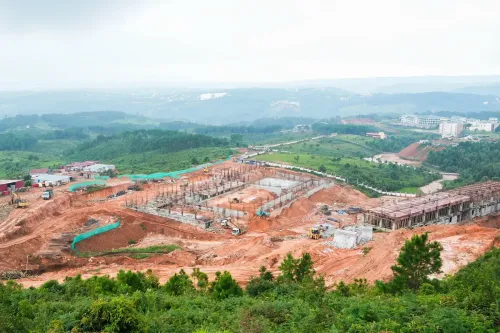
The state is constructing what is projected to be India's largest football stadium .
Sangma framed the National Games as a milestone in a longer state-building journey, not a standalone objective.
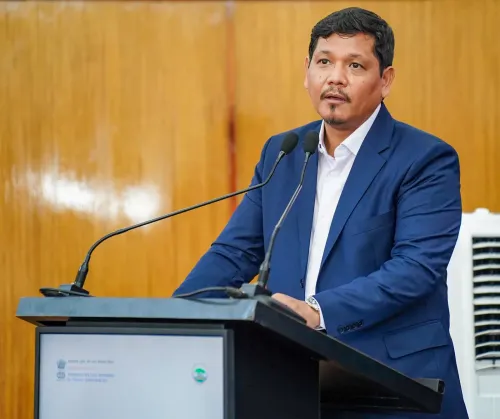
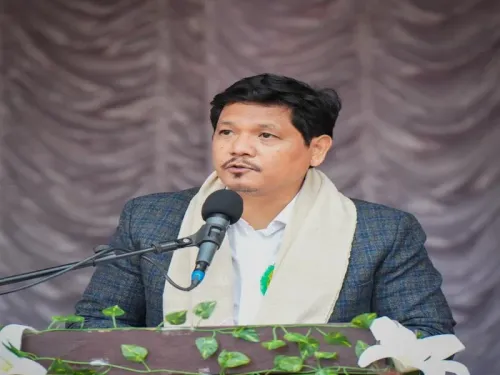
Meghalaya Chief Minister Conrad K. Sangma on Tuesday, 16 June 2026, reaffirmed the state's ambition to build a world-class sporting ecosystem at the Meghalaya Sports Conclave 2026 in Shillong, framing sports as a vehicle for youth empowerment and long-term social transformation rather than a pursuit of medals alone.
The Vision Behind the Numbers
Addressing an audience of sports administrators, athletes, policymakers, and industry experts, Sangma drew a clear distinction between transactional sports investment and systemic state-building. 'It is not just about one medal, one appointment letter, or one stadium. It is about the youth and the opportunity we create for them,' he said, articulating the philosophy underpinning Meghalaya's sports push.
The Chief Minister pointed to a significant infrastructure surge: nearly 240 sports infrastructure projects have been completed, are under implementation, or are currently under construction across the state. That figure is expected to surpass 500 projects by 2028, marking one of the most ambitious sub-national sporting infrastructure drives in the country's northeast.
National Games 2027 as a Milestone, Not a Target
Sangma urged stakeholders not to view Meghalaya's preparations for the 39th National Games in 2027 as a short-term objective. Instead, he positioned the Games as a milestone within a longer journey — one aimed at cultivating a durable sporting culture and a talent pipeline that serves future generations.
Notably, the state has earmarked ₹72.5 crore specifically for Team Meghalaya's National Games preparations, signalling a serious commitment to competitive readiness rather than mere hosting logistics.
Talent Identification and Athlete Development
On the ground, the numbers are equally striking. More than 50,000 athletes have been identified through scouting programmes since June 2025, while over 1,200 athletes are currently undergoing structured training. This systematic talent pipeline is a marked departure from the ad-hoc identification processes that have historically constrained northeast India's sporting output.
This comes amid a broader national push to decentralise elite sports development beyond traditional strongholds such as Haryana, Punjab, and Kerala — and Meghalaya appears to be positioning itself as a model for smaller states with outsized sporting ambitions.
India's Largest Football Stadium in Shillong
Among the flagship projects, Sangma highlighted the construction of what is set to become the country's largest football stadium in Meghalaya — a project he described as symbolic of the state's growing confidence and its aspiration to become a major national sporting hub. Football has deep cultural roots in Meghalaya, and a stadium of this scale could significantly elevate the state's standing in Indian club and national football circuits.
A Shift in Mindset
Beyond infrastructure and investment, Sangma identified a transformation in collective confidence as Meghalaya's most significant achievement — the belief that the state can dream bigger, host major national events, and compete with the best in the country. He argued this shift has driven greater public participation, stronger institutional support, and rising aspirations among young athletes.
With the National Games two years away and over 500 infrastructure projects on the horizon, Meghalaya's sports trajectory will be closely watched as a test case for how targeted state investment can reshape a region's sporting identity.
Point of View
000 athletes is meaningless without a pathway to elite competition, and 500 infrastructure projects can easily become 500 underutilised facilities if institutional capacity does not keep pace. The ₹72.5 crore National Games allocation is a start, but Meghalaya will need sustained post-Games investment to avoid the 'host city hangover' that has left facilities in other states idle within years of a major event. The football stadium ambition is bold; converting that into a viable domestic league ecosystem is the harder, unglamorous work that follows.
NationPress
24 Sept 2026
Frequently Asked Questions
What was announced at the Meghalaya Sports Conclave 2026?
Chief Minister Conrad K. Sangma outlined Meghalaya's sports development roadmap at the conclave in Shillong on 16 June 2026, highlighting 240 ongoing infrastructure projects, a target of 500 projects by 2028, ₹72.5 crore earmarked for the 2027 National Games, and over 50,000 athletes identified through scouting since June 2025.
How many sports infrastructure projects is Meghalaya building?
Nearly 240 sports infrastructure projects are currently completed, under implementation, or under construction across Meghalaya. The state government expects this number to exceed 500 projects by 2028.
How is Meghalaya preparing for the 39th National Games in 2027?
Meghalaya has earmarked ₹72.5 crore specifically for Team Meghalaya's National Games preparations. Over 1,200 athletes are in structured training, and more than 50,000 have been identified through scouting programmes since June 2025. CM Sangma has described the Games as a milestone rather than the final goal.
What is the significance of the football stadium being built in Meghalaya?
The stadium under construction in Meghalaya is projected to be the largest football stadium in India. CM Sangma cited it as a symbol of the state's ambition to establish itself as a major national sporting hub, particularly significant given football's deep cultural roots in the region.
Who is Conrad K. Sangma and why is his sports push significant?
Conrad K. Sangma is the Chief Minister of Meghalaya. His administration's sports investment is notable because it positions a smaller northeast Indian state as a serious player in national sports infrastructure, challenging the traditional dominance of states like Haryana, Punjab, and Kerala in elite athlete development.