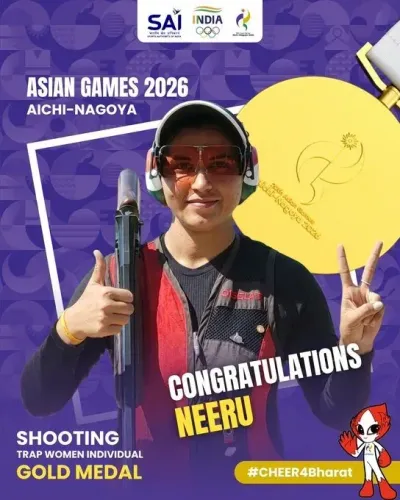
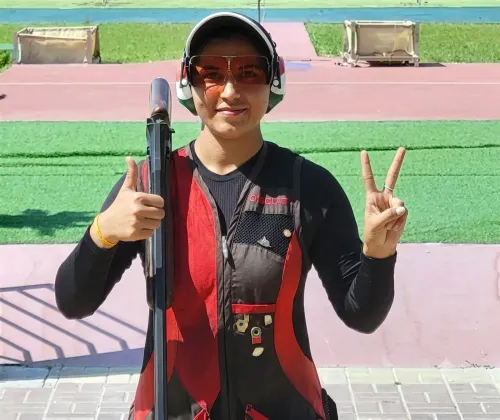
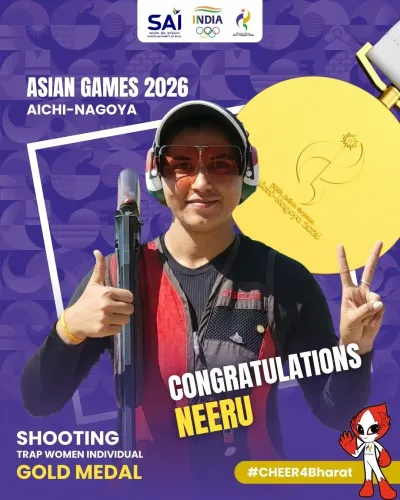
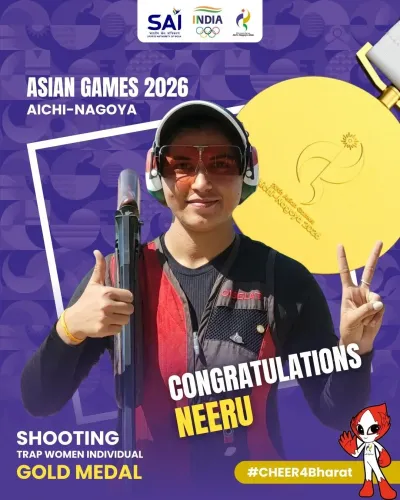
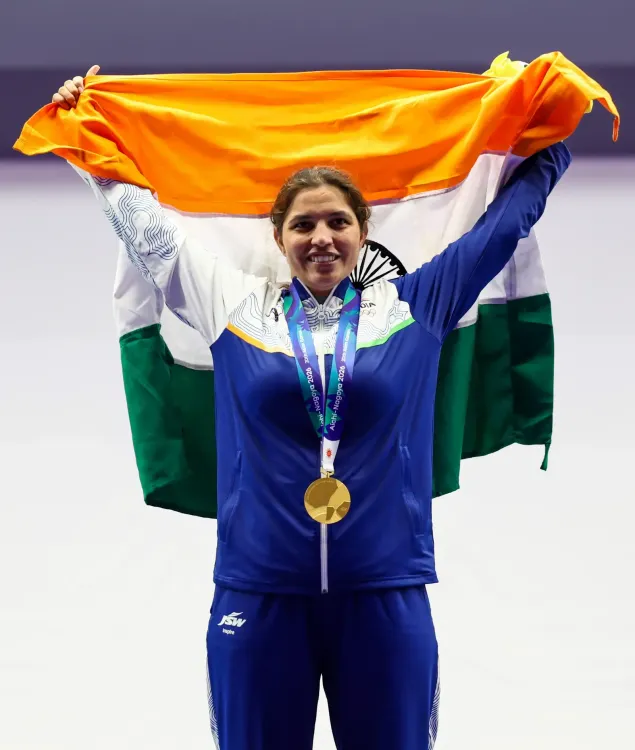
Neeru Dhanda wins Asian Games 2026 trap gold after illness scare, coach Wilson hails composure
Synopsis
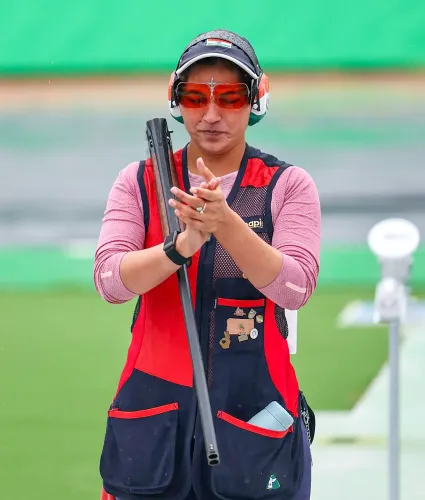
Neeru Dhanda was so ill ten days before the Asian Games that her participation was in doubt — yet she topped qualification and shot 28 out of 30 in the final to win gold in Aichi-Nagoya, surviving a yellow card controversy at the decisive moment. Coach Peter Wilson called it one of the most attritional and emotionally charged victories he had been part of.
Key Takeaways
Neeru Dhanda won the women's trap individual gold at the Asian Games 2026 in Aichi-Nagoya on 29 September .
Dhanda scored 28 out of 30 in the final, having also topped the qualification round.
She had been seriously ill just 10 to 12 days before the competition and completed no training in the build-up.
A yellow card issued to Dhanda at the decisive moment of the final was challenged by coach Peter Wilson ; the jury resettled and she hit the winning target.
Coach Wilson, a London 2012 Olympic double trap gold medallist , described Dhanda as 'more composed than anybody' during the final.
The Indian team will next compete in the mixed team event before preparing for the World Championships in Doha .
Neeru Dhanda claimed the women's trap individual gold at the Asian Games 2026 in Aichi-Nagoya on Tuesday, 29 September, producing 28 hits out of 30 in the final to deliver a historic medal for India — a feat made all the more remarkable by the fact that she had been seriously ill just 10 to 12 days before the competition. Indian trap-shooting coach Peter Wilson described the win as one of the most emotionally charged performances he had witnessed, praising Dhanda's exceptional composure under pressure.
From Illness to the Top of the Podium
According to Wilson, Dhanda's participation in the Games was in serious doubt in the fortnight leading up to competition. 'Considering Neeru was very poorly only 10 days, 12 days ago, and it was looking like she might not even be able to make the Asian Games. She didn't do any training in the build-up,' Wilson told reporters after the victory. Despite missing her pre-competition preparation entirely, Dhanda topped the qualification round before going on to win gold in the final.
The 26-year-old shooter's ability to peak without a conventional build-up underscores what Wilson described as a rare mental resilience — one that held firm even as conditions and officiating decisions tested her during the final itself.
Brutal Conditions in the Final
The final at Aichi-Nagoya was contested in persistently difficult weather. Rain fell throughout the day, and as the competition progressed into the evening, fading light compounded the challenge. Wilson described the conditions in detail: 'It just rained all day. And now we're very lucky, it stopped raining, but it's getting dark. So not only was it raining, the light was dim. And that again makes it more tricky. So you struggle to get a good connection with the gun. And then, of course, as you're looking down the rib, the rain's bouncing off it. You're getting wet, the rain's running down the back of your neck. It's really very, very difficult.'
Notably, the format of the final — where shooters are eliminated progressively in blocks of 10, then 5 — added psychological intensity with every passing round.
Yellow Card Controversy and Dhanda's Response
At the most critical juncture of the final, with Dhanda needing just one more target to secure gold, she received a yellow card for allegedly taking too long over a shot. Wilson challenged the decision before the jury, arguing that the timer had been started prematurely. 'I felt it was really unfair because they'd started the timer too early. I objected with the jury, they resettled,' he said. Rather than being rattled, Dhanda absorbed the disruption calmly. 'Neeru was incredible. She was more composed than anybody. And she settles herself and shoots it,' Wilson added.
This is the kind of pressure-management that Wilson said he had consciously prepared Dhanda for — urging her to work 'one target at a time' and to stay present rather than dwell on the significance of the occasion.
What Wilson Told Dhanda Before the Final
Wilson, a British Olympic champion who won double trap gold at the London 2012 Games, said his pre-final message to Dhanda was deliberately simple. 'Just grind them down and work one target at a time. It's really very simple. Hard to do, easy to say. Of course, there is other stuff that's going on in one's mind, but you have to try and catch that, bring it back to this moment. Be present and just one target at a time,' he said.
What Comes Next for the Indian Shooting Team
With the Asian Games gold secured, the Indian team's immediate focus shifts to the mixed team event the following day. After the Games, Wilson indicated the squad would return home and take a short break before ramping up preparations for the World Championships in Doha. 'I'm hoping these guys are going to have a couple of weeks off, maybe a touch longer, just to decompress. This has been an amazing competition for us, for Neeru especially, in Olympic trap,' he said. He added that the timeline for Doha preparations would depend on how Dhanda and the team recover from what he called 'an enormous feat.'
For the Indian shooting setup, Dhanda's gold is evidence that disrupted preparation need not derail peak performance — a lesson that will carry weight as the team targets the World Championships.
Point of View
Skipped her entire build-up, and then outperformed a clean field under rain, fading light, and a disputed yellow card. The yellow card incident deserves scrutiny: if Wilson's account of the timer being started prematurely is accurate, it points to officiating inconsistency at a high-stakes moment. More broadly, India's shooting programme has quietly built a pipeline of athletes who peak at major events despite systemic preparation gaps — a pattern that reflects individual resilience as much as institutional support, and one that should prompt a harder look at whether the support structures match the talent on display.
NationPress
29 Sept 2026
Frequently Asked Questions
How did Neeru Dhanda perform in the Asian Games 2026 trap final?
Neeru Dhanda scored 28 out of 30 in the women's trap individual final at the Asian Games 2026 in Aichi-Nagoya on 29 September, winning the gold medal. She had also topped the qualification round ahead of the final.
Why was Neeru Dhanda's gold medal considered especially remarkable?
Dhanda had been seriously ill just 10 to 12 days before the Asian Games and completed no training in the build-up, making her participation uncertain. Her ability to top qualification and win the final without a conventional preparation period made the achievement stand out, according to her coach Peter Wilson.
What happened with the yellow card during Neeru Dhanda's final?
Dhanda received a yellow card for allegedly taking too long over a shot at the moment she needed just one more target to win gold. Coach Peter Wilson challenged the decision before the jury, arguing the timer had been started too early. The jury resettled the situation and Dhanda went on to hit the winning shot.
Who is Peter Wilson and what is his connection to Indian shooting?
Peter Wilson is a British Olympic champion who won double trap gold at the London 2012 Games. He currently serves as the Indian trap-shooting coach and has been working with Neeru Dhanda and the national squad.
What are India's next shooting targets after the Asian Games 2026?
After the Asian Games, the Indian shooting team will compete in the mixed team event before returning home for a recovery period. Coach Peter Wilson has indicated the squad will then prepare for the World Championships in Doha, with the timeline depending on how athletes decompress from the Asian Games.