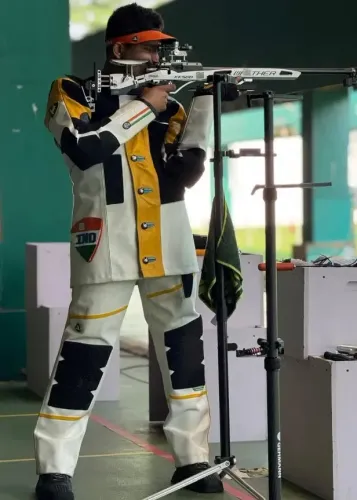
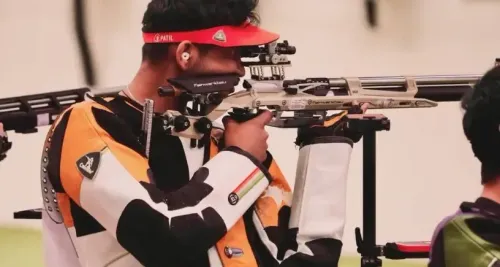
Rudrankksh Patil on Asian Games 2026: Hotel mix-ups, delayed buses and twin medals
Synopsis
Fresh off winning a silver and bronze at the Aichi-Nagoya Asian Games, Rudrankksh Patil laid bare the chaos that preceded his medals — an emergency landing in Jaipur, a 4 am hotel dispute where coaches confronted staff over a booking mix-up, and bus rides that took two and a half hours instead of 70 minutes. India's quick fix: private cars for every shooting discipline, so no athlete missed their event.
Key Takeaways
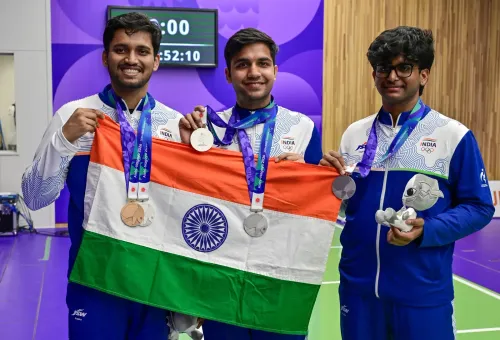
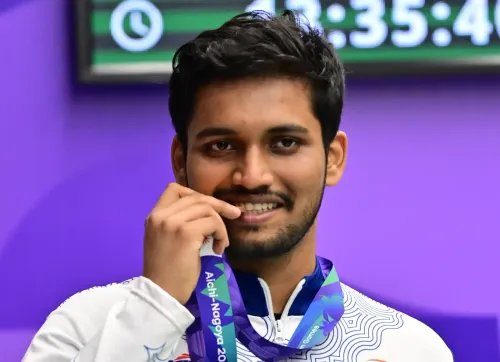
Rudrankksh Patil won a silver (10m Air Rifle team) and a bronze (individual) at the Asian Games 2026 in Aichi-Nagoya, Japan.
The contingent's flight made an emergency landing in Jaipur en route from Bhopal to Delhi before departing for Japan.
After a three-hour wait at the welcoming centre, the team reached their hotel at approximately 3:30–4 am , only to find their confirmed booking had not been honoured.
Indian coaches resolved the room crisis by converting double-occupancy rooms to single occupancy for all shooters.
Persistent bus delays of up to two and a half hours were addressed by the Indian authorities, who arranged private cars for rifle, pistol, and shotgun teams.
Patil praised Japan's sustainable food management system and called the overall Games atmosphere 'really good.'
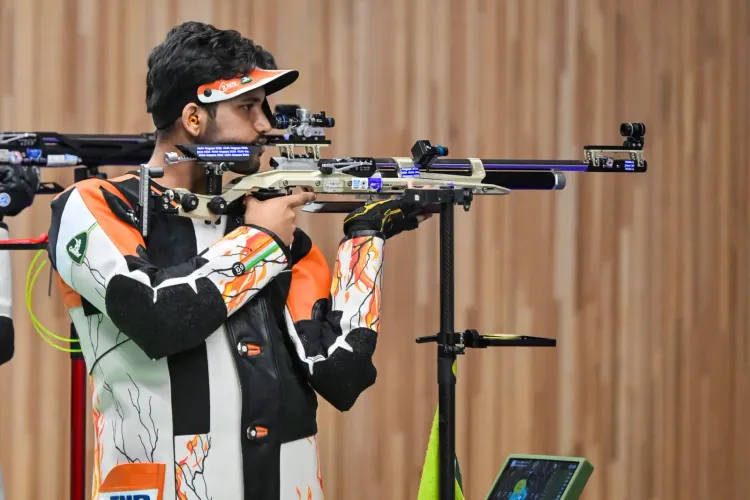
Double Asian Games 2026 medallist Rudrankksh Patil has revealed a series of logistical challenges — including an emergency landing, a hotel booking dispute, and chronic bus delays — that the Indian shooting contingent had to navigate before competing at the Aichi-Nagoya Games in Japan. Patil, who clinched a silver in the 10m Air Rifle team event and a bronze in the individual event, spoke candidly to reporters after his twin-medal haul.
A Turbulent Journey to Japan
The trouble began on Indian soil. Patil described how the contingent's flight from Bhopal to Delhi encountered technical difficulties, forcing an emergency landing in Jaipur. The team eventually made it to Delhi and departed for Japan the following evening. The onward journey — via Hong Kong — involved a near five-hour leg to Hong Kong, a six-to-seven-hour layover, and another five-hour flight before the team finally touched down in Japan.
'It was a long travel for us from Bhopal to Delhi. Our flight had some issues, and we did an emergency landing in Jaipur,' Patil told reporters. He added that despite the gruelling transit, paperwork at the Japanese end was cleared within minutes of arrival.
Hotel Dispute in the Early Hours
The exhausted contingent's ordeal was far from over. After a three-hour wait at the welcoming centre, the team's buses departed for the hotel only at around 2 or 3 am, reaching at approximately 3:30 to 4 am. On arrival, the shooters discovered that the property they had been allocated was not the hotel they had originally booked.
'Our coaches were fighting over there — if you can give us the confirmation for the best hotel, then how are you shifting us to some other hotel?' Patil recalled. He explained that the organisers operated an accommodation cluster — a 'village' model where a main hotel was connected to several smaller annexes — and rooms were assigned based on availability rather than confirmed reservations.
The rooms provided were notably small. 'We cannot open our suitcases over here,' Patil said. However, he credited the Indian coaches for swiftly responding: they converted all double-occupancy rooms to single occupancy, giving each shooter more personal space. 'The rooms are very small, but it's comfortable also. It's cosy also. I love this room now,' he added.
Bus Delays and the Government Fix
A second major grievance was unreliable bus transport to competition venues. Despite Japan's global reputation for precision punctuality, Patil noted that buses were consistently late — taking up to two hours to cover a route originally promised at 70 minutes, and sometimes stretching to two and a half hours.
Indian authorities intervened promptly. Private cars were arranged for each of the three shooting disciplines — rifle, pistol, and shotgun — with one car allocated per team per day. The system ensured that no athlete missed their event window regardless of bus availability. 'Even if the bus is delayed or due to any circumstance, the car will always be on time,' Patil said, noting that the women's rifle team used the arrangement on the previous day and his team relied on it for their competition.
Patil's Praise for Japan's Sustainable Approach
Despite the logistical friction, Patil was broadly appreciative of the Japanese hosts. He highlighted their ecological approach to food management — where athletes pre-register their meal attendance so that food is prepared to match actual demand, minimising waste. 'Japan is always the first one to have a sustainable, ecological way of conducting tournaments, and that's what they are doing,' he said.
Patil, a 2023 Hangzhou Asian Games gold medallist in the team event, called the overall atmosphere at the Games 'really good' and acknowledged that the compact room sizes reflect Japanese cultural norms rather than organisational neglect. With the shooting programme still ongoing, the Indian contingent will be hoping the administrative teething problems remain firmly behind them.
Point of View
Government-arranged private cars) demonstrate commendable on-the-ground problem-solving, but they also underscore a systemic gap: contingency planning for travel logistics and confirmed accommodation should not depend on coaches fighting hotel staff at 4 am. As India pushes for a stronger Asian Games identity, the backend infrastructure — transport coordination, confirmed room allocation, pre-event reconnaissance — deserves as much attention as athlete preparation itself.
NationPress
21 Sept 2026
Frequently Asked Questions
What accommodation issues did Rudrankksh Patil face at Asian Games 2026?
Patil revealed that the Indian shooting contingent arrived at their hotel at around 3:30–4 am after a three-hour wait at the welcoming centre, only to find that the hotel they had confirmed bookings for was not fully available to them. Coaches disputed the situation with hotel staff and ultimately arranged single-occupancy rooms for every shooter to compensate for the small room sizes.
What medals did Rudrankksh Patil win at the Aichi-Nagoya Asian Games?
Patil claimed a silver medal in the 10m Air Rifle team event and a bronze medal in the individual 10m Air Rifle event at the Asian Games 2026 in Aichi-Nagoya, Japan. He is also a gold medallist from the 2023 Hangzhou Asian Games in the team event.
Why did Patil's flight make an emergency landing in Jaipur?
Patil stated that the flight carrying the contingent from Bhopal to Delhi experienced unspecified technical issues, necessitating an emergency landing in Jaipur. The team subsequently continued to Delhi and flew to Japan the following evening via Hong Kong.
How were the bus delay problems resolved for India's shooting team?
After buses to competition venues took up to two and a half hours instead of the promised 70 minutes, Indian authorities arranged private cars — one per discipline per day — for the rifle, pistol, and shotgun teams. This ensured athletes reached venues on time regardless of official transport delays.
What did Patil say about Japan's overall hosting of the Asian Games?
Despite the logistical difficulties, Patil praised Japan's sustainable approach to food management, where athletes pre-register meal attendance to reduce waste. He described the Games atmosphere as 'really good' and noted that the compact room sizes are consistent with Japanese cultural norms.