Pujara rules out reverse sweep, cites Test cricket demands

Synopsis
Pujara's candid admission—that the reverse sweep would have left him all out—is more than a joke. It is a window into why he succeeded where aggressive modern batters failed in Australian conditions. His 521 runs and three centuries in 2018–19, built on patience and technique, beat Australia's pace attack when aggression could not. Now retired, Pujara's old-school method stands as a rebuke to T20-ification of Test cricket.
Key Takeaways
Cheteshwar Pujara acknowledged that the reverse sweep would have been incompatible with his Test batting style, risking dismissal.
During the 2018–19 Border-Gavaskar Trophy , Pujara scored 521 runs with three centuries , earning Player of the Series honours.
India secured their maiden Test series win in Australia , a first for any Asian team, with Pujara's contributions crucial to both 2018–19 and 2020–21 victories.
Pujara retired in August 2025 with 7,195 Test runs across 103 matches at an average of 43.60 .
Ravi Shastri credited Pujara as the "soldier" whose resilience was indispensable to India's overseas Test triumphs.
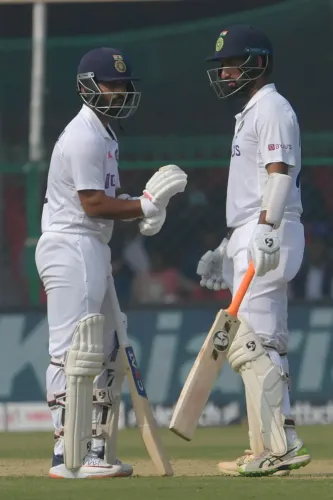
Former Indian cricketer Cheteshwar Pujara on Wednesday acknowledged that modern attacking strokes such as the reverse sweep would have been incompatible with his Test batting philosophy, risking dismissal in the longer format. Speaking during a candid exchange with Ravi Shastri, the former India head coach, on Jio Hotstar, Pujara reflected on his uncompromising defensive approach that defined his international career.
"If I had attempted such a shot in a Test match, I would not have been able to accumulate runs. All three of my stumps would have been knocked over, because executing that stroke was beyond my technical capability," Pujara said. Shastri had joked that had he suggested the reverse sweep to Pujara three years into his tenure as coach, the batter would have "come running after me with a bat."
The Border-Gavaskar Trophy legacy
The conversation pivoted to India's historic Test series victories in Australia, campaigns where Pujara's resilience proved instrumental. During the 2018–19 tour, he amassed 521 runs across the series, including three centuries, and was named Player of the Series. India secured their maiden Test series win on Australian soil, a milestone that had eluded Asian teams for decades.
Pujara's grit remained equally vital in the 2020–21 series, where his capacity to absorb pace bowling and fatigue the Australian attack proved decisive in securing another famous victory. Shastri underscored the magnitude of the achievement, comparing it to winning a World Cup. "No Asian team had ever beaten Australia in Australia in a Test series. It remains the toughest tour," Shastri noted.
A soldier in the trenches
Shastri lauded Pujara's combative temperament across multiple challenging tours, including England. "Pujara was our soldier, taking blows and still fighting it out on both Australian tours and in England. His presence was crucial; we wouldn't have achieved those victories without him," Shastri said. The characterisation underscores how Pujara's old-school discipline and patience became India's competitive advantage in overseas Test cricket.
Career in numbers
Pujara retired from all forms of international and first-class cricket in August 2025, ending a career defined by technical soundness and mental toughness. He finished with 7,195 Test runs across 103 matches at an average of 43.60, establishing himself as one of India's most dependable middle-order anchors in the longest format.
What comes next
With Pujara now in the commentary box, his insights into defensive cricket and overseas technique are likely to shape India's next generation of Test batters, who face mounting pressure to adapt to modern T20-influenced stroke play.
Point of View
His success in Australia—built on patience, technique, and an almost monastic discipline—proves that Test cricket still rewards the old virtues. The reverse sweep is a young batter's shot; Pujara's 521 runs in 2018–19 were an older batter's masterclass. As India struggles to find middle-order anchors who can bat time overseas, Pujara's retirement marks the end of an era when defensive skill was not a liability but a weapon.
NationPress
19 Sept 2026
Frequently Asked Questions
Why did Cheteshwar Pujara reject the reverse sweep as a Test batter?
Pujara stated that executing the reverse sweep would have been technically beyond him and would have resulted in dismissal, with all three stumps being knocked over. His defensive batting style, built on sound technique and patience, was fundamentally incompatible with such attacking strokes in the longer format.
What was Pujara's role in India's Border-Gavaskar Trophy victories?
In the 2018–19 series, Pujara scored 521 runs including three centuries and was named Player of the Series. In the 2020–21 tour, his ability to absorb pace bowling and tire the Australian attack proved vital. India secured their first-ever Test series win in Australia, a first for any Asian team.
How many Test runs did Pujara score in his career?
Pujara finished his Test career with 7,195 runs across 103 matches at an average of 43.60 when he retired in August 2025.
What did Ravi Shastri say about Pujara's importance to India's Test victories?
Shastri described Pujara as India's "soldier," crediting his toughness, resilience, and presence as crucial to victories in Australia and England. He compared the Border-Gavaskar Trophy wins to World Cup victories, emphasizing that India would not have achieved those triumphs without Pujara.