IPL 2026: How RCB's auction blueprint and dressing room culture built back-to-back titles
Synopsis
RCB were ranked near-last after their mega auction, dismissed by most experts. Two years later, they are back-to-back IPL champions. Mo Bobat and Andy Flower's blueprint — experience over speculation at auction, a top-two obsession in the group stage, and Indian coaches embedded at every level — has rewritten what a franchise rebuild looks like in T20 cricket.
Key Takeaways
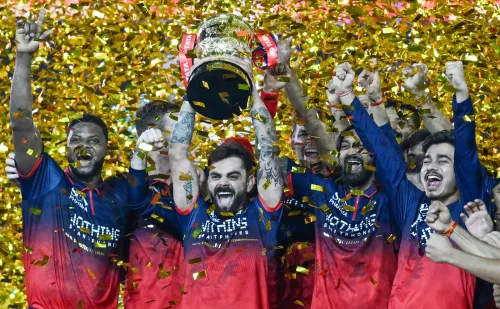
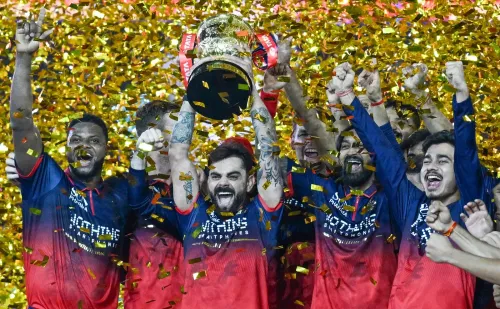
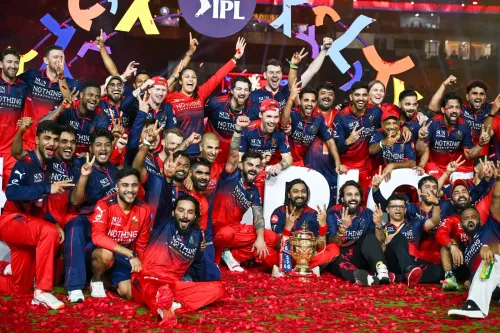
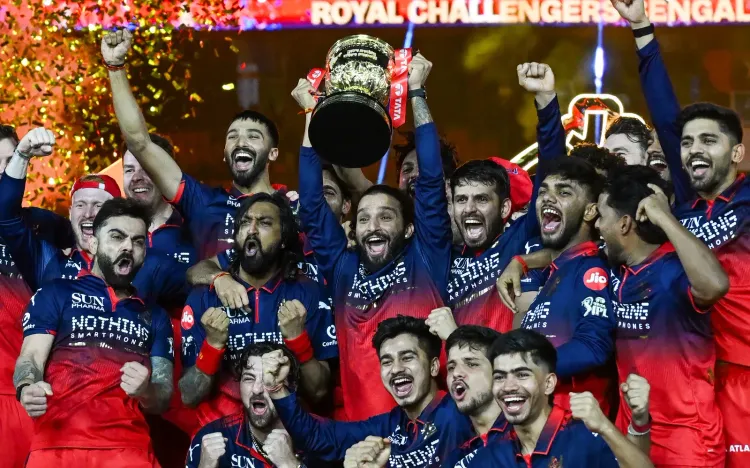
Royal Challengers Bengaluru defeated Gujarat Titans by five wickets on 1 June 2026 in Ahmedabad to claim back-to-back IPL titles .
Director of Cricket Mo Bobat said he 'never really doubted' RCB would win their first title, and immediately targeted back-to-back wins once they did.
A top-two group-stage finish was the strategic north star across both title-winning seasons, according to Bobat.
RCB were ranked second-bottom for squad quality by broadcasters after their mega auction; they went on to win the title that season.
Indian coaches Dinesh Karthik , Omkar Salvi , and Malolan Rangarajan were described by head coach Andy Flower as 'absolutely crucial' to the franchise's success.
The franchise's scouting system, built by Bobat and Rangarajan, is described as still in its 'initial phases of growth,' with further expansion planned.
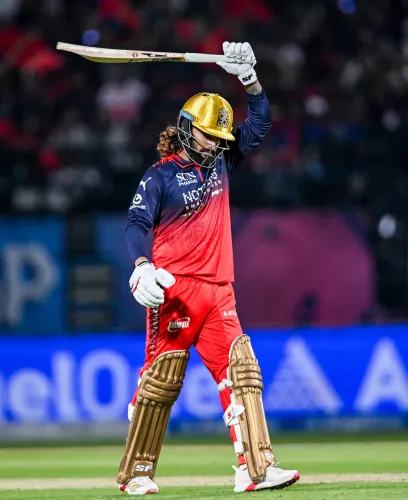
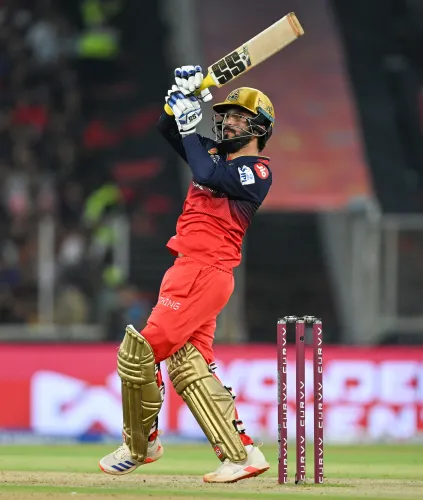
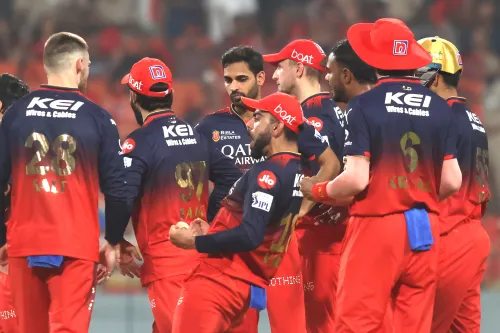
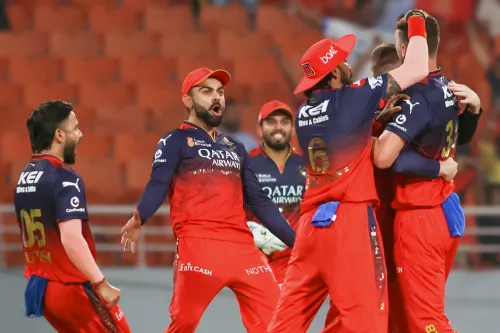
Royal Challengers Bengaluru (RCB) claimed their second consecutive IPL title on 1 June 2026 in Ahmedabad, defeating Gujarat Titans by five wickets — and according to the franchise's leadership, the back-to-back triumphs are the product of deliberate planning, not chance.
Director of Cricket Mo Bobat and head coach Andy Flower spoke at length in a virtual press conference on Monday, pulling back the curtain on the strategy that transformed a perennially star-heavy but lopsided franchise into the IPL's most consistent side over the past two seasons.
From 'Season of Two Halves' to Back-to-Back Champions
Bobat traced the turnaround to the period immediately after the duo joined the franchise, describing their first year as 'a season of two halves and pretty challenging.' The mega auction that followed gave them the reset they needed. 'We had the benefit of a mega auction and a bit of a reset, having learned some really strong lessons in the year before,' Bobat said.
The appointment of Rajat Patidar as captain was central to that fresh start. Bobat called it 'a blank slate,' and said the squad that emerged from the mega auction left him 'very ambitious and optimistic.' Crucially, he revealed that he never harboured doubts about ending RCB's long wait for a title. 'I never really doubted that we would do that,' he said, adding that once the first trophy arrived, the goal immediately shifted to sustaining excellence rather than celebrating a milestone.
The North Star: A Top-Two Finish
On the strategic framework underpinning both campaigns, Bobat pointed to a singular obsession — finishing in the top two of the group stage. 'I've probably been personally quite keen and fixed on trying to achieve top two, because I think the 14-game group stage is quite a gruelling campaign. If you can put yourself in a position to finish top two, I think everybody knows historically what that means for your chances,' he explained.
He credited Flower's game-by-game focus as the complementary force to his own big-picture thinking. 'Andy is excellent at getting people to focus on what's coming in front of us and the game ahead — it's certainly one of the things that I think he did brilliantly,' Bobat added. This duality — long-range ambition paired with present-moment execution — appears to be a defining feature of RCB's management culture under the current setup.
Auction Strategy: Experience Over Speculation
One of the most consequential decisions RCB made was to prioritise battle-hardened, proven players over unproven talent at the auction. Retaining Virat Kohli and Patidar was described as 'a really good start,' but the additions of Phil Salt, Tim David, Bhuvneshwar Kumar, Josh Hazlewood, and Krunal Pandya were equally deliberate.
Bobat was candid about the scepticism that greeted their auction choices. 'When we finished our mega auction, I think we were ranked second bottom for the quality of the squad by quite a lot of broadcasters and experts, and many people had us to finish last,' he recalled. That external noise, he said, 'was certainly nothing that affected our thought process or psychology.'
His broader philosophy on the auction was equally striking: 'I don't know whether you can win a competition at the auction. I think you can probably lose one at the auction.' The implication — that squad assembly is a necessary but insufficient condition — underlines RCB's emphasis on culture and cohesion as the decisive variables.
The Coaching Setup: Indian Coaches as 'Absolutely Crucial'
Flower was emphatic about the role of RCB's Indian coaching staff, describing their contribution as indispensable. Batting coach and mentor Dinesh Karthik was praised for his 'unquenchable energy' and creative ideas, with Flower noting that Karthik had 'earned the trust of even guys like Virat.' Bowling coach Omkar Salvi was described as 'one of the nicest men I have ever met' and an 'experienced head coach' whose calm observations and clear opinions the bowlers trusted implicitly.
Spin bowling coach and talent identification head Malolan Rangarajan — who also serves as WPL head coach — was credited with a dual role: coaching spinners Krunal Pandya and Suyash Sharma, and playing a wider part in scouting and auction preparation. 'Without their influence, I am sure we would not be sitting quite in the same position that we are this morning,' Flower said.
Flower also highlighted RCB's expanding scouting infrastructure, built in collaboration between Bobat and Rangarajan, noting that scouts were present at the final and attended the after-party — a signal, he suggested, of how deeply embedded they are in the franchise's identity.
What Next for RCB
With consecutive titles and a settled core, RCB enter the next cycle as the benchmark against which every other IPL franchise will measure itself. The mini-auction years ahead will test whether Bobat's squad-building philosophy holds under the constraints of a thinner player pool — but on current evidence, the franchise's leadership appears to have built something more durable than a one-season wonder.
Point of View
But not win it' is the most honest thing a franchise director has said publicly in years — and the results back it up. The more interesting question is whether this model is replicable, or whether it depends on the rare alignment of a settled captain, a world-class retention in Kohli, and two coaches whose philosophies happen to be perfectly complementary. The scouting infrastructure is the sleeper story here: if Rangarajan's system matures, RCB could have a talent pipeline that outlasts this core group.
NationPress
20 Sept 2026
Frequently Asked Questions
How did RCB win back-to-back IPL titles in 2025 and 2026?
Royal Challengers Bengaluru won consecutive IPL titles through a deliberate strategy built around experienced players, a top-two group-stage target, and a strong dressing room culture. Director of Cricket Mo Bobat and head coach Andy Flower credit the mega auction reset, the appointment of Rajat Patidar as captain, and the contributions of Indian coaches Dinesh Karthik, Omkar Salvi, and Malolan Rangarajan as the key pillars.
What was RCB's auction strategy for IPL 2026?
RCB prioritised proven, battle-hardened players over unknown quantities at the mega auction. Key additions included Phil Salt, Tim David, Bhuvneshwar Kumar, Josh Hazlewood, and Krunal Pandya, alongside retentions of Virat Kohli and Rajat Patidar. Bobat noted the franchise was ranked near-last for squad quality by experts after the auction — a verdict that proved spectacularly wrong.
What role did Dinesh Karthik play in RCB's IPL 2026 title win?
Dinesh Karthik served as RCB's batting coach and mentor, and head coach Andy Flower described his contribution as 'integral' to the franchise's success. Flower praised Karthik's creative energy, his ability to challenge players with new ideas, and the trust he built even with senior players like Virat Kohli.
Who are the Indian coaches at RCB and what do they do?
RCB's Indian coaching staff comprises Dinesh Karthik (batting coach and mentor), Omkar Salvi (bowling coach), and Malolan Rangarajan (spin bowling coach, talent identification head, and WPL head coach). Andy Flower described all three as 'absolutely crucial' to RCB's back-to-back title wins, with each playing a distinct and complementary role.
Why did RCB focus on finishing in the top two of the IPL group stage?
Mo Bobat explained that the 14-game IPL group stage is a gruelling campaign, and a top-two finish provides a significant structural advantage in the knockout rounds — historically improving a team's chances of reaching and winning the final. Achieving that target was described as his personal north star across both title-winning seasons.