Jonty Rhodes eyes lasting European cricket impact as Rotterdam ETPL co-owner

Synopsis
Rhodes isn't just buying into a franchise—he's betting that European cricket's future lies in year-round infrastructure, not four-week tournaments. By anchoring Rotterdam to a South African operational model and targeting non-traditional cricket audiences, he's attempting to solve associate cricket's most stubborn problem: sustained competitive exposure. Whether the ETPL can deliver on that promise will define European cricket's next decade.
Key Takeaways
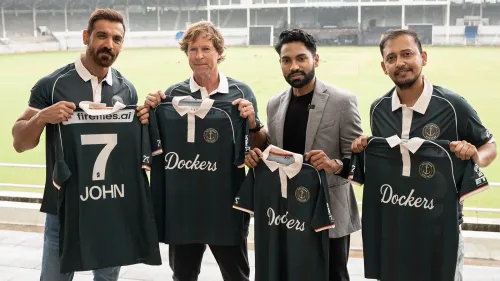
Jonty Rhodes , Faf du Plessis , and Heinrich Klaasen are co-owners of the Rotterdam franchise in the ETPL .
Du Plessis will captain Rotterdam in the inaugural season running 26 August to 20 September .
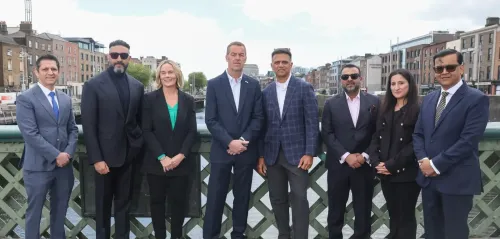
The six-team ETPL features franchises in Rotterdam , Glasgow , Amsterdam , Edinburgh , Dublin , and Belfast .
Rhodes plans year-round player development by linking Rotterdam players to South African cricket during the Southern Hemisphere season.
The strategy targets 33 ICC associate member nations in Europe and aims to attract athletes from football, hockey, and tennis backgrounds.
Rhodes will not coach but will oversee operational infrastructure, local management, and grassroots development.
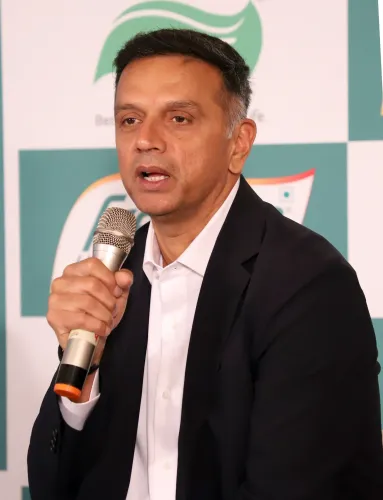
Former South African cricketer Jonty Rhodes has transitioned from coaching Sweden to ownership, joining fellow South Africans Faf du Plessis and Heinrich Klaasen as co-owners of the Rotterdam franchise in the European T20 Premier League (ETPL). Speaking exclusively to IANS on Thursday, Rhodes outlined an ambitious vision to build year-round competitive pathways for European cricketers beyond the tournament's four-week window.
From coaching to ownership
Rhodes spent two and a half years in Sweden during the pandemic, coaching the national team while observing cricket infrastructure across the Nordics, Germany, France, and Italy. That experience convinced him that European cricketers were "hungry" for elite exposure and investment. "I only worked with the national team for about a year and a half and saw how eager and keen and how grateful they were for an international player to come and spend time," Rhodes said. The opportunity to enter franchise cricket as an owner rather than employee proved irresistible.
Building year-round infrastructure
Rather than confining development to the August 26 to September 20 tournament window, Rhodes has structured the Rotterdam franchise with a distinctly South African operational model. This allows local players to access cricket practice and club cricket in South Africa during the Southern Hemisphere season, ensuring continuous competitive exposure. "We want to grow that platform and base by bringing in great players to play at the ETPL, and great coaches, but also ensuring that it's not just a four-week window," he explained. The franchise will leverage existing cricket facilities across the Netherlands, Ireland, and Scotland—a structural advantage absent in emerging markets like the USA.
Expanding cricket beyond diaspora communities
Rhodes identified a critical gap: while 33 ICC associate member nations exist in Europe, cricket remains predominantly a diaspora sport. His strategy targets young athletes already playing football, hockey, and tennis—sports with proven technical transferability to cricket. "If you've got the natural movement that all these other sports will bring, there's a great opportunity to switch from a technical point of view and become cricket players," he noted. Fan engagement activations beyond match days will be central to introducing the sport to new audiences.
Ecosystem-building beyond the playing field
Rhodes stressed that success requires investment across all operational layers—logistics, administration, local management, and grassroots development. "We are also utilizing local coaching staff and local management to ensure that, through this franchise, we are growing," he said. Du Plessis will captain Rotterdam in the inaugural season, while Rhodes remains focused on building institutional capacity that outlasts the competition's opening year. The six-team ETPL, featuring franchises in Rotterdam, Glasgow, Amsterdam, Edinburgh, Dublin, and Belfast, joins a growing wave of T20 leagues modeled on the Indian Premier League (IPL).
What lies ahead
Rhodes will not take a coaching role, maintaining clear boundaries around his ownership responsibilities. The focus remains on whether the franchise model can sustainably grow European cricket infrastructure and create pathways for local talent—a test that will unfold across multiple seasons rather than a single tournament window.
Point of View
Rhodes signals that the ETPL's real test isn't August crowds but whether it can build institutional staying power. The question is whether one franchise's ambition can move the needle when the entire European cricket ecosystem remains fragmented across 33 nations with minimal inter-regional competition.
NationPress
19 Sept 2026
Frequently Asked Questions
Who are the co-owners of the Rotterdam ETPL franchise?
Jonty Rhodes, Faf du Plessis, and Heinrich Klaasen are the co-owners of Rotterdam. Du Plessis will also serve as captain of the franchise in the inaugural season.
When will the ETPL tournament take place?
The European T20 Premier League is scheduled to run from 26 August to 20 September, featuring six city-based franchises across the Netherlands, Ireland, and Scotland.
What is Rhodes' strategy for developing European cricketers year-round?
Rhodes has structured the Rotterdam franchise with a South African operational model that allows local players to access cricket practice and club cricket in South Africa during the Southern Hemisphere season, ensuring continuous competitive exposure beyond the four-week tournament window.
Why does Rhodes believe European cricket has untapped potential?
According to Rhodes, while 33 ICC associate member nations exist in Europe, cricket remains largely confined to diaspora communities. He sees opportunity in attracting young athletes from football, hockey, and tennis backgrounds, who possess the technical movement skills transferable to cricket.
Will Jonty Rhodes take a coaching role with Rotterdam?
No. Rhodes has stated he will not coach, instead focusing on his responsibilities as co-owner—building operational infrastructure, local management capacity, and grassroots development across all layers of the franchise.