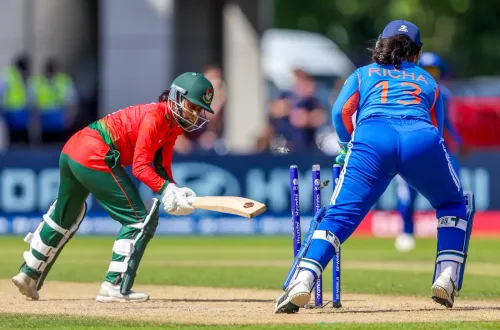
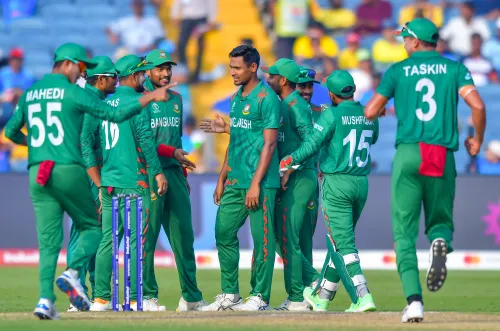
Sarowar Imran slams Bangladesh women's fitness, coaching culture after exit
Synopsis
Sarowar Imran's exit from the Bangladesh women's coaching role looked like a temperament issue from the outside — but his own account paints a picture of systemic fitness failures and a coaching culture built around keeping players comfortable rather than improving them. His claim that over half the first XI fall below international fitness standards is a serious indictment of the BCB's development infrastructure.
Key Takeaways
Former Bangladesh women's head coach Sarowar Imran says the BCB did not seek his explanation before letting his contract expire in October after the Asian Games .
David Hemp has been appointed as his replacement.
Sarowar alleges more than half of the first XI do not meet international fitness standards, with most rated 'below average'.
He described a coaching culture where support staff defer entirely to players, preventing meaningful improvement.
Sarowar acknowledged uneven relationships within the squad relative to captain Nigar Sultana , stopping short of confirming factions.
The BCB had reportedly considered a show-cause notice over dressing-room unrest but dropped it citing Sarowar's long association with Bangladesh cricket.
Former Bangladesh women's cricket team head coach Sarowar Imran has launched a pointed critique of the squad's fitness levels and training culture, asserting that his push for greater discipline — not poor temperament — was the real reason behind his exit from the role. His remarks, made in an interview with Ekattur TV, offer a rare inside look at the dysfunction he says plagued the programme.
How the coaching relationship ended
The Bangladesh Cricket Board (BCB) allowed Sarowar's contract to lapse in October, following the Asian Games, and subsequently named David Hemp as his successor. According to reports from Cricbuzz, the board had reservations about Sarowar's temperament, and several senior players had reportedly approached the BCB with complaints about his conduct and methods.
Sarowar had earlier commented on dressing-room unrest following Bangladesh's Asian Games exit, which prompted the BCB to consider issuing him a show-cause notice — a move that was ultimately dropped, reportedly in recognition of his long association with Bangladesh cricket.
The former coach, however, contended that the board never sought his side of the story. 'BCB did not communicate with me after the Asian Games and Asia Cup. I got a letter that I am not going to the Australia tour as another coach will go. This is all the communication I had with BCB,' he said.
Comfort zone culture and player compliance
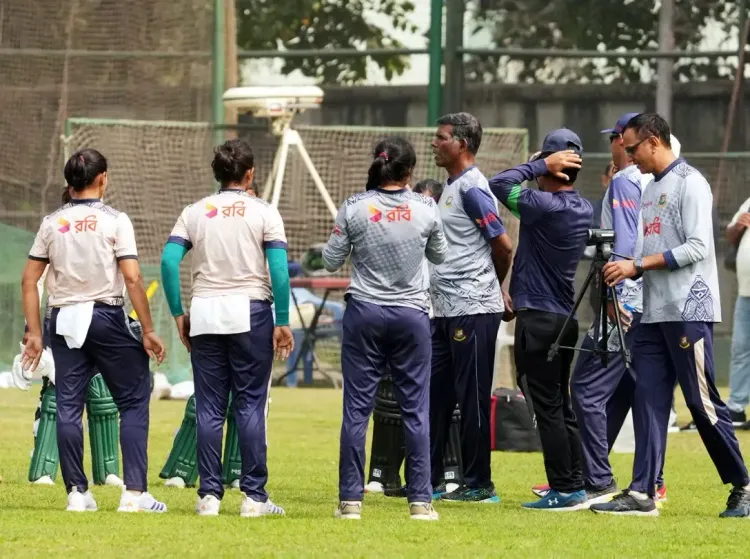
Sarowar reserved his sharpest criticism for what he described as an overly accommodating coaching environment that he believes has stunted the team's development. 'As far as my ill temper is concerned when I entered the women's team, what I saw was that there from bowling coach to spin bowling coach, batting coach, trainer, physio all were very quiet. They listen to whatever the women cricketers say and they cannot improve living in this comfort zone. That is the reason our team is still the same as it was five years back,' he said.
He recounted specific incidents that he felt illustrated the problem. 'A spinner after bowling 30 deliveries tells the coach that she won't bowl any more and the coach agrees. One or two batters bat for the whole day and after seeing all these I started interfering,' he said. He added: 'I also interfered regarding their fitness. When I needed to scold them I did that and if you say this is ill temper in that case I don't feel Bangladesh cricket can improve.'
Fitness levels fall short of international standards
Fitness emerged as a central grievance. Sarowar alleged that a majority of the first-choice players were below international fitness benchmarks. 'I am telling you more than half of the first XI cricketers do not have the required fitness level. Most of them are below average (in fitness) while some of them are medium while a couple have standard fitness level,' he said.
'Fitness is a big issue and when the fitness test is conducted the trainer can say how many of them match international fitness level. They don't have that (fitness level). If I feel that I will be world champion only by bowling 30 balls, that will never happen,' he added. The allegations, if accurate, would raise serious questions about the BCB's physical preparation protocols ahead of upcoming international assignments.
On temperament and the coach-player relationship
Sarowar firmly rejected the characterisation of himself as short-tempered, drawing a distinction between personal and professional conduct. 'I have my own dignity and I am aware of what I am capable of and I don't work to show off. If anyone says that I am ill-tempered that is wrong because in life I can have temper but when I am coaching I am not ill-tempered because I am a professional and I know what needs to be done. A coach cannot be a friend of a player because if I am a friend of a player I cannot drop the player. I am a coach and I am not their friend,' he said.
He also suggested that foreign coaches who preceded him may have fallen into the same pattern of compliance. 'I think whoever worked with them adjusted with them but the women cricketers won't improve if they are in the comfort zone and I felt foreign coaches also did the same. I feel a coach ensures his job by doing this (adjusting and remaining silent).'
Squad unity and captain's standing
When pressed on reports of internal divisions, Sarowar stopped short of confirming the existence of factions but acknowledged uneven relationships within the squad. 'I cannot say about grouping but some were close to the captain while some others were not close to the captain,' he said, in an apparent reference to Bangladesh women's team captain Nigar Sultana.
With David Hemp now installed as the new head coach, how the BCB responds to Sarowar's public allegations — and whether it commissions an independent review of the fitness and training culture — will be closely watched by those invested in the growth of women's cricket in Bangladesh.
Point of View
A named pattern of staff deference, a named captain at the centre of squad dynamics. The BCB's silence is conspicuous: if the allegations about sub-standard fitness are even partially accurate, the board has an accountability problem that pre-dates Sarowar's tenure. The real question is not whether he was the right coach, but why the fitness culture he describes was allowed to persist across multiple coaching cycles. Appointing a foreign replacement without addressing the structural issues he has identified would simply reset the clock on the same failure.
NationPress
11 Nov 2026
Frequently Asked Questions
Why did Sarowar Imran leave the Bangladesh women's coaching role?
The BCB allowed Sarowar Imran's contract to expire in October following the Asian Games, reportedly due to concerns about his temperament and complaints from senior players. Sarowar himself says he was never asked for an explanation and argues his push for discipline — not ill temper — was the real cause of friction.
Who replaced Sarowar Imran as Bangladesh women's head coach?
David Hemp was appointed as the new Bangladesh women's team head coach following Sarowar's departure. The appointment was confirmed by the BCB after his contract was not renewed.
What did Sarowar say about Bangladesh women's fitness levels?
Sarowar alleged that more than half of the first XI do not meet international fitness standards, with most players rated below average and only a couple at a standard level. He said the team's trainer could verify these claims through fitness test data.
What is the 'comfort zone culture' Sarowar described?
Sarowar said the coaching and support staff had adopted a practice of deferring entirely to players — including allowing a spinner to stop bowling after 30 deliveries without question. He argued this approach had kept the team stagnant for five years and that foreign coaches had perpetuated the same dynamic.
Is there a factional divide in the Bangladesh women's squad?
Sarowar stopped short of confirming outright factions but acknowledged that not all players were equally close to captain Nigar Sultana. The BCB has not publicly addressed the internal dynamics described by the former coach.