India's Asian Games distance runners eye LA 2028 under Scott Simmons
Synopsis
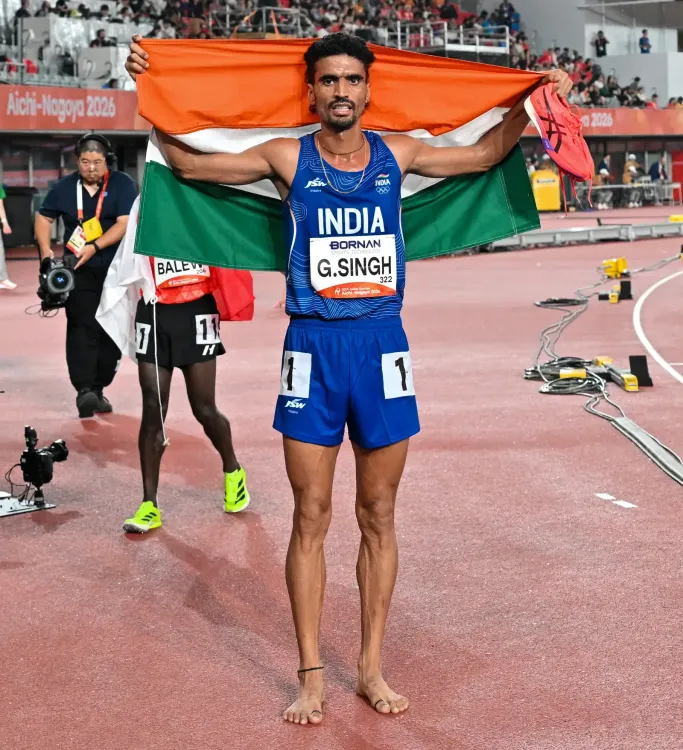
India's distance runners didn't just win medals in Nagoya — they rewrote the record books. Gulveer Singh's three-medal haul, Sawan Barwal's national record marathon silver ending a 44-year wait, and Seema Kumari's 10,000m bronze are the clearest proof yet that a Colorado Springs training model is transforming Indian endurance athletics — and coach Scott Simmons believes LA 2028 is now within genuine reach.
Key Takeaways
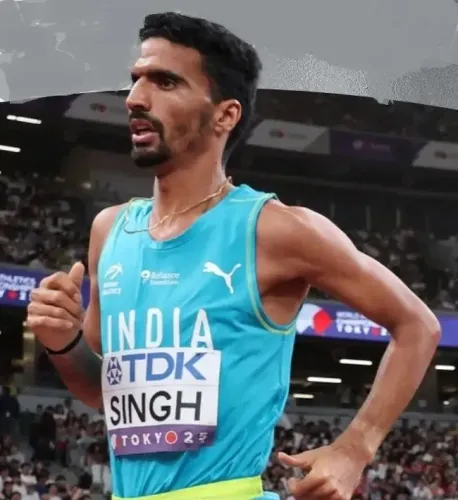
Gulveer Singh won three medals at the 2026 Asian Games in Nagoya — silver in the 10,000m and 1,500m , bronze in the 5,000m — competing four times in five days.
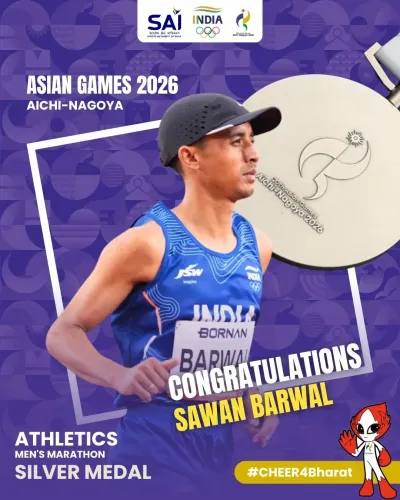
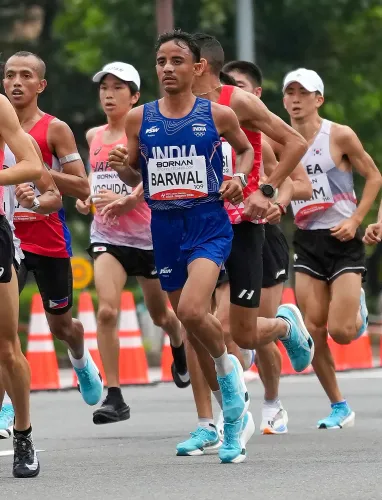
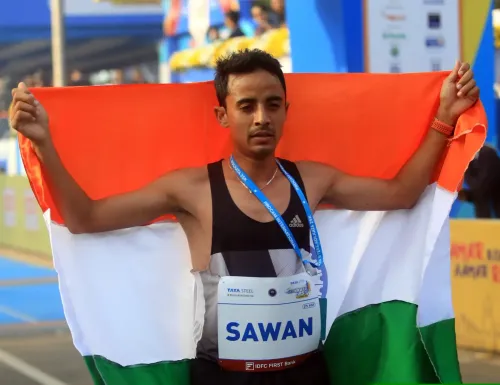
Sawan Barwal claimed silver in the men's marathon in 2:11:37 , a new national record ending India's 44-year wait for an Asian Games marathon medal.
Seema Kumari won bronze in the women's 10,000m , India's first Asian Games medal in the event since 2010 .
All three athletes trained under American coach Scott Simmons at a high-altitude base in Colorado Springs, USA , supported by the AFI , TOPS , and the Union sports ministry's ACTC programme .
Simmons has called for two to four younger Indian athletes to join the long-distance programme to build depth ahead of LA 2028 .
American coach Scott Simmons says India's landmark medal haul in distance running at the 2026 Asian Games in Nagoya has set the stage for a credible push at the Los Angeles 2028 Olympics, with athletes training at his high-altitude base in Colorado Springs, USA delivering some of the most significant performances in Indian endurance athletics in decades.
A Historic Medal Haul in Nagoya
Gulveer Singh was the standout performer, competing in four events across five days and returning with three medals — silver in the 10,000m and 1,500m, and bronze in the 5,000m. The feat marked a clear progression from his bronze in the 10,000m at the 2022 Hangzhou Asian Games. Gulveer had also impressed earlier at the 2026 Commonwealth Games in Glasgow, winning silver in the 10,000m and bronze in the 5,000m.
Sawan Barwal produced what many consider the single most historic result of the campaign, winning silver in the men's marathon with a time of 2:11:37 — a new national record that ended India's 44-year wait for an Asian Games marathon medal. Meanwhile, Seema Kumari claimed bronze in the women's 10,000m, India's first Asian Games medal in that event since 2010.
The Colorado Springs Blueprint
All three athletes have trained under Simmons at the high-altitude facility in Colorado Springs, where they benefit from sustained preparation alongside international-level distance runners. Simmons said Gulveer's programme was structured primarily around the 10,000m, with that base naturally feeding into his shorter-event performances.
'The plan proved to be very successful,' Simmons said in a video conference ahead of his flight back from Nagoya. 'We obviously prepared 100% for the 10,000m. And Gulveer gave his best challenge, ending up with the silver. We thought that was his best event, but it also prepared him for the 1500m as a byproduct.'
Simmons first visited Bengaluru in early 2022 and described Indian distance running at the time as a 'sleeping giant' — talented but lacking the sustained support and development time required to compete at the highest level. He credited the Athletics Federation of India (AFI), the Target Olympic Podium Scheme (TOPS), and the Union sports ministry's ACTC programme for backing an extended training stint in the United States. A six-month block before Nagoya allowed Gulveer, in particular, to maintain continuity in Colorado Springs while competing alongside athletes of a high international standard.
Consistency Over Crash Camps
Simmons identified the shift from last-minute preparation to year-round consistency as the defining change behind India's results. 'In the past, there was no consistency. There was always a late rush to get fitness for Asian Championships and Asian Games, whereas in distance running in particular, it's like building a house. You're always building the house. And when you're not building the house, then you're tearing down the house,' he said.
He praised Gulveer for embodying that philosophy. 'Gulveer's done such a good job of continuing one step after another after another,' he added. The group-training model, where Indian athletes train alongside world-class runners, has also accelerated development. 'When we all pull together and we train together, then everybody improves and everybody can get to this next level,' Simmons said.
Barwal and Seema: Room to Grow
Simmons acknowledged that Barwal, despite his historic silver, is still relatively new to the marathon distance and will benefit from more event-specific preparation. 'He does have some struggles because he's still young and he's still new to the distance. But this was a very good build-up. It'll be better the next time, for sure,' he said. Progression could eventually lead Barwal to qualification for the Beijing World Championships, according to Simmons. Seema Kumari's bronze, meanwhile, reinforced the depth India is beginning to build in women's long-distance events.
The Road to Los Angeles 2028
With Nagoya behind them, Simmons says the focus has firmly shifted to LA 2028. He noted that Olympic qualifying standards are becoming increasingly demanding, but said the athletes in his group now possess the belief to meet them. 'They believe they can qualify and qualifying is more difficult than it's ever been. But again, they're in a training group with others that have their eyes set on it also,' he said.
Simmons also called for two to four younger Indian athletes to be integrated into the long-distance programme now, giving them the development time required to be competitive by 2028. The performances in Nagoya have provided a compelling proof of concept — and for Indian distance running, the next Olympic cycle may be its most consequential yet.
Point of View
High-altitude, group-based training replacing the crash-camp model that defined Indian athletics preparation for decades. What Simmons has built in Colorado Springs is essentially a proof of concept for what Indian endurance running can look like with adequate institutional backing. The harder question is whether the AFI and TOPS can now scale that model — bringing in the next generation Simmons is asking for — without reverting to the short-termism that stunted the discipline for so long. LA 2028 qualifying standards will be the sternest test yet, and the margin for institutional inconsistency is now zero.
NationPress
30 Sept 2026
Frequently Asked Questions
How many medals did India win in distance running at the 2026 Asian Games?
India won multiple medals across distance events in Nagoya. Gulveer Singh alone claimed three — silver in the 10,000m and 1,500m, and bronze in the 5,000m. Sawan Barwal won silver in the men's marathon, and Seema Kumari took bronze in the women's 10,000m.
What is significant about Sawan Barwal's marathon result in Nagoya?
Barwal's silver medal in the men's marathon with a time of 2:11:37 set a new Indian national record and ended India's 44-year wait for an Asian Games marathon medal. It is widely regarded as one of the most historic results in Indian distance running.
Who is Scott Simmons and what is his role with Indian athletes?
Scott Simmons is a highly regarded American distance running coach based in Colorado Springs, USA. He has been working with Indian athletes including Gulveer Singh, Sawan Barwal, and Seema Kumari at a high-altitude training facility, supported by the Athletics Federation of India, TOPS, and the Union sports ministry's ACTC programme.
What is the target for Indian distance runners after the 2026 Asian Games?
Coach Scott Simmons has said the focus has shifted to qualifying for the Los Angeles 2028 Olympics. He noted that the athletes in his Colorado Springs group now believe they can meet the increasingly demanding Olympic qualifying standards.
What changes in training approach have driven India's distance running improvement?
Simmons credits a shift from last-minute, event-specific preparation to year-round consistency and high-altitude group training alongside international-level runners. He described the old approach as a 'late rush to get fitness' and contrasted it with the sustained, building-block model now in place.