CM Shivakumar Holds Public Grievance Camp in Hanur, Chamarajanagar

Synopsis
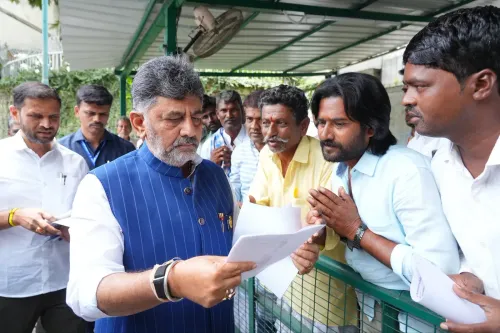
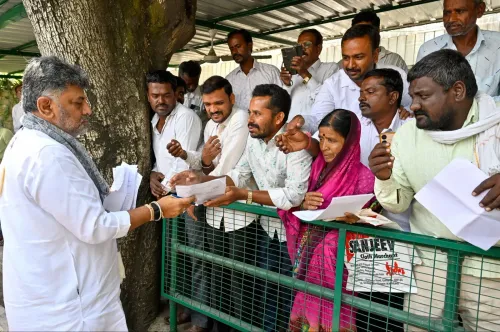
Chief Minister D.K. Shivakumar visited Hanur in Chamarajanagar district on September 30, 2026, personally receiving public petitions at a grievance camp and pledging swift resolution — framing the outreach under the Kannada ideal that service to the people is service to God.
Key Takeaways
Shivakumar held a public grievance camp at Hanur in Chamarajanagar district on September 30, 2026 .
He personally received petitions from citizens and assured swift redressal of their concerns.
The camp was held under the principle 'Janaseve Janardhana Seve' — service to the people is service to God.
Chamarajanagar is Karnataka's southernmost district, bordering Tamil Nadu and Kerala, with large rural and tribal populations who face limited routine administrative access.
Karnataka's Sakala Act, 2011 provides the statutory framework for time-bound grievance redressal that backs such public outreach camps.
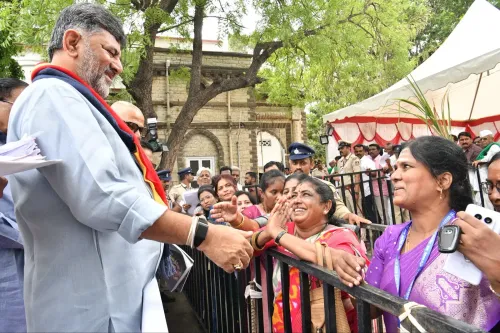
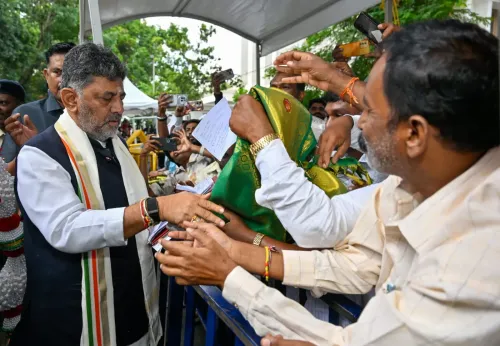
At a public grievance camp in Hanur, Chamarajanagar district, Chief Minister D.K. Shivakumar sat down on Wednesday, September 30, 2026 to personally receive petitions from citizens — a direct line between the state's top office and the residents of one of Karnataka's most remote southern taluks.
The Chief Minister's Office of Karnataka announced the event under the Kannada phrase 'Janaseve Janardhana Seve' ('Service to the people is service to God'), setting the tone for what was framed as an act of administrative duty as much as political outreach. Shivakumar received the public's petitions (ahavaalugannu sweekarisiri) and assured residents that their grievances would be resolved as swiftly as possible.
Why Hanur, and Why It Matters
Chamarajanagar is Karnataka's southernmost district, sharing borders with Tamil Nadu and Kerala, and home to significant rural and tribal communities with historically limited administrative access. Hanur taluk, the venue for the camp, sits deep in this geography — meaning residents often travel considerable distances to reach a government officer, let alone the Chief Minister.
Holding a grievance camp here is a deliberate signal: that governance is expected to travel to the citizen, not just the other way around. The event fits a well-established pattern across Karnataka, where senior leaders periodically visit district and taluk headquarters to hear local concerns ranging from infrastructure gaps and welfare scheme delivery to revenue and land disputes.
Karnataka's Grievance Redressal Framework
Behind the symbolism sits a legal scaffold. Karnataka's Sakala Act, 2011 mandates time-bound delivery of government services and redressal of citizen complaints, with defined timelines for each department. When a Chief Minister personally receives petitions at a camp, those grievances enter this statutory pipeline — the assurance to resolve them 'as soon as possible' carries formal weight, not just political promise.
Camps like the one in Hanur also serve a diagnostic function: the volume and nature of petitions received in a single session give the administration a snapshot of what routine service delivery is failing to reach on its own.
For the people of Hanur, Wednesday's camp was a rare chance to bypass layers of bureaucracy with one piece of paper and a direct word from the top. Whether those papers translate into resolved files is the test that follows every such session — and the one Karnataka's southern districts will be watching.
Point of View
Such ground-level camps strengthen a governance-delivery narrative that the Congress government has leaned on heavily since 2023. The choice of Chamarajanagar, a district that has historically lagged on development indicators, also carries implicit political significance in a state where rural southern Karnataka remains a contested electoral terrain. The real measure, however, will be whether the Sakala pipeline delivers on the promises made under the banyan tree.
NationPress
30 Sept 2026
Frequently Asked Questions
What did CM Shivakumar do at Hanur in Chamarajanagar?
Chief Minister D.K. Shivakumar held a public grievance camp at Hanur taluk in Chamarajanagar district on September 30, 2026, where he personally received petitions from citizens and assured them of swift resolution of their problems.
Where is Hanur and why was the camp held there?
Hanur is a taluk headquarters in Chamarajanagar, Karnataka's southernmost district bordering Tamil Nadu and Kerala. The camp was held there to bring government accessibility directly to residents of a region with significant rural and tribal populations who have limited routine access to senior officials.
What is Janaseve Janardhana Seve?
'Janaseve Janardhana Seve' is a Kannada phrase meaning 'service to the people is service to God,' used by the Karnataka government to frame public outreach and grievance redressal events as a moral and civic duty.
What is the Sakala Act and how does it relate to grievance camps?
Karnataka's Sakala Act, 2011 mandates time-bound delivery of government services and redressal of citizen grievances with defined departmental timelines. Petitions received at camps like the one in Hanur enter this statutory pipeline, giving the Chief Minister's assurances a formal legal backing.
Does the Karnataka government regularly hold such public camps?
Yes, holding public grievance camps at district and taluk headquarters is a well-established administrative practice in Karnataka. Senior leaders including the Chief Minister periodically visit different regions to directly hear citizen concerns on issues ranging from welfare schemes to infrastructure and revenue matters.