Shubhangi Kulkarni recalls India's first women's Test in 1976, 50 years on
Synopsis
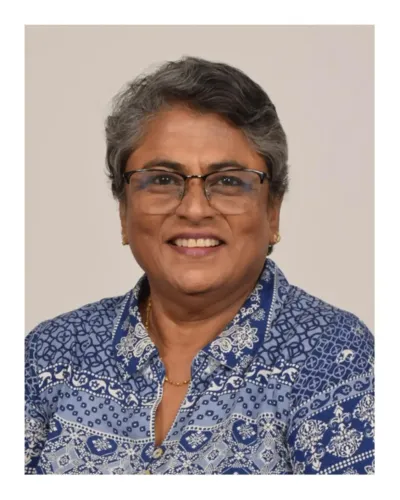
Fifty years ago today, a 17-year-old leg-spinner from Pune took 5 for 48 on debut to launch India women's Test cricket at Bengaluru. Shubhangi Kulkarni's story — from self-funded train journeys and parental resistance to a joint world record of five Test five-fors, an Arjuna Award, and a hand in the WCAI-BCCI merger — is a lens through which India's entire women's cricket revolution can be read.
Key Takeaways
Shubhangi Kulkarni debuted in India's first women's Test at M Chinnaswamy Stadium, Bengaluru on 31 October 1976 , aged 17 years and 104 days — the third-youngest debutant in women's Test history.
She took 5 for 48 on debut and finished the match with 7 for 76 ; her 23 wickets in the six-match series against the West Indies remain a joint world record .
Her career tally includes 60 Test wickets , five five-wicket hauls (a joint world record), 16 stumpings (second-most in women's Tests), and 38 ODI wickets at an economy of 3.49 .
As honorary secretary of the WCAI , she helped engineer the WCAI-BCCI merger in 2006 , the turning point that unlocked professional facilities for women players.
India won their first ICC Women's ODI World Cup on 2 November last year ; India will host the inaugural ICC Women's Champions Trophy in February 2027 .
Exactly 50 years after she stepped onto the field at M Chinnaswamy Stadium in Bengaluru for India's first women's Test match against the West Indies, veteran leg-spinner Shubhangi Kulkarni says the buzz in the dressing room that morning has never left her. The 31 October 1976 fixture also marked the first-ever international appearance by the India women's cricket team — a milestone being commemorated as Indian women's cricket marks its golden jubilee on Saturday.
A Debut to Remember
At just 17 years and 104 days, Shubhangi became the third-youngest debutant in women's Test history. The Pune-born leg-spinner took 5 for 48 in the first innings and finished the match with figures of 7 for 76 — a remarkable entry into international cricket. 'All of us were very excited. We were all very young, mostly college-going girls around 17 or 18 years old. We were just getting exposed to international competition, and all of us were thrilled to be playing international matches,' she recalled.
The squad had trained under former India batter Lala Amarnath ahead of the series against a West Indies side known for its pace attack. Shubhangi said the team's confidence rested on spin. 'We thought our spinners were very good, and we were really looking forward to the competition,' she said.
Historic Win and a Record Series
India's defining moment came in the fourth Test at Moin-ul-Haq Stadium in Patna, when the team registered its first-ever Test victory. Shubhangi took 3 for 43 in the first innings and a devastating 4 for 14 in the second to clinch the result. Her 23 wickets across the six-match series remain a joint record for the most wickets in a women's Test series.
The public reception at Patna stayed with her. 'The crowd response was so overwhelming that it took us a long time to get back to the hotel because the crowds wouldn't allow the bus to move. We kept signing autographs,' she said. She noted that initial curiosity gradually turned into genuine appreciation. 'People came out of curiosity just to see us play. But once they started watching, they appreciated our skills and realised that girls could play cricket too.'
Barriers on and off the Field
For her generation, the obstacles began at home. 'The biggest challenge for most girls was getting permission from home to play cricket. Parents were worried about the hard ball causing injuries, or that playing for long hours in the sun would make the girls dark,' Shubhangi recalled. Financial hardship compounded the challenge. 'We had to spend money from our own pockets to travel for domestic events, often paying our own train fares. We stayed in dormitories and travelled in unreserved or second-class train compartments, sometimes carrying our own food to save money.'
Despite those constraints, Shubhangi went on to play 17 consecutive Tests — the seventh-longest run in women's Test history — and bowled 3,329 deliveries, placing her ninth on the all-time list. She took 60 Test wickets with five five-wicket hauls, a joint world record. Her 16 stumpings are the second-most in women's Tests. She also claimed 38 ODI wickets at an economy rate of 3.49. She received the Arjuna Award in 1985.
Her finest batting performance arrived on her captaincy debut against England at Collingham in 1986. Walking in with India at 105 for 5, she made a career-best 118, adding 106 for the eighth wicket with Minoti Desai — the fifth-highest eighth-wicket stand in women's Tests — as India posted 323.
The BCCI Merger and Women's Cricket's Transformation
Off the field, Shubhangi's influence extended to administration. As honorary secretary of the Women's Cricket Association of India (WCAI), she helped broker the landmark merger of the WCAI with the BCCI in 2006, crediting former BCCI president Sharad Pawar with driving it through. 'That is where things changed for women's cricket in India and that is when the girls started getting the facilities,' she said.
She also credited ICC chairman Jay Shah, in his earlier role as BCCI secretary, and the current board administration with accelerating growth. The contrast with her playing era is stark: today's players travel by air and stay in four-star or five-star hotels, receive equal match fees and central contracts, and compete in the Women's Premier League (WPL). 'The most significant change has been the introduction of the WPL, which has opened up numerous opportunities for domestic players to play alongside international stars and learn from them in the dressing room,' she said.
World Cup Satisfaction and the Road to 2027
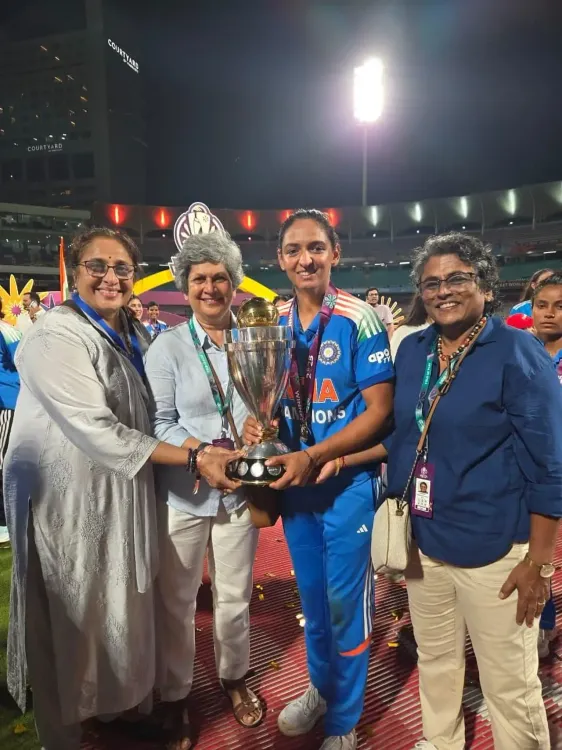
India clinched their first ICC Women's ODI World Cup on 2 November last year, and Shubhangi said the triumph resonated deeply with her generation. 'Winning a World Cup is something we all wanted. Seeing this team achieve it gave me immense satisfaction,' she said, adding praise for captain Harmanpreet Kaur and the entire squad. She also welcomed the team's recognition of its predecessors, noting it felt like 'they truly valued all of that.'
Looking ahead, Shubhangi expressed strong support for India hosting the inaugural ICC Women's Champions Trophy in February 2027. 'After winning the World Cup last year and then the match at Lord's, I think we have the momentum, and this is the fastest-growing sport in India,' she said. She paid tribute to the founders of the women's game — Mahendra Kumar Sharma, Pramila Bai Chavan, and Chandra Tripathi — noting that when the organisation was registered in 1973, Sharma 'gave the girls a platform to play a sport and turn what had been a hobby into a national sport.' As Indian women's cricket celebrates its golden jubilee, the arc from dormitory travel and self-funded train rides to a World Cup title and a marquee global tournament makes Shubhangi's story both a personal record and a national one.
Point of View
Yet the institutional narrative today credits administrative milestones — the BCCI merger, the WPL, Jay Shah's tenure — with the transformation. Both things can be true, but the golden jubilee is a timely moment to ask whether the players who built the foundation have received the kind of material recognition — pensions, benefit funds, retrospective contracts — that matches the rhetorical appreciation. The World Cup win is genuine and historic. The harder question is whether the infrastructure investment came in time for those who earned the least and gave the most.
NationPress
31 Oct 2026
Frequently Asked Questions
When was India's first women's Test match played, and what was the result?
India's first women's Test match was played on 31 October 1976 at M Chinnaswamy Stadium in Bengaluru against the West Indies; it also marked the first-ever international game for the India women's cricket team. India went on to win the series, claiming their first Test victory in the fourth match at Patna's Moin-ul-Haq Stadium.
What records does Shubhangi Kulkarni hold in women's Test cricket?
Shubhangi Kulkarni holds a joint world record of five five-wicket hauls in women's Tests and took 60 Test wickets overall, also bowling 3,329 deliveries (ninth on the all-time list). Her 23 wickets in the 1976 series against the West Indies is a joint record for the most in a single women's Test series, and her 16 stumpings are the second-most in women's Tests.
What challenges did India's women cricketers face in the 1970s?
Players had to fund their own travel to domestic tournaments, often travelling in unreserved train compartments and carrying food to cut costs. Many also faced resistance from parents who were concerned about injury or about their daughters spending long hours in the sun — reflecting broader social barriers women faced in accessing competitive sport at the time.
What was the significance of the WCAI-BCCI merger in 2006?
The merger of the Women's Cricket Association of India with the BCCI in 2006 brought women's cricket under a well-resourced national board, which led to professional facilities, equal match fees, central contracts, and eventually the Women's Premier League. Shubhangi Kulkarni, who helped facilitate the merger as WCAI honorary secretary, credits former BCCI president Sharad Pawar with making it happen.
When is the inaugural ICC Women's Champions Trophy, and who is hosting it?
India will host the inaugural ICC Women's Champions Trophy in February 2027. Shubhangi Kulkarni welcomed the decision, saying India's World Cup title and the momentum built since make it 'absolutely right' timing for the country to host the first edition.