Asian Games 2026: South Korea beats Japan 75-70 for women's basketball gold
Synopsis
South Korea led by 19 at halftime but barely held on — Japan had them at 70-72 with 15 seconds left before free throws sealed it. Lee Hae-ran's 24-point, 9-rebound showing and Kang Lee-seul's 21 points powered the gold, while Japan's Haru Owaki came agonisingly close to a triple-double in defeat. A final that reminded everyone why you play all 40 minutes.
Key Takeaways
South Korea won the women's basketball gold at the 2026 Aichi-Nagoya Asian Games , defeating Japan 75-70 in Nagoya on 26 September .
Lee Hae-ran led all scorers with 24 points and 9 rebounds ; Kang Lee-seul added 21 points and 7 rebounds .
Japan pulled back from 19 points down at halftime to within two points — 70-72 — with 15 seconds left before South Korea closed it out at the line.
Japan's Haru Owaki nearly posted a triple-double with 23 points, 13 rebounds and 5 assists .
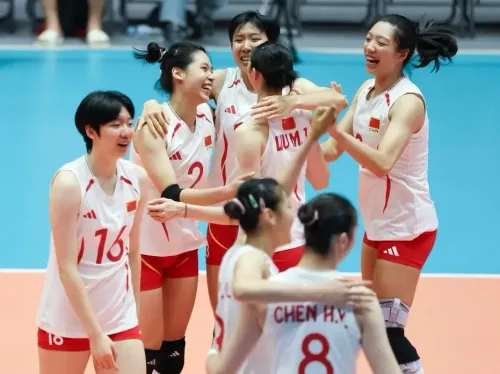
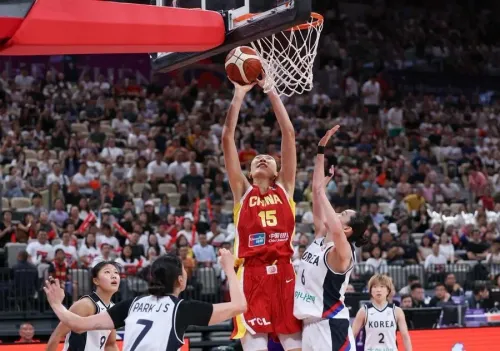
China beat Chinese Taipei 77-64 for bronze; Chen Mingling top-scored with 20 points .
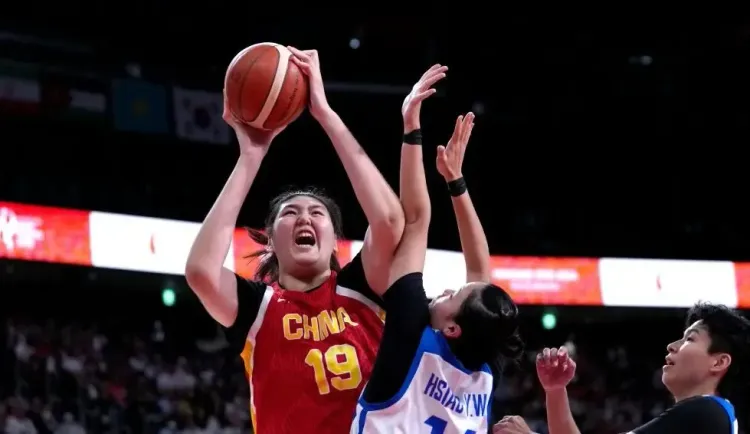
China converted just 1 of 10 three-point attempts in the first half but rallied through Zhang Ziyu's interior dominance.
South Korea held off a dramatic second-half comeback by Japan to claim the women's basketball gold medal 75-70 at the 2026 Aichi-Nagoya Asian Games in Nagoya on Saturday, 26 September, while China edged Chinese Taipei 77-64 to take bronze. The final proved a tense affair after South Korea, who had dominated the first half, were pushed to the wire in the closing seconds.
How South Korea Sealed the Gold
South Korea built a commanding 19-point halftime lead, but Japan mounted a spirited fightback in the second half, clawing the deficit to just two points — 70-72 — with 15 seconds remaining. South Korea held their nerve at the free-throw line to close out the victory and claim the continental title.
Lee Hae-ran led all scorers with 24 points and nine rebounds, while Kang Lee-seul contributed 21 points and seven rebounds. 'We built a big lead early on, but they came back quite a lot in the second half. I don't think we maintained our concentration very well... but in the end, we won, so I'm extremely happy,' Lee said after the final buzzer.
Japan's Near-Miss and Okamoto's Regret
Japan's Haru Owaki delivered a near-historic individual performance, finishing with 23 points, 13 rebounds and 5 assists — narrowly missing a triple-double — but it was not enough to overcome South Korea's early stranglehold. Japan's Miyu Okamoto pointed to a slow start as the decisive factor. 'If we had a better start, I think we would have had a much better chance of winning,' she said. Japan's second-half surge underscored both the team's resilience and the cost of a sluggish opening quarter.
China Claims Bronze Despite Shooting Struggles
In the bronze medal contest, China overcame a difficult shooting night from long range — converting just 1 of 10 three-point attempts in the first half — to pull away from Chinese Taipei in the third quarter. The turnaround was powered by 2.23-metre centre Zhang Ziyu, whose interior presence gave China a reliable scoring option when the perimeter shots were not falling.
Luo Xinyu, Tang Ziting and Zhang Manman then sealed the win with fourth-quarter three-pointers. Chen Mingling top-scored for China with 20 points, while Zhang Ziyu and Luo Xinyu contributed 14 and 12 points respectively. For Chinese Taipei, Lin Yu-ting led with 15 points and Chen Yen-yu added 11.
China's Yang Shuyu remained philosophical about the shooting woes. 'We only put up 13 threes yesterday, compared to their 40. If you want them to go in, you have to keep shooting,' she said. Head coach Gong Luming acknowledged the shortfall against the tournament's gold-medal benchmark. 'We came here to win gold, and we didn't get it. But for a young team like this one, chasing a shared goal together means something,' he said.
What This Result Means Going Forward
South Korea's gold reaffirms their status as Asia's premier women's basketball force, having demonstrated both clinical early-game execution and composure under late pressure. Japan's silver, secured despite a 19-point halftime deficit, signals the team's growing competitive depth ahead of future international cycles. For China, the bronze with a young squad, combined with Gong's developmental framing, suggests a rebuilding phase aimed at the next Asian Games and the global calendar beyond.
Point of View
Not just a dramatic storyline. Japan's silver, built almost entirely on second-half grit, is the more instructive result — it shows a programme closing the gap fast. China's bronze is correctly read as a developmental marker rather than a failure, but Gong Luming's reflective tone post-match suggests the federation knows the window to challenge South Korea is still a cycle away. The real story from Nagoya is competitive compression at the top of Asian women's basketball — and that has implications for Paris 2028 qualifying.
NationPress
27 Sept 2026
Frequently Asked Questions
Who won the women's basketball gold at the 2026 Asian Games?
South Korea won the women's basketball gold medal at the 2026 Aichi-Nagoya Asian Games, defeating Japan 75-70 in Nagoya on 26 September. Lee Hae-ran top-scored with 24 points and nine rebounds.
How did South Korea hold off Japan's comeback?
South Korea built a 19-point halftime lead but Japan rallied to within two points — 70-72 — with just 15 seconds remaining. South Korea converted their free throws in the final seconds to seal the 75-70 victory.
Who were the top performers in the gold medal game?
South Korea's Lee Hae-ran led all scorers with 24 points and 9 rebounds, while Kang Lee-seul added 21 points and 7 rebounds. Japan's Haru Owaki nearly posted a triple-double with 23 points, 13 rebounds and 5 assists.
Who won the bronze medal in women's basketball at Asian Games 2026?
China beat Chinese Taipei 77-64 to claim the bronze medal. Chen Mingling led China with 20 points, and Zhang Ziyu's interior play proved decisive after a difficult shooting start from three-point range.
What did coaches and players say after the women's basketball final?
South Korea's Lee Hae-ran said she was 'extremely happy' despite a lapse in concentration in the second half. Japan's Miyu Okamoto attributed the defeat to a slow start. China coach Gong Luming acknowledged missing the gold but said the shared experience mattered for a young squad.