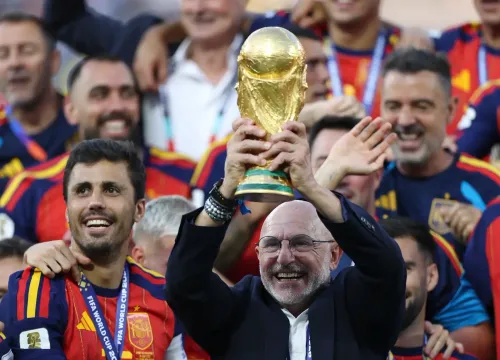
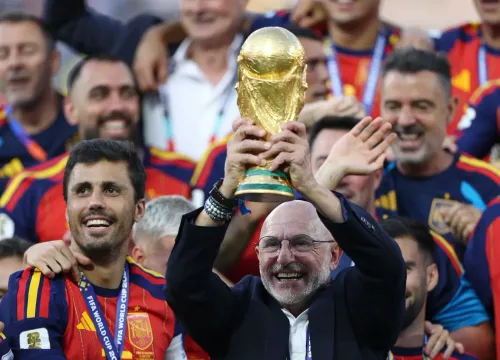
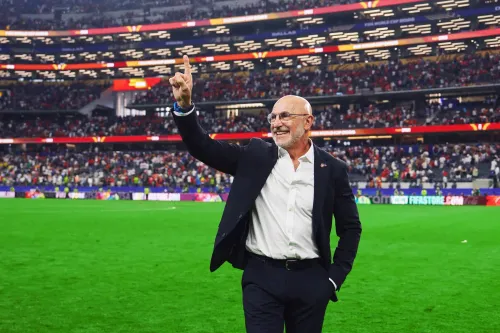
FIFA World Cup 2026 Final: How Luis de la Fuente's quiet evolution carried Spain to the brink
Synopsis
While Argentina's star power dominates the headlines, Spain's path to the 2026 World Cup final has been quietly extraordinary — built on a coach who managed injuries, made brave calls on Pedri and Llorente, and timed Merino's comeback to perfection. Luis de la Fuente's evolution-over-revolution philosophy may be the most underrated story of this tournament.
Key Takeaways
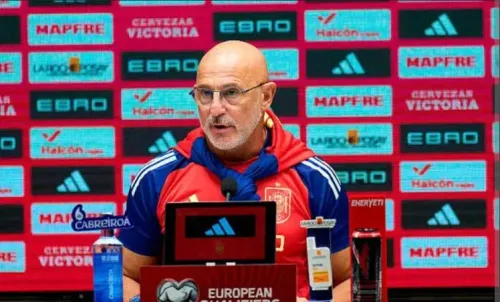
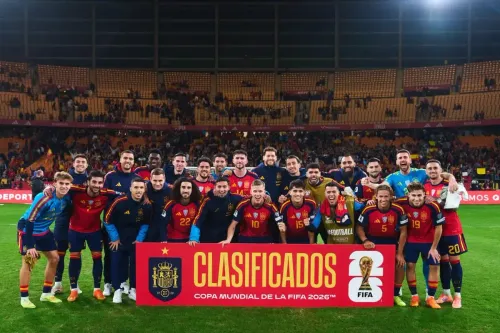
Luis de la Fuente , 65 , has guided Spain to the 2026 FIFA World Cup final against Argentina in New York .
Lamine Yamal , Nico Williams , and Víctor Munoz all carried injuries into the tournament, forcing De la Fuente to adapt.
Alex Baena deputised for the sidelined Nico Williams and delivered four strong performances across the knockout rounds.
Mikel Merino scored decisive late goals against both Portugal (91st minute) and Belgium (88th minute) as a substitute.
Pedro Porro was preferred at right back over Marcos Llorente and scored two crucial goals, including one against France in the semifinal.
De la Fuente dropped Pedri for the Belgium quarterfinal, handing Fabian Ruiz a start — a call vindicated when Ruiz opened the scoring.
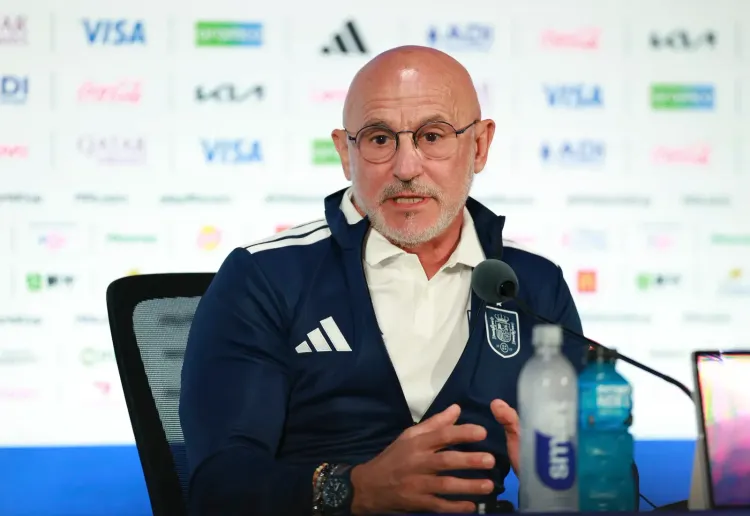
Spain head coach Luis de la Fuente has guided his side to the 2026 FIFA World Cup final against Argentina in New York, and in a sign of his unshakeable composure, the 65-year-old has said the only thing making him nervous ahead of the showpiece is the prospect of his squad having to travel to the venue by helicopter.
A Coach Built on Evolution, Not Revolution
De la Fuente's journey to this moment is defined by patience and incremental progress. He spent the bulk of his playing days at Athletic Bilbao and channelled that same club loyalty into his early coaching career — five seasons in the Athletic Bilbao youth setup before joining the Spanish Football Federation in 2013. His club management experience is minimal, with just 11 games at Deportivo Alaves to his name at senior level.
What followed was a methodical climb: Spain Under-19 coach, then Under-21 coach, then the senior job after the disappointment of Qatar 2022. That trajectory speaks to a man who believes in building, not overhauling — a philosophy that has defined Spain's entire campaign at this tournament.
Navigating Injuries and Finding New Heroes
Spain arrived at the 2026 World Cup severely undermanned. Lamine Yamal, Nico Williams, and Víctor Munoz were all carrying injuries, while Mikel Merino was struggling for full fitness after an ankle problem sustained in February.
The early signs were unconvincing — Spain laboured to create chances against a resolute Cabo Verde. But form returned against Saudi Arabia, and a gritty victory over a physical Uruguay side — in a match where the referee, according to reports, was permissive with Uruguay's robust approach — steadied the ship. When a Uruguayan challenge forced Nico Williams to the sidelines again, Alex Baena stepped in on the left flank and delivered four outstanding displays as Spain dispatched Austria, held firm against Portugal, and struck a late winner in the quarterfinal against Belgium.
Merino's Comeback and a Brave Call on Pedri
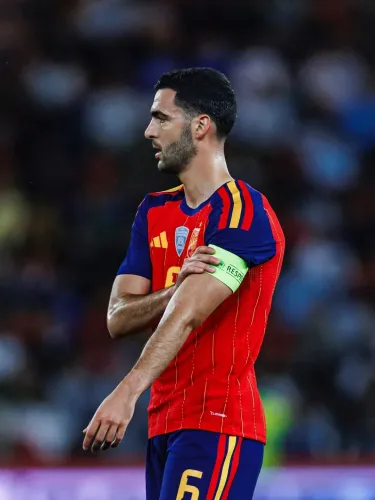
Mikel Merino has been De la Fuente's most telling masterstroke. Introduced as a substitute against Portugal, Merino scored in the 91st minute to seal a narrow victory. He then repeated the trick against Belgium, arriving off the bench to net two minutes from time and book Spain's place in the last four.
De la Fuente also showed he is not afraid to make uncomfortable decisions. Pedri, the Barcelona midfielder widely considered untouchable in Spain's setup, was visibly fatigued against Portugal. The coach responded by handing Fabian Ruiz the starting berth for the quarterfinal against Belgium — and the PSG midfielder repaid the faith immediately by opening the scoring.
Similarly, Pedro Porro was preferred over the widely expected choice of Marcos Llorente at right back. Porro has not only defended solidly but contributed two crucial goals — one against Austria and another against France, arriving unmarked to double Spain's lead and confirm their place in the final.
The Yamal Factor: Trust Over Pressure
Central to De la Fuente's man-management has been his handling of Lamine Yamal, who turned 19 only recently and is regarded by many as arguably the second most recognisable footballer on the planet — behind only Leo Messi, who is 20 years his senior. A hamstring injury carried into the tournament has meant Yamal has not been at his absolute peak, but De la Fuente has carefully rationed the winger's minutes, shielding him from the weight of expectation while keeping him available for the moments that matter most.
The coach's long familiarity with his players — having worked with the majority of them at Under-19 or Under-21 level — has fostered a trust that is visible on the pitch. His players know his methods, and he knows their limits.
What to Expect in the Final
Should Spain find themselves ahead of Argentina with 20 minutes remaining, De la Fuente is unlikely to retreat into a defensive shell. His footballing identity demands that Spain protect leads by retaining possession and pressing for a second goal — not by packing the backline with central defenders. Some principles, it appears, are simply non-negotiable for the quietly confident Spaniard now standing one match away from the sport's greatest prize.
Point of View
Managing a hamstrung Yamal with discipline, and making two selection calls (Ruiz over Pedri, Porro over Llorente) that most coaches would have avoided for fear of the backlash. The deeper question is whether Spain's model — federation continuity, youth pipeline, incremental trust — is replicable, or whether it depends entirely on having a generation as gifted as this one. The final against Argentina will test whether evolution can beat the world's most decorated footballing identity.
NationPress
17 Oct 2026
Frequently Asked Questions
Who is Luis de la Fuente, Spain's World Cup 2026 coach?
Luis de la Fuente is a 65-year-old Spanish football coach who spent most of his playing career at Athletic Bilbao before moving into coaching. He joined the Spanish Football Federation in 2013, progressed from Under-19 to Under-21 coach, and was appointed senior head coach after Spain's exit at Qatar 2022. He has minimal club management experience, with just 11 games at Deportivo Alaves at senior level.
Who is Spain playing in the 2026 FIFA World Cup final?
Spain are playing Argentina in the 2026 FIFA World Cup final, to be held in New York. Spain reached the final after victories over Uruguay, Austria, Portugal, Belgium, and France across the knockout stages.
How did Mikel Merino contribute to Spain's World Cup 2026 campaign?
Mikel Merino has been Spain's super-substitute of the tournament, scoring in the 91st minute to beat Portugal and then netting two minutes from time to eliminate Belgium in the quarterfinal. De la Fuente carefully managed his return from an ankle injury sustained in February, introducing him off the bench at the critical moments.
Why was Pedri dropped for Spain's quarterfinal against Belgium?
Coach Luis de la Fuente felt that Pedri, the Barcelona midfielder, looked fatigued after the Portugal match and decided to replace him with Fabian Ruiz for the quarterfinal against Belgium. The decision was vindicated when the PSG midfielder opened the scoring for Spain.
How has Lamine Yamal performed at the 2026 World Cup despite his injury?
Lamine Yamal, who recently turned 19, carried a hamstring injury into the tournament and has not been at his absolute best by his own high standards. De la Fuente has carefully managed his workload, rationing his minutes and shielding him from pressure, while keeping him available for key moments across Spain's run to the final.