Who are the 10 players that could define T20 WC 2026?
Synopsis
The 2026 ICC Men’s T20 World Cup promises an exciting clash of strategies between India and Sri Lanka. As the tournament unfolds, watch out for ten key players who are poised to make significant impacts and possibly define the tournament's outcome.
Key Takeaways
Key players can define T20 World Cup outcomes.
India's and Sri Lanka's pitches will present distinct challenges.
Critical moments in matches can shift momentum dramatically.
Versatile players contribute significantly to team balance.
Calmness under pressure is vital for success.
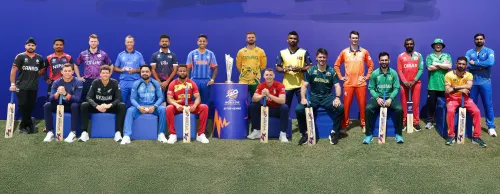
New Delhi, Feb 6 (NationPress) The ICC Men’s T20 World Cup 2026 is on the horizon, co-hosted by India and Sri Lanka. This tournament promises a tactical showdown: India's batting-friendly pitches are set to promote aggressive play and soaring scores, while Sri Lanka's slower, more demanding surfaces will test players' patience and spin-bowling expertise.
T20 World Cups are rarely claimed solely based on depth; they are often determined by critical moments, such as an electrifying powerplay, a pivotal spell that curtails the middle overs, or a brilliant display in the death overs amidst high pressure.
History indicates that a select group of standout players frequently influences the narrative of the tournament. Here are 10 cricketers poised to make a significant impact on the 2026 event:
Abhishek Sharma (India)
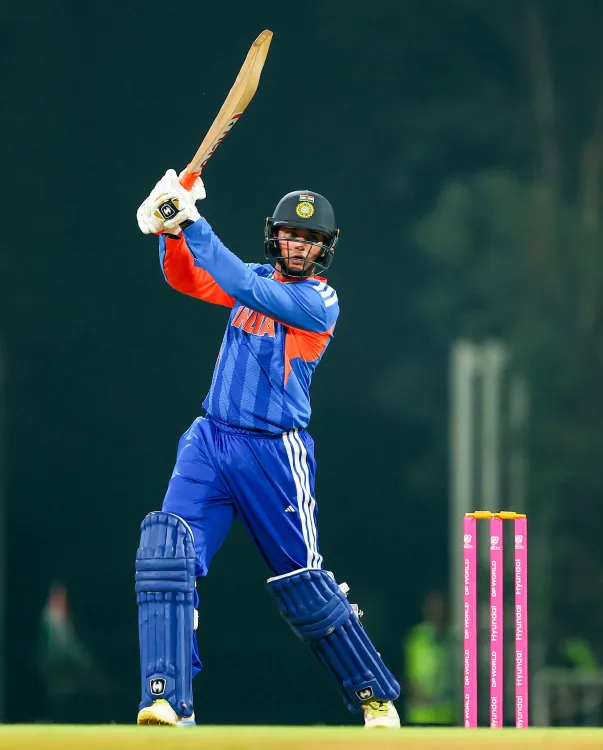
The evolution of India’s T20 cricket is characterized by a clear purpose, exemplified by Abhishek Sharma. As an opener, he perceives the powerplay as an opportunity rather than a risk, utilizing pace and true bounce—conditions that are typical in India. His ability to dismantle bowling attacks early gives him the potential to disrupt entire tournaments. With a series of confident performances, he could make India's top order extremely formidable.
Travis Head (Australia)
Few batsmen can put opposing teams on the back foot as swiftly as Travis Head. His aggressive scoring not only comes rapidly but also unsettles bowlers, often forcing them to adopt defensive fields early and compelling captains to change strategies sooner. Head’s experience in subcontinental conditions adds to his versatility, making him a formidable threat. In a format where sustaining momentum is essential, he remains one of Australia’s most dangerous assets.
Wanindu Hasaranga (Sri Lanka)
Should the conditions favor Sri Lanka, Hasaranga is set to be a pivotal player. A wrist-spinner recognized for his breakthrough potential, he excels both with the new ball and in middle overs, which is crucial in T20 cricket. His sharp cricketing acumen and subtle variations make him particularly perilous on slower pitches.
Additionally, his evolving capability to score runs in the lower order renders Hasaranga a versatile match-winner in home conditions.
Hardik Pandya (India)
Major tournaments demand players who can navigate chaos, and Hardik Pandya has built his career thriving in such circumstances. Whether he is finishing an innings, bowling a crucial over, or energizing the fielding side, his influence often transcends mere statistics.
For India, Hardik’s significance lies in maintaining equilibrium: he provides versatility in team composition while taking on leadership roles during critical moments. In tightly contested knockout matches, his composure could be invaluable.
Quinton de Kock (South Africa)
Few batsmen embody elegance and ferocity as effortlessly as Quinton de Kock. His return to international cricket reinstates his authority at the top of South Africa’s batting order. De Kock’s key strength is his ability to manage powerplays with poise, compelling bowlers to toil hard for breakthroughs early on. When he anchors innings, South Africa's chances of setting or chasing large totals improve dramatically.
Varun Chakaravarthy (India)
Varun Chakaravarthy’s resurgence is a notable success story in Indian cricket. Previously labeled merely a “mystery spinner,” he now adeptly combines deception with control and strategy. His unique strength lies in his performances during the powerplay, a time when most spinners focus on damage control. On turning wickets, his array of deliveries can be decisive, particularly against aggressive openers.
Rashid Khan (Afghanistan)
Rashid Khan continues to set the standard for T20 bowling. His vast experience in franchise cricket worldwide has enhanced his adaptability, and his statistics consistently reflect excellence. Beyond merely taking wickets, Rashid governs the game’s tempo, induces errors, and thrives under pressure. For Afghanistan, he is not only their top player but also their main pillar of strength.
Phil Salt (England)
England’s bold T20 strategy is epitomized by Phil Salt. As an opener eager to assert dominance immediately, Salt rarely allows bowlers a moment to settle in. Although the slower Sri Lankan pitches might test his shot selection, his daring style aligns well with England’s game plan. If he survives the early overs, the match can quickly tip in England’s favor.
Azmatullah Omarzai (Afghanistan)
Afghanistan's success in global tournaments hinges on versatile players, and Azmatullah Omarzai is a prime example. As a robust middle-order batsman and capable pace bowler, he provides balance and strategic options. When confronting elite teams, players like Omarzai often make significant impacts by contributing across various facets of the game—an ability that could prove crucial for Afghanistan’s ongoing campaign.
Jasprit Bumrah (India)
Even in a format predominantly focused on batters, Jasprit Bumrah emerges as a master of control. His capacity to vary length, angle, and pace allows him to dictate the game during both the powerplay and the death overs, which are the most unpredictable phases of a T20 match. When playing in familiar conditions, his influence increases further. As the game tightens and margins narrow, captains increasingly turn to Bumrah as their go-to bowler.
The 2026 T20 World Cup is set to be a clash of contrasts, showcasing power against precision, aggression versus adaptability. While teams will be replete with talented players, these ten individuals stand out as potential architects of critical moments.
In a tournament where a single over can change the trajectory of the match, their performances could ultimately decide the champions.
The marquee event begins on Saturday and will continue until March 8.
Point of View
I firmly believe that the ICC Men’s T20 World Cup 2026 offers a unique blend of talent and strategy that could redefine the landscape of T20 cricket. With India and Sri Lanka as co-hosts, we are set for an exhilarating showcase of cricket where individual brilliance can turn the tide in crucial moments. The focus should remain on skill, adaptability, and the ability to rise under pressure, as these factors will determine which players ultimately shine.
NationPress
19 Sept 2026
Frequently Asked Questions
What is the significance of the T20 World Cup?
The T20 World Cup is a premier international cricket tournament that showcases the best T20 teams from around the world, creating thrilling competition and moments that can change the course of cricket history.
When does the T20 World Cup 2026 start?
The T20 World Cup 2026 is set to commence on Saturday and will run until March 8.
How do pitches affect gameplay in T20 cricket?
Pitches play a crucial role in T20 cricket, as they can influence the scoring patterns, strategies, and overall performance of teams. Batting-friendly pitches encourage aggressive play, while slower pitches demand patience and strategic execution.