Ashwin: Nepal, USA, Ireland need more matches beyond ICC World Cup formats
Synopsis
Ravichandran Ashwin has backed the ICC's revamped World Cup formats but says they don't go far enough — he wants Nepal, USA, Ireland and other associates added as third teams in bilateral series, not just shunted into qualification events. With cricket heading to the Olympics, his argument is about the sport's global credibility, not just its calendar.
Key Takeaways
Ravichandran Ashwin endorsed the ICC's revised formats for the 2027 ODI World Cup and 2028 T20 World Cup on 16 July .
The 2027 ODI World Cup introduces a three-stage structure: Super Series, group phase, Super 7, and knockouts.
The 2028 T20 World Cup retains 20 teams across five initial groups , followed by a Super 10 phase and Eliminators.
Ashwin called for Netherlands, Scotland, Nepal, USA, and Ireland to be included as third teams in bilateral series between Full Members.
He linked associate-nation growth directly to cricket's ambitions at the Olympic Games .
Former India off-spinner Ravichandran Ashwin has welcomed the International Cricket Council's (ICC) revamped tournament structures for the 2027 ODI World Cup and the 2028 T20 World Cup, but argues that format changes alone will not be enough to grow cricket into a truly global sport. Writing on X on 16 July, Ashwin called on the ICC to create stronger, more consistent competitive pathways for associate and emerging nations.
What the ICC Changed
The ICC recently confirmed sweeping structural overhauls to its two flagship white-ball tournaments. The 2027 ODI World Cup will introduce a three-stage architecture — beginning with a preliminary Super Series, moving through a group phase and a Super 7 round, before culminating in the knockout stage. The 2028 T20 World Cup will retain 20 teams but restructure the group stage into five initial pools, followed by a Super 10 phase and Eliminators ahead of the semi-finals.
Ashwin's Case for Emerging Nations
'The ICC's changes to the fixture format for the 2027 ODI World Cup and 2028 T20 World Cup make sense from a competitiveness standpoint. But if the final goal is to grow the game, there needs to be a stronger pathway for emerging nations,' Ashwin wrote on X.
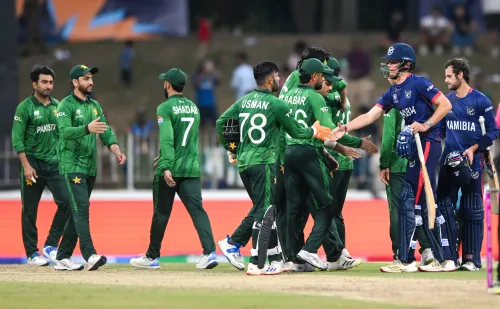
He specifically named Netherlands, Scotland, Nepal, USA, and Ireland as teams requiring far greater exposure against higher-ranked Full Members. His proposed solution was direct: add associate sides as a third team in bilateral series between established nations, rather than confining them to qualification events that offer limited visibility and competitive depth.
'Teams like the Netherlands, Scotland, Nepal, USA and Ireland need more meaningful matches (for example: getting added as the third team into every bilateral series), not just qualification tournaments,' he added.
The Olympic Dimension
Ashwin's remarks carry added weight given cricket's imminent return to the Olympic Games. He argued that the sport's Olympic ambitions demand a broader base of competitive nations, not just a polished elite tier. 'Let's not forget that collective growth will make this sport a spectacle at the Olympics,' he stated.
This comes amid wider debate within the cricketing world about whether the ICC's expansion model — which has increased team counts in World Cups — is translating into genuine development at the grassroots level for associate members, or simply creating lopsided group-stage fixtures.
Why This Debate Matters
Associate nations have long argued that their players lack the match practice needed to compete meaningfully at global tournaments. Qualification cycles, which can span years, offer irregular high-stakes cricket but little of the sustained bilateral exposure that Full Members take for granted. Ashwin's bilateral-series proposal, if adopted, would represent a structural shift in how the ICC integrates developing cricketing nations into the international calendar — a conversation that is likely to intensify as the sport prepares for its Olympic debut.
Point of View
Yet the international calendar between tournaments remains almost exclusively a Full Members' club. Adding associate sides to bilateral series would cost established boards revenue and scheduling flexibility — which is precisely why it hasn't happened. The Olympic argument is the strongest lever available, because it forces the ICC to answer whether cricket at the Games will be a showcase of genuine global breadth or a rebranded bilateral tournament with flags. That question deserves a clearer answer than revised group-stage formats provide.
NationPress
16 Jul 2026
Frequently Asked Questions
What did Ravichandran Ashwin say about the ICC's new World Cup formats?
Ashwin said the ICC's structural changes to the 2027 ODI World Cup and 2028 T20 World Cup make sense from a competitiveness standpoint, but argued that emerging nations need more meaningful bilateral match opportunities — not just qualification tournaments — if cricket is to grow globally.
What are the key changes to the 2027 ODI World Cup format?
The 2027 ODI World Cup will feature a three-stage structure starting with a preliminary Super Series, progressing through a group phase and a Super 7 round, before the knockout stage. The ICC confirmed the changes recently.
How will the 2028 T20 World Cup format differ from previous editions?
The 2028 T20 World Cup will retain 20 teams but restructure the competition into five initial groups, followed by a Super 10 stage and Eliminators before the semi-finals — a departure from earlier group-stage formats.
Which associate nations did Ashwin specifically mention?
Ashwin named the Netherlands, Scotland, Nepal, USA, and Ireland as teams that need more consistent competitive exposure against higher-ranked Full Members, suggesting they be included as a third team in bilateral series.
How does Ashwin's proposal connect to cricket at the Olympics?
Ashwin argued that broadening the competitive base for associate nations is essential for cricket to be a genuine spectacle at the Olympic Games, where the sport is set to return after a long absence.