Nuwan Thushara Drops IPL NOC Legal Battle Against SLC
Synopsis
Sri Lanka pacer Nuwan Thushara has dropped his court battle against Sri Lanka Cricket over an IPL 2026 NOC refusal, with his lawyer citing the tournament's advanced stage. The case spotlights SLC's opaque NOC policies and raises urgent questions about player autonomy once central contracts expire.
Key Takeaways
Nuwan Thushara officially withdrew his legal petition against Sri Lanka Cricket (SLC) at the Colombo District Court on Wednesday, April 23, 2025 .
SLC had refused to issue a No Objection Certificate (NOC) for IPL 2026 , citing fitness concerns — a claim Thushara contested in court.
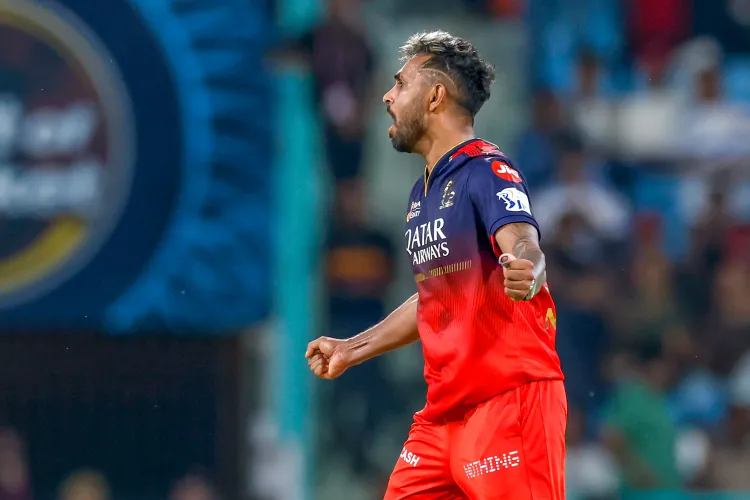
Thushara had signed with Royal Challengers Bengaluru (RCB) and was set to play his third consecutive IPL season before the NOC was denied.
Thushara's central contract with SLC was due to expire on March 31, 2026 , and he had already decided not to renew it, raising questions about the board's jurisdiction.
The dismissal closes the case for IPL 2026 but leaves SLC's NOC policy framework under scrutiny for future seasons.
The episode mirrors broader global cricket tensions between national boards and players seeking financial security through franchise T20 leagues .
Nuwan Thushara, the Sri Lanka fast bowler, has withdrawn his legal case against Sri Lanka Cricket (SLC) over the refusal to issue a No Objection Certificate (NOC) for the Indian Premier League (IPL) 2026. The petition, filed before the Colombo District Court, was formally withdrawn on Wednesday, April 23, with Thushara's legal counsel citing the advanced stage of the IPL season as the primary reason for stepping back.
Legal Withdrawal at Colombo District Court
Thushara's attorney, G. G. Arulpragasam, informed the Colombo District Court that his client no longer wished to pursue the matter. With a significant portion of the IPL 2026 season already completed, the court granted permission to withdraw the petition and subsequently dismissed it, as reported by Sri Lanka Mirror.
The case had initially been filed seeking an interim directive compelling SLC to issue the mandatory clearance that would have allowed Thushara to participate in the tournament. The dismissal brings the legal dispute to a formal close, at least for this season.
Background: Why SLC Denied the NOC
Thushara had secured a contract with Royal Challengers Bengaluru (RCB) and was poised to play in IPL 2026 for a third consecutive season, having previously participated with the board's full approval. However, SLC declined to issue the NOC this time, citing fitness concerns and the pacer's alleged failure to meet required physical benchmarks.
Thushara contested this position in his petition, arguing that his fitness level remained consistent with that of previous seasons, when the board had granted him clearance without objection. He also noted that his central contract with SLC was due to expire on March 31, 2026, and that he had already communicated his decision not to renew it.
The petition further highlighted that Thushara was no longer part of Sri Lanka's immediate national team plans, making the NOC refusal appear contradictory — a player outside the squad's active consideration was still being denied the right to earn through overseas leagues.
Financial and Professional Stakes
The legal filing had underscored the significant professional and financial consequences of the NOC denial. Failure to secure clearance risked Thushara being replaced in the RCB squad, directly affecting his earnings and his standing in global T20 cricket markets.
For a fast bowler of Thushara's profile — a genuine pace asset who had made an impression in previous IPL stints — missing out on the tournament could have had cascading effects on future franchise interest and bilateral series recall prospects. The financial dimension of such disputes is rarely trivial, with IPL contracts representing some of the most lucrative short-format deals available to international cricketers.
Broader Pattern: SLC's NOC Policies Under Scrutiny
This episode is not isolated. SLC's NOC policies have faced repeated scrutiny from players and cricket observers alike. The board has historically been cautious about releasing players for overseas leagues, often citing fitness or national duty — but critics argue these decisions are inconsistently applied and lack transparent benchmarks.
Notably, this dispute comes at a time when Sri Lanka Cricket is navigating a complex transition period, with younger talent emerging and veteran players seeking financial security through franchise cricket. The tension between board control and player autonomy mirrors similar conflicts seen in Cricket South Africa and, to a lesser extent, the Board of Control for Cricket in India (BCCI) in earlier years.
The fact that Thushara's central contract was expiring and he had chosen not to renew it adds another layer — SLC's authority to deny an NOC to a player who is essentially a free agent raises legitimate questions about the scope of board jurisdiction over non-contracted cricketers.
What Happens Next
With the petition dismissed, Thushara has effectively exhausted his legal options for IPL 2026. The season is well underway, and his window for participation this year has closed. However, the underlying issue — SLC's NOC framework and its application to players outside active national contracts — remains unresolved.
Cricket governance experts suggest that Sri Lanka Cricket may face renewed pressure to formalize transparent NOC criteria, particularly as more players approach the end of their central contracts and seek income through global franchise leagues. The International Cricket Council (ICC) has, in recent years, encouraged member boards to develop clearer player release policies.
For Nuwan Thushara, the focus will now likely shift to maintaining fitness and form through domestic cricket, with an eye on future overseas league opportunities in 2027 and beyond — or a potential return to national reckoning if circumstances change within Sri Lanka's fast bowling setup.
Point of View
But it has done something more lasting — it has put SLC's NOC policies in the public dock. A board that denies clearance to a player it has already sidelined from national plans, on fitness grounds it has never transparently defined, is exercising authority that looks more like control than governance. As franchise cricket reshapes the financial landscape for cricketers globally, boards like SLC must either modernize their player release frameworks or face an accelerating exodus of talent willing to challenge them legally. The real story here isn't that Thushara lost — it's that he fought at all.
NationPress
20 Sept 2026
Frequently Asked Questions
Why did Nuwan Thushara withdraw his case against SLC?
Nuwan Thushara withdrew his petition because a significant portion of the IPL 2026 season had already been completed, making the legal pursuit no longer practical. His counsel informed the Colombo District Court of this decision, and the petition was subsequently dismissed.
Why did SLC deny Nuwan Thushara an IPL NOC?
Sri Lanka Cricket cited fitness concerns, claiming Thushara failed to meet required physical benchmarks. Thushara disputed this, arguing his fitness was consistent with previous seasons when SLC had granted him clearance without issue.
Which IPL team had signed Nuwan Thushara for 2026?
Nuwan Thushara had secured a contract with Royal Challengers Bengaluru (RCB) for IPL 2026. It would have been his third consecutive IPL season, having participated in previous editions with SLC's approval.
What is a No Objection Certificate (NOC) in cricket?
An NOC is a mandatory clearance issued by a player's national cricket board allowing them to participate in overseas franchise leagues like the IPL. Without it, players contracted to their national boards cannot legally join foreign tournaments.
What are the broader implications of Thushara's case for Sri Lanka cricketers?
The case highlights the tension between SLC's authority and player autonomy, especially for those whose central contracts have expired or are not in active national plans. It may pressure SLC to introduce transparent, standardized NOC criteria in the future.