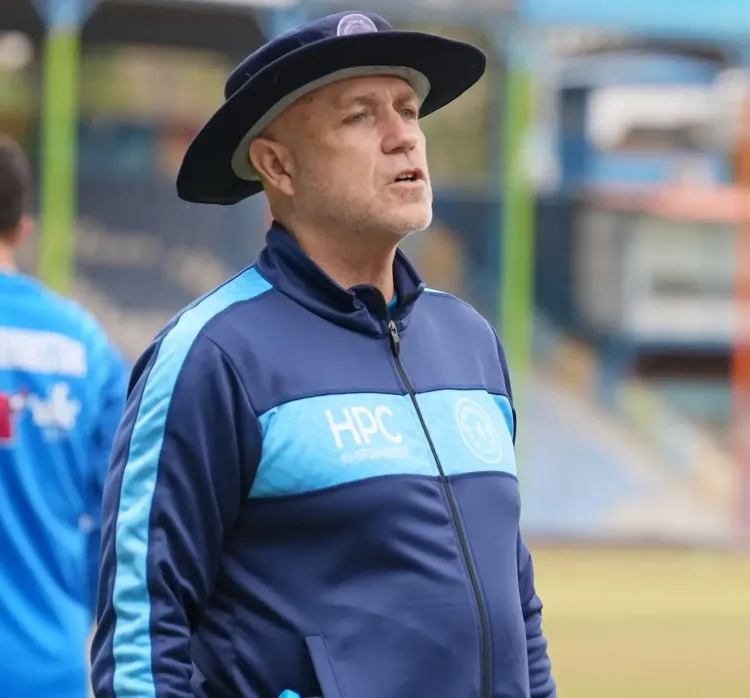
Afghanistan coach Pybus: 'Nowhere to hide' after 3-0 T20I loss to India
Synopsis
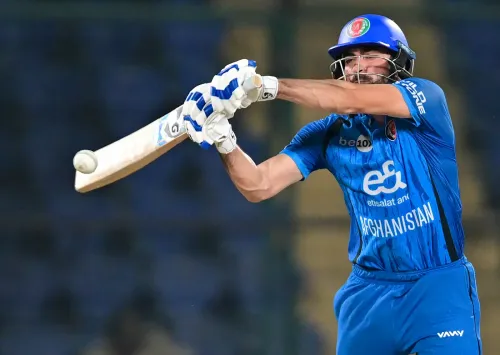
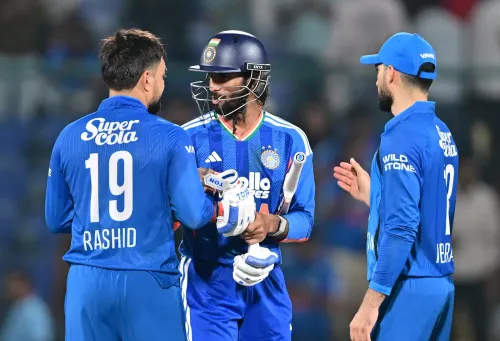
Bowled out for 94 chasing 220 — less than Abhishek Sharma's individual score of 108 — Afghanistan's 3-0 T20I series loss to India has forced a reckoning. Coach Richard Pybus called it 'the ultimate examination' and a necessary benchmark, admitting his side now knows exactly where the deficits lie ahead of the 2028 T20 World Cup cycle.
Key Takeaways
Afghanistan suffered a 3-0 T20I series whitewash against India , with the third game played at the Arun Jaitley Stadium, New Delhi on 18 September 2026 .
Afghanistan were bowled out for 94 chasing 220 — 14 runs fewer than Abhishek Sharma's individual score of 108 .
Coach Richard Pybus cited execution under pressure and inconsistent bowling length as the key deficits exposed by India.
Rashid Khan was credited with a strong individual fightback in the back ten overs, but Afghanistan still conceded 79 runs from the final 60 balls .
Pacer Naveen-ul-Haq missed all three T20Is with a shoulder niggle; Pybus confirmed it is unrelated to his previous injury.
Pybus outlined a step-by-step skill and strategy rebuild targeting the 2028 T20 World Cup .
Afghanistan head coach Richard Pybus acknowledged on 18 September 2026 that his side had been comprehensively 'benchmarked' and 'tested' by India following a 3-0 T20I series defeat, with the visitors bowled out for just 94 in the decisive third T20I at the Arun Jaitley Stadium in New Delhi. The series loss has laid bare exactly where Afghanistan stand in the shortest format heading into their next cycle.
A Stark Assessment from the Dressing Room
'We've got a lot to work on. I think I said the other day this is our first T20 series since the World Cup. That's a really long break. Some of these guys have just come back into the squad for the first time since then. We've been benchmarked, tested and we can see where our deficits are. Now we need to go to work,' Pybus said at the post-match press conference.
Afghanistan had not played a T20 international since their T20 World Cup group-stage exit in February, making the India series their first competitive exposure in the format in months. That extended gap, Pybus conceded, contributed to the inconsistency that defined Afghanistan's campaign.
Batting Collapse and Scoreboard Pressure
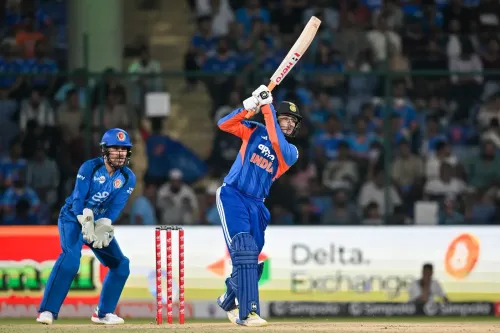
The third T20I encapsulated Afghanistan's struggles in brutal fashion. Abhishek Sharma blazed his way to 108, anchoring a 100-run powerplay that set the tone, before Afghanistan crumbled to 94 all out — 14 runs fewer than Abhishek's individual score and six short of a three-figure total.
Despite making a promising 31 runs in the first three overs of their chase, Afghanistan could not sustain the momentum under the weight of a 220-run target. 'There's nowhere to hide. If you come up short, it's no good scoring 150 and being behind the rate,' Pybus said. He credited openers Ibrahim Zadran and Rahmanullah Gurbaz for showing better intent but rued the inability to sustain execution under pressure.
Bowling Margins and the India Lesson
Pybus was equally candid about his bowlers being exposed on flat New Delhi surfaces. He pointed to Jasprit Bumrah and Axar Patel as 'world-class operators' who demand precision most sides rarely face in lower-ranked fixtures. 'We're bowling to some really fine opening batters on fantastic surfaces. On wickets like this, your length is about 12 inches. On one side of the length, you're getting pulled. The other side, you're getting driven,' he explained.
He cited Rashid Khan as the standout performer in the back ten overs of India's innings, calling his response 'phenomenal,' but acknowledged that even Rashid and Mohammad Nabi were exposed when India's batters punished any fractional length error for six. Notably, Afghanistan still conceded 79 runs from the final 60 balls of India's innings despite that fightback.
Road to the 2028 T20 World Cup
Looking ahead to the 2028 T20 World Cup, Pybus outlined a step-by-step plan to break any psychological hold top sides hold over Afghanistan. 'You're conditioning and got to get your skills right. Off the back of improving your skills, then your strategy improves. Until you get your skills to world-class level, you really don't have a strategy,' he said.
He stressed that facing India — a side grounded by the sheer volume of IPL cricket — was 'the ultimate examination' and a necessary benchmark for a developing T20 programme. 'When sides are evolving, when you are putting your calendar together, you need a mixture of opponents, and this is the best opponent we can have for us to work out exactly where we're at,' Pybus added.
Naveen-ul-Haq Injury Update
Pybus also provided an update on pacer Naveen-ul-Haq, who missed all three T20Is with a shoulder niggle picked up in training. He confirmed the irritation was unrelated to Naveen's previous injury. 'The good news is the irritation has got nothing to do with his old injury. We want to get him 100 percent ready so he can play at his best,' Pybus said, urging patience with the pacer's return timeline.
With serious reflection expected from the Afghanistan squad and a full review underway, the coaching staff's next task is translating these hard lessons into a measurable improvement programme before their next major assignment.
Point of View
Combined with thin domestic T20 exposure for key players, means the series was always likely to function as a diagnostic rather than a contest. What's telling is how clearly Pybus reads the problem — skills, then strategy, then execution — yet the calendar management that created a near-eight-month T20 void is itself a planning failure. Pybus is right that India is the ideal benchmark, but benchmarks only matter if the follow-through exists. Afghanistan's 2028 World Cup ambitions will be shaped not by this series result but by what the board and coaching staff actually do in the months following it.
NationPress
18 Sept 2026
Frequently Asked Questions
What happened in the India vs Afghanistan T20I series 2026?
India won the T20I series 3-0, with the third and final match played at the Arun Jaitley Stadium in New Delhi. Afghanistan were bowled out for 94 chasing 220, their lowest score of the series, in a comprehensive defeat.
What did Afghanistan coach Richard Pybus say after the 3-0 loss?
Pybus admitted his side had been 'benchmarked and tested' and said there was 'nowhere to hide' after being bowled out for 94. He cited poor execution under pressure and inconsistent bowling lengths as the primary deficits exposed by India.
Why did Afghanistan struggle so much against India in this series?
Afghanistan had not played a T20 international since the T20 World Cup group stage in February, making this their first T20 series in several months. Pybus acknowledged the long break, unfamiliarity with pressure situations against top-ranked opposition, and technical gaps against India's world-class bowling attack.
What is the injury update on Afghanistan pacer Naveen-ul-Haq?
Naveen-ul-Haq missed all three T20Is with a shoulder irritation picked up in training. Coach Pybus confirmed the niggle is unrelated to his previous injury and said the team wants to get him '100 percent ready' before rushing his return.
How does this series affect Afghanistan's T20 World Cup 2028 preparations?
Pybus framed the series loss as a necessary learning experience, calling India 'the ultimate examination.' He outlined a step-by-step rebuild — skills first, then strategy, then execution under pressure — as Afghanistan look to be competitive in the knockout stages of the 2028 T20 World Cup.