US sanctions Iranian crypto exchange BitBank over IRGC Bitcoin transfers
Synopsis
Washington has directly targeted Iran's crypto infrastructure, sanctioning exchange BitBank and its developer over alleged transfers of hundreds of millions in Bitcoin to the IRGC. The move under Operation Economic Outcast signals that the Trump administration views digital assets as a core battleground in its economic war on Tehran — and that no financial channel is considered out of OFAC's reach.
Key Takeaways
The US Treasury sanctioned Iranian crypto exchange BitBank and developer Pishtaz Simorgh on 18 September 2026 .
The network allegedly transferred hundreds of millions of dollars in Bitcoin to Iran's IRGC between June and July 2026 .
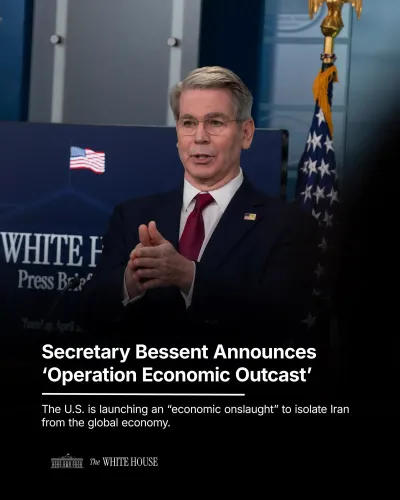
Action was taken under Operation Economic Outcast , the Trump administration's economic campaign against Iran.
Three individuals — Hossein Ali Zaker Hossein , Mohammad Mahdi Zaker Hossein , and Seyed Adel Heidari — were also designated, all linked to the Dot One Value Creation Group network.
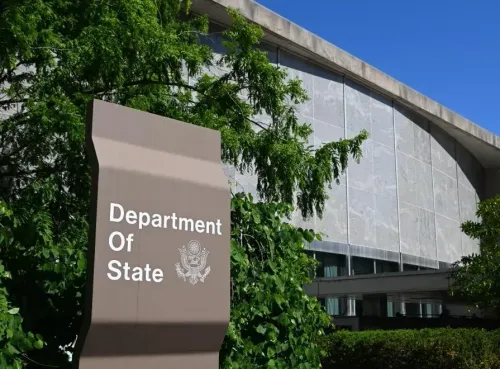
Treasury Secretary Scott Bessent warned that crypto-based financing of the Iranian regime is 'not beyond OFAC's reach.' The State Department separately urged global digital asset platforms to prevent Iranian access to international financial systems.
The United States Treasury Department on 18 September 2026 sanctioned Iranian cryptocurrency exchange BitBank and its software developer, alleging the network facilitated transfers of hundreds of millions of dollars in Bitcoin to Iran's Islamic Revolutionary Guard Corps (IRGC). The action, taken under Operation Economic Outcast — the Trump administration's sustained economic campaign against Iran — marks one of Washington's most direct strikes yet at Tehran's alleged use of digital assets to circumvent international sanctions.
Who Was Designated
The Treasury's Office of Foreign Assets Control (OFAC) designated BitBank, its software developer Pishtaz Simorgh Electronic Trade Company, and three individuals: Hossein Ali Zaker Hossein, Mohammad Mahdi Zaker Hossein, and Seyed Adel Heidari. All three are described as executives and associates operating within the alleged sanctions evasion network of Iranian businessman Babak Zanjani.
Pishtaz Simorgh, which developed BitBank's digital asset software, is identified as a subsidiary of the previously sanctioned Dot One Value Creation Group. Mohammad Mahdi Zaker Hossein is chief executive of Pishtaz Simorgh and a manager and representative of Dot One. Heidari serves as vice chairman of Dot One's board. Hossein Ali Zaker Hossein is alleged to have participated in Iranian oil exports and digital asset transfers, reportedly brokering transactions whose proceeds ultimately reached the IRGC.
How the Network Allegedly Operated
According to the Treasury Department, Zanjani used BitBank between June and July 2026 to facilitate transfers of hundreds of millions of dollars' worth of Bitcoin to the IRGC. Separately, the already-sanctioned Hormuz Safe Marine Services Authority is alleged to have used the platform since June to route payments it received to the Iranian government.
Treasury further noted that Zanjani has promoted BitBank on his personal social media accounts since at least 2024, and that several companies within his alleged evasion network have publicly listed the exchange as a partner — suggesting the network operated with considerable visibility.
What the Treasury Secretary Said
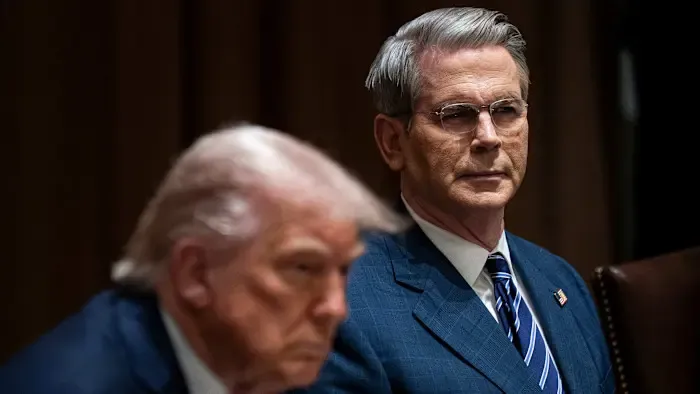
'Today's designations of Iranian digital asset infrastructure make perfectly clear that efforts to finance the Iranian regime using cryptocurrencies are not beyond OFAC's reach,' Treasury Secretary Scott Bessent said. 'If you support the Iranian regime, the Department of the Treasury will sanction you.'
The statements supplied did not include any response from BitBank, Zanjani, the other designated parties, or the Iranian government.
Legal Effect of the Designations
The designations block all property and interests in property held in the United States or controlled by US persons. Any entity owned at least 50 per cent by one or more blocked persons is also covered under the action, Treasury confirmed.
State Department Warning to Global Exchanges
The State Department separately called on governments and private companies — particularly digital asset businesses — to guard against Iranian use of their platforms. State Department spokesman Tommy Pigott warned that international exchanges had reportedly provided Iran, including its central bank, with access to the international financial system, underscoring Washington's concern that the problem extends well beyond BitBank.
This action comes amid broader US pressure on Iran's financial lifelines, and signals that Washington views crypto infrastructure as a primary frontier in its sanctions enforcement strategy going forward.
Point of View
And that even infrastructure-level players (developers, holding companies, board members) will be caught in the net. What is conspicuously absent is any response from the designated parties or Tehran, which leaves the evidentiary case one-sided for now. The deeper question is whether unilateral US designations can meaningfully constrain a crypto network that, by design, operates across jurisdictions beyond Washington's direct reach — a structural limitation that the State Department's appeal to foreign exchanges implicitly acknowledges.
NationPress
18 Sept 2026
Frequently Asked Questions
What is BitBank and why has the US sanctioned it?
BitBank is an Iranian cryptocurrency exchange that the US Treasury alleges was used to transfer hundreds of millions of dollars in Bitcoin to Iran's Islamic Revolutionary Guard Corps (IRGC). It was sanctioned on 18 September 2026 under Operation Economic Outcast as part of Washington's broader campaign to cut off Iranian financing channels.
Who is Babak Zanjani and what is his alleged role?
Babak Zanjani is an Iranian businessman whom the Treasury Department identifies as the controller of a sanctions evasion network that includes BitBank. He is alleged to have used the exchange between June and July 2026 to facilitate Bitcoin transfers to the IRGC, and to have promoted BitBank on his social media accounts since at least 2024.
What does the US designation actually do to BitBank?
The designation blocks all of BitBank's property and interests in property held in the United States or controlled by US persons. Any entity owned at least 50 per cent by a blocked person is also covered, effectively cutting the exchange off from the US financial system and exposing any non-US entity that continues to deal with it to secondary sanctions risk.
Which individuals were sanctioned alongside BitBank?
Three individuals were designated: Hossein Ali Zaker Hossein, alleged to have brokered transactions whose proceeds reached the IRGC; Mohammad Mahdi Zaker Hossein, chief executive of Pishtaz Simorgh and a Dot One manager; and Seyed Adel Heidari, vice chairman of Dot One's board. All three are linked to Zanjani's alleged network.
What has the State Department asked global crypto exchanges to do?
The State Department urged governments and private companies, particularly digital asset businesses, to guard against Iranian use of their platforms. Spokesman Tommy Pigott warned that international exchanges had reportedly given Iran — including its central bank — access to the international financial system, calling for vigilance across the global crypto industry.