Surat cyber police arrest 3 Mumbai men in ₹1.10 crore share market fraud
Synopsis
Three men from Mumbai were arrested by Surat's Cyber Crime Branch for allegedly renting out a bank account used to siphon ₹1.10 crore from a victim via a fake Axis Bank app. The same account was flagged in 29 complaints across multiple states, with total alleged fraud touching ₹16.13 crore — revealing the trio as cogs in a far larger racket.
Key Takeaways
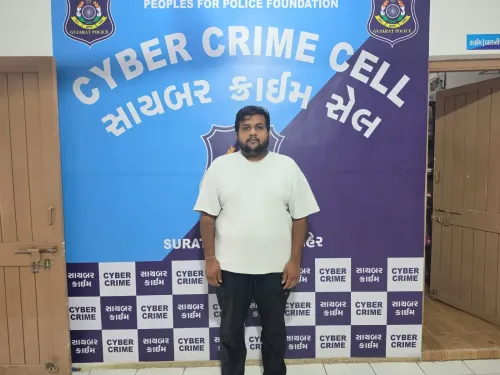
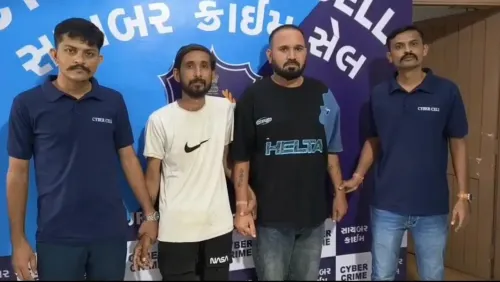
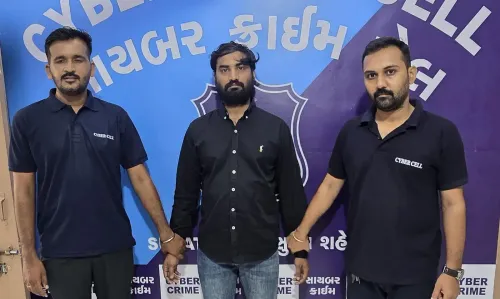
Surat City Cyber Crime Branch arrested Rahul Rajak (27) , Ashish Sonar (37) , and Bhushan Sendane (34) from Mumbai on 29 September 2026 .
The complainant transferred ₹1,10,90,000 through a fake Axis Bank APK application; only ₹5,000 was returned.
The trio earned a combined commission of ₹60,000 for facilitating access to an IDFC Bank current account used in the fraud.
The National Cybercrime Reporting Portal (NCRP) linked the same account to 29 complaints from multiple states, with total alleged fraud of ₹16.13 crore .
Transactions of ₹2,41,03,506 were routed through the account between 18 October 2025 and 9 January 2026 .
Police are continuing efforts to trace the remaining accused in the wider network.
The Surat City Cyber Crime Branch has arrested three men from Mumbai in connection with an alleged ₹1.10 crore share market investment fraud, with investigators discovering that the bank account at the centre of the case was linked to complaints from multiple states. The arrests were made following a probe into a scheme that used a fake banking application to dupe a victim into transferring over a crore of rupees.
Who Was Arrested
The three accused have been identified as Rahul Rajak (27), Ashish Sonar (37), and Bhushan Sendane (34). According to police, Rajak allegedly registered a firm in his name, obtained an Udyam certificate, and opened a current account with IDFC Bank, which he subsequently handed over to Sonar for ₹10,000.
Sonar then allegedly passed the account on to Sendane for ₹30,000, who in turn handed it to another accused for ₹20,000. In total, the three men reportedly received a combined commission of ₹60,000 for facilitating access to the bank account, according to DCP (Cybercrime Cell) Bishakha Jain.
How the Fraud Was Carried Out
The case originated when the complainant was allegedly contacted by individuals posing as representatives of a share market investment platform, promising high returns. The accused reportedly sent the victim an APK file of a counterfeit Axis Bank application, falsely claiming to be calling from the bank's customer care service.
The complainant was instructed to download the fake application, open a demat account, and conduct trading through it. He was then directed to transfer funds into various bank accounts purportedly for trading purposes. In all, he transferred ₹1,10,90,000. When he later attempted to withdraw his investment and the claimed profits, the accused demanded additional payments towards withdrawal fees and other charges. He was ultimately permitted to withdraw only ₹5,000, while ₹1,10,85,000 remained blocked — at which point, police said, he realised he had been defrauded.
Scale of the Fraud Network
A check on the National Cybercrime Reporting Portal (NCRP) revealed that the same bank account had attracted 29 complaints from different states. The alleged total fraud linked to the account across these complaints amounts to approximately ₹16.13 crore (₹16,13,44,790), indicating the account was used well beyond this single case. Transactions worth ₹2,41,03,506 were recorded through the current account between 18 October 2025 and 9 January 2026.
Legal Action and Investigation Status
A case has been registered at the Cyber Crime Police Station under Sections 318(4), 336(2), 338, 336(3), 340(2), 61(2), and 3(5) of the Bharatiya Nyaya Sanhita, 2023, as well as Section 66(D) of the Information Technology Amendment Act, 2008. Police have stated that efforts are ongoing to trace the remaining accused persons allegedly involved in the wider fraud network.
The Cyber Crime Branch has urged the public to exercise caution when encountering advertisements that promise unusually high returns through online share market investments, and advised against transferring money to unknown individuals without thorough verification.
Point of View
Insulating the operators from direct exposure. What is striking here is the scale: a single account, opened under an Udyam-certified firm, drew 29 complaints and an alleged fraud trail of ₹16.13 crore across multiple states. The three arrested earned a combined ₹60,000 — a fraction of what the fraud generated — yet they are the ones facing charges while the principal operators remain at large. India's cybercrime enforcement consistently catches the bottom of the chain; without dismantling the recruiters and operators upstream, the mule-account pipeline will keep refilling.
NationPress
29 Sept 2026
Frequently Asked Questions
What was the Surat share market investment fraud case?
The Surat City Cyber Crime Branch arrested three men from Mumbai who allegedly facilitated a ₹1.10 crore share market investment fraud by renting out a bank account used to defraud the victim through a fake Axis Bank mobile application. The same account was linked to 29 complaints from multiple states with total alleged fraud of ₹16.13 crore.
Who are the three men arrested in the Surat cyber fraud case?
The arrested accused are Rahul Rajak (27), Ashish Sonar (37), and Bhushan Sendane (34), all from Mumbai. They allegedly passed an IDFC Bank current account between themselves, earning a combined commission of ₹60,000 for providing it to the fraud network.
How did the fake share market investment fraud work?
The accused contacted the victim posing as share market investment advisors, then sent an APK file of a counterfeit Axis Bank application. After the victim created a demat account on the fake app and transferred over ₹1.10 crore, the accused blocked withdrawals and demanded additional fees, ultimately allowing him to recover only ₹5,000.
What is a mule bank account and why does it matter in this case?
A mule bank account is a legitimately opened account that its holder rents or sells to fraudsters to receive and route illegal funds, obscuring the trail. In this case, the IDFC Bank current account changed hands three times before being used in the fraud, making it harder for investigators to trace the actual operators.
What legal sections have been invoked in the Surat cyber fraud case?
The case was registered under Sections 318(4), 336(2), 338, 336(3), 340(2), 61(2), and 3(5) of the Bharatiya Nyaya Sanhita, 2023, and Section 66(D) of the Information Technology Amendment Act, 2008. Police said the investigation is ongoing to identify and apprehend the remaining accused.