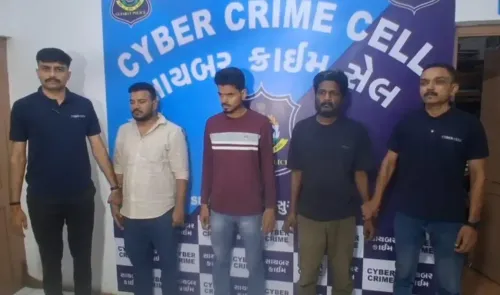
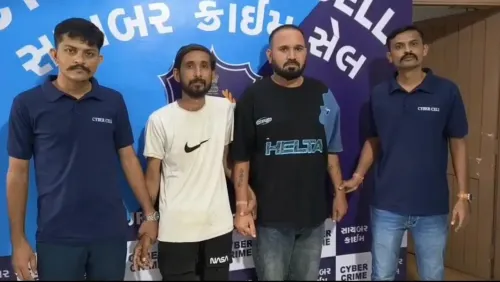
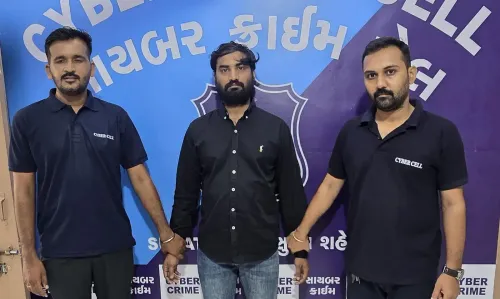
Surat cyber cell arrests 5 in ₹26.2 lakh fake share trading scam

Synopsis
A single Axis Bank account rented out by fraudsters across Odisha and West Bengal sits at the heart of a ₹26.2 lakh WhatsApp share-trading scam — but the bigger revelation is its scale: 149 cyber crime complaints nationwide and over ₹6.53 crore in suspicious transactions through one account alone, exposing how organised account-renting networks amplify the reach of online investment fraud.
Key Takeaways
The Surat City Cyber Crime Cell arrested five people from Odisha and West Bengal on 17 July in a ₹26.20 lakh fake share trading scam.
The fraud was initiated via a WhatsApp group offering share market tips and directing victims to a fake trading website.
The Axis Bank current account used in the fraud is linked to 149 cyber crime complaints on the NCCRP from across India.
Suspicious transactions worth ₹6,53,43,924 were routed through the account between March 2025 and February 2026 .
All five accused have prior criminal records in cyber fraud cases across Odisha , Karnataka , and West Bengal .
Victims are urged to report financial cyber fraud immediately on the National Cyber Crime Helpline: 1930 .
The Surat City Cyber Crime Cell on Friday, 17 July arrested five members of an interstate cyber fraud network accused of cheating a city resident of ₹26.20 lakh through a fake share market trading and investment scheme. Investigators found that the bank account at the centre of the fraud is linked to 149 cyber crime complaints filed across India and suspicious transactions totalling more than ₹6.53 crore.
How the Fraud Unfolded
According to police, the scam began when the complainant was added to a WhatsApp group where the accused shared purported share market trading tips and promised high returns through their application. The victim was subsequently sent a link to a fake trading website and instructed to create an account.
The accused allegedly persuaded the complainant to transfer a total of ₹26.20 lakh into multiple bank accounts for purported share market trading and investment. The funds were never returned, prompting the victim to report the matter through the National Cyber Crime Helpline, 1930.
The Accused and Their Roles
Police arrested five individuals from Odisha and West Bengal. They have been identified as Ranjan alias Sunil, 33, of Sundargarh district, Odisha; Krishna Kumhar alias Kishan, 54, of Jharsuguda district, Odisha; Subaschandra, 52, of Gajapati district, Odisha; S.K. Alamgir, 41, of Purba Bardhaman district, West Bengal; and Basantsingh alias Singhsar alias Big Boss, 45, of Murshidabad district, West Bengal.
Investigators said Ranjan and Krishna jointly opened an Axis Bank current account in the name of 'RRK PublicBazzar Private Limited'. The account was then rented to Subaschandra and Alamgir for a commission, who in turn passed the bank account kit to Basantsingh — also for a commission — who then supplied it to absconding members of the network to facilitate the fraud. Money obtained through the scheme was transferred using IMPS and RTGS via net banking to absconding conspirators.
Scale of the Fraud Network
Investigators found that ₹50,000 from the complainant's defrauded amount had been routed through the Axis Bank account. The account has been linked to 149 complaints registered on the National Cyber Crime Reporting Portal (NCCRP) from multiple states. Between 1 March 2025 and 28 February 2026, suspicious cyber-fraud transactions totalling ₹6,53,43,924 were reportedly carried out through the same account.
The accused also have prior criminal records in cyber fraud cases registered in Odisha, Karnataka, and West Bengal, including cases at the Sundargarh Cyber and Economic Offences Police Station, the North CEN Cyber Crime Police Station and Whitefield CEN Police Station in Bengaluru, and the Badgawan Police Station. Basantsingh is additionally linked to an earlier case at Hare Street Police Station, Kolkata under provisions including criminal conspiracy, cheating, and forgery.
Legal Action and Investigation
The Cyber Crime Cell registered an FIR under Sections 318(4), 336(2), 338, 336(3), 340(2), 61(2) and 3(5) of the Bharatiya Nyaya Sanhita, 2023, along with Section 66(D) of the Information Technology Act, 2008. Assistant Commissioner of Police (Cyber Crime) S.E. Daniels supervised the investigation, while Police Inspector V.D. Mandora led the team that traced the accused through technical analysis, financial trail examination, digital evidence, and interstate coordination.
Police Advisory to the Public
Following the arrests, police advised citizens not to respond to unsolicited messages promising guaranteed profits through forex or share trading. Authorities urged people to leave and block unknown WhatsApp or Telegram groups and cautioned investors against committing larger sums simply because they received small initial returns — a tactic, police warned, that fraudsters use to build confidence before executing larger financial frauds.
Anyone who falls victim to financial cyber fraud is urged to immediately contact the National Cyber Crime Helpline at 1930, as prompt reporting improves the chances of halting further transfer of stolen funds.
Point of View
But the absconding members of the network — who actually operated the fraud — remain at large, and the structural vulnerability that allowed one rented account to serve dozens of scams remains unaddressed.
NationPress
16 Oct 2026
Frequently Asked Questions
What was the Surat online share trading scam?
It was a fake share market investment scheme in which fraudsters added a Surat resident to a WhatsApp group, promised high returns through a bogus trading application, and persuaded the victim to transfer ₹26.20 lakh into multiple bank accounts. The money was never returned, and the victim reported the fraud through the National Cyber Crime Helpline, 1930.
Who were the five people arrested in the Surat cyber fraud case?
The five accused are Ranjan alias Sunil (33, Sundargarh, Odisha), Krishna Kumhar alias Kishan (54, Jharsuguda, Odisha), Subaschandra (52, Gajapati, Odisha), S.K. Alamgir (41, Purba Bardhaman, West Bengal), and Basantsingh alias Singhsar alias Big Boss (45, Murshidabad, West Bengal). They were arrested by the Surat City Cyber Crime Cell following technical analysis and interstate coordination.
How was the bank account linked to 149 cyber crime complaints?
The Axis Bank current account opened in the name of 'RRK PublicBazzar Private Limited' was rented out to multiple members of the fraud network and ultimately supplied to absconding conspirators. Investigators found it registered on the National Cyber Crime Reporting Portal (NCCRP) against 149 complaints from different states, with suspicious transactions of over ₹6.53 crore between March 2025 and February 2026.
What charges have been filed against the accused?
An FIR has been registered under Sections 318(4), 336(2), 338, 336(3), 340(2), 61(2), and 3(5) of the Bharatiya Nyaya Sanhita, 2023, along with Section 66(D) of the Information Technology Act, 2008. The accused also have prior criminal records in Odisha, Karnataka, and West Bengal.
How can people protect themselves from WhatsApp share trading scams?
Police advise citizens to avoid responding to unsolicited messages promising guaranteed profits through forex or share trading, to immediately leave and block unknown WhatsApp or Telegram groups, and not to invest larger sums merely because they received small initial returns. Victims of financial cyber fraud should call the National Cyber Crime Helpline at 1930 without delay.